
China Issues Special ID Cards, Not for Its Citizens
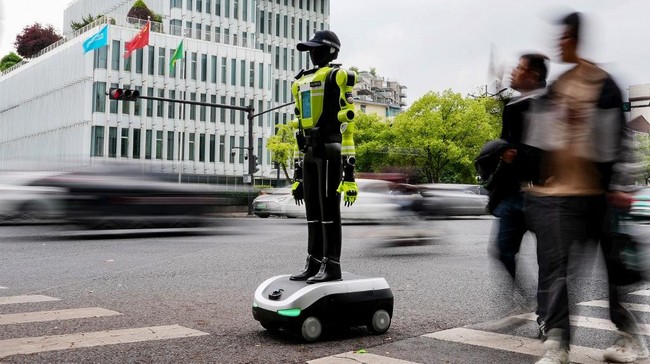
The Chinese government has launched a special ID card for humanoid robots within its territory. This identification system is an effort by the state to keep pace with rapid technological developments.
The initiative was spearheaded by the Ministry of Industry and Information Technology alongside the Hubei Humanoid Robot Innovation Centre.
This robot ID card contains a range of identifying details, much like an identity card owned by a human. The information listed includes nationality, manufacturer, model, and a unique serial number.
However, the code embedded within it is far longer than that of a Chinese citizen’s ID, comprising 29 characters instead of 11 digits.
The information in the ID card is also not merely a static registration plate. Instead, it will report on what is happening to the robot, such as physical wear and tear, battery status, and the cognitive capacity of the AI embedded in its body.
An executive at the Hubei centre, Liu Chuanhou, stated that information regarding the robot’s condition will allow them to identify damage and even find maintenance solutions.
“If a robot experiences a malfunction, we can examine the operational logs and maintenance records via the unique ID to locate the damage, determine responsibility, and carry out efficient repairs,” Liu said.
Robot development in China is extraordinary. Many local companies have produced their own robots and are even planning to sell them to the public.
For instance, GigaAI, which is backed by Huawei’s investment arm, announced the existence of its first commercial service robot named SeeLight S1. A batch of 100 robots began trials this month and will be launched free of charge in the first half of next year in Wuhan.
GigaAI CEO Zhu Zheng also confirmed the sale of the robots in retail stores, priced at around US$15,000 (Rp 268 million).