
China Is the Only Country in the World with Rare Earth Graduates
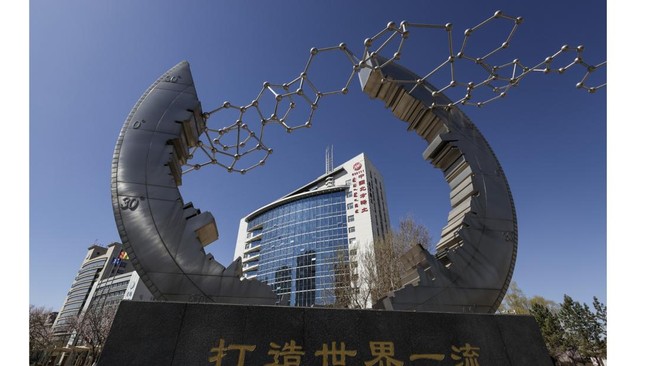
China not only controls rare earth mines and refining plants, but also prepares its human resources from the university bench onwards.
Each year, hundreds of students pursue specialised rare earth studies at the Inner Mongolia University of Science and Technology in Baotou. They are absorbed directly by state-owned refining industries that produce magnets for jet engines, electric vehicles (EVs) and wind turbines.
Others continue their research at the Baotou Rare Earth Research Institute, located only about 150 kilometres from the world’s largest rare earth mine.
This strategy is one of Beijing’s principal weapons in maintaining its dominance over the global supply chain.
Whilst the United States and Western countries pour billions of dollars into catching up in the rare earth sector, China has already built an integrated ecosystem spanning campuses, laboratories and industrial zones.
A Reuters investigation found that China has more than 40 dedicated rare earth laboratories, as well as at least 11 universities and polytechnics that admit more than 500 students each year into rare earth metals degree programmes.
To date, not a single university outside China offers a dedicated undergraduate degree in rare earth metals.
Constantine Karayannopoulos, former CEO of Neo Performance Materials, acknowledged that Chinese university graduates can start work immediately without lengthy training, unlike graduates from other countries who generally require several years of development.
“In China, I can recruit fresh graduates and they are productive straight away. In other countries, I have to train them for three years,” he told Reuters.
Hundreds of Hours Studying Metallurgy
At the Inner Mongolia University of Science and Technology, students in the rare earth metals engineering department receive more than 100 hours of specialised lectures, ranging from rare earth chemistry to materials science.
The coursework is also integrated with laboratories and companies.
Most laboratories are built near major mines such as Bayan Obo, Maoniuping and Longnan, so research can be applied directly to production processes.
A similar model is applied at the Jiangxi University of Science and Technology (JXUST), which has opened a dedicated rare earth metals undergraduate programme.
The first cohort of 70 students will study the entire industry chain, from ore processing and metallurgy to magnet manufacturing, and are required to complete a research project with a company before graduating.
This education model is regarded as one of the keys to China’s dominance.
David Parker, a rare earth expert from Durham University, described the JXUST curriculum as highly specialised, reflecting China’s position as the global leader in rare earth metals science and engineering.
Through this system, industry receives a steady supply of graduates who are ready to work without lengthy training.
A similar view was expressed by the Portuguese physicist Luís Carlos, who has spent nearly two decades researching institutes in China.
According to him, postgraduate students in China do indeed have very narrow specialisations. However, this approach makes the entire research and industrial ecosystem work far more efficiently.
Education as a Weapon
China openly refers to education as part of its geopolitical strategy.
Li Chaozhong, dean of the JXUST Rare Earth Programme, said rare earth metals are the “main bargaining chip” in global politics. For this reason, the degree programme is designed not only to produce scientists, but also to safeguard China’s position as the world leader in the rare earth metals industry.
Interestingly, the curricula at several Chinese universities are designed around industry needs.
Students not only learn rare earth processing techniques, but also understand the strategic and geopolitical value of the commodity.
In one course at the Jiangxi University of Science and Technology, for example, students are taught how Chinese rare earth metals have become essential components in various American weapons systems, including missiles and US Navy equipment.
Meanwhile, the United States is still trying to catch up.
Valor Metals is developing new technology claimed to be capable of processing rare earth metals ten times faster and more cheaply than Chinese technology, although it has yet to be tested on a commercial scale. Separately, the Colorado School of Mines, together with the US Department of Energy, is building two critical minerals research centres scheduled to begin operating in 2027.
Although investment is beginning to flow, the biggest challenge for the US remains the availability of skilled workers.
Valor Metals CEO Kunal Sinha believes the American minerals industry must attract more young talent if it wishes to rival China’s dominance of the global critical minerals supply chain.
Developing Rare Earth Metals from Upstream to Downstream
Processing rare earth metals is no easy task. For example, to produce the neodymium and praseodymium required by the electric vehicle industry, plants must first separate the far more abundant lanthanum and cerium elements.
The process is extremely complex, involving a combination of various acids, alkalis and chemicals, and therefore requires advanced technology and specialised expertise.
This complexity also makes the industry laden with environmental risks. Refining waste can potentially contaminate soil and water if not properly managed, whilst exposure to certain types of rare earth metals can harm the respiratory and nervous systems.
Indeed, researchers in China found groundwater contamination around waste storage sites in Baotou, and the Chinese government itself has acknowledged that rare earth refining activities have caused serious environmental damage.
Nevertheless, Beijing has succeeded in building global dominance. Since the 1980s and 1990s, the Chinese government has rolled out various tax incentives, exploited low-cost labour and continuously funded research institutes.
State-owned banks have also provided cheap financing to companies in the critical minerals sector, accelerating the industry’s expansion from upstream to downstream.
China’s advantage is also underpinned by the integration between mines, research centres and processing facilities.
The Bayan Obo mine, the world’s largest rare earth mine, is only about 150 kilometres from the research and refining hub in Baotou, Inner Mongolia.
This proximity accelerates technology transfer, the development of skilled workers and the commercialisation of innovations, cementing China’s position as master of the global rare earth supply chain.
This advantage is now closely guarded by Beijing. The Chinese government continues to tighten restrictions on the export of rare earth processing technology and equipment, as well as limiting foreign access to the industry.
Catching up with China in rare earth metals technology is no simple matter. The rare earth industry requires very specific expertise because the refining process is extremely intricate.
Refineries must separate 17 rare earth elements with almost identical chemical characteristics, making processing far more complex and expensive than other minerals. This is what makes China’s dominance of the rare earth supply chain difficult to shake.
The rare earth processing industry in Western countries effectively vanished in the 1990s. As a result, Western universities stopped producing the skilled workers the industry needed, severing the talent supply chain.
China, by contrast, has continued to strengthen the synergy between campuses, research institutes and industry. One outcome is refining technology developed by the National Engineering Research Center for Rare Earths in Beijing, which began to be used by the red-chip company Gansu Rare Earth New Materials in 2023.
The facility is capable of producing up to 50,000 metric tonnes of processed rare earth metals per year — roughly five times larger than the output of Lynas Rare Earths, the biggest producer outside China.
Given China’s current strength, other countries will likely need years to match Beijing.
Source: jawawa.id (https://jawawa.id/newsitem/china-is-the-only-country-in-the-world-with-rare-earth-graduates-1784717562)
Originally published by CNBC Indonesia (https://www.cnbcindonesia.com/research/20260722152414-128-752948/china-satu-satunya-negara-di-dunia-punya-sarjana-logam-tanah-jarang), translated from Indonesian