
China is building more legal tools for foreign-related disputes. What does it mean for companies, individuals?
analysis East Asia
China is building more legal tools for foreign-related disputes. What does it mean for companies, individuals?
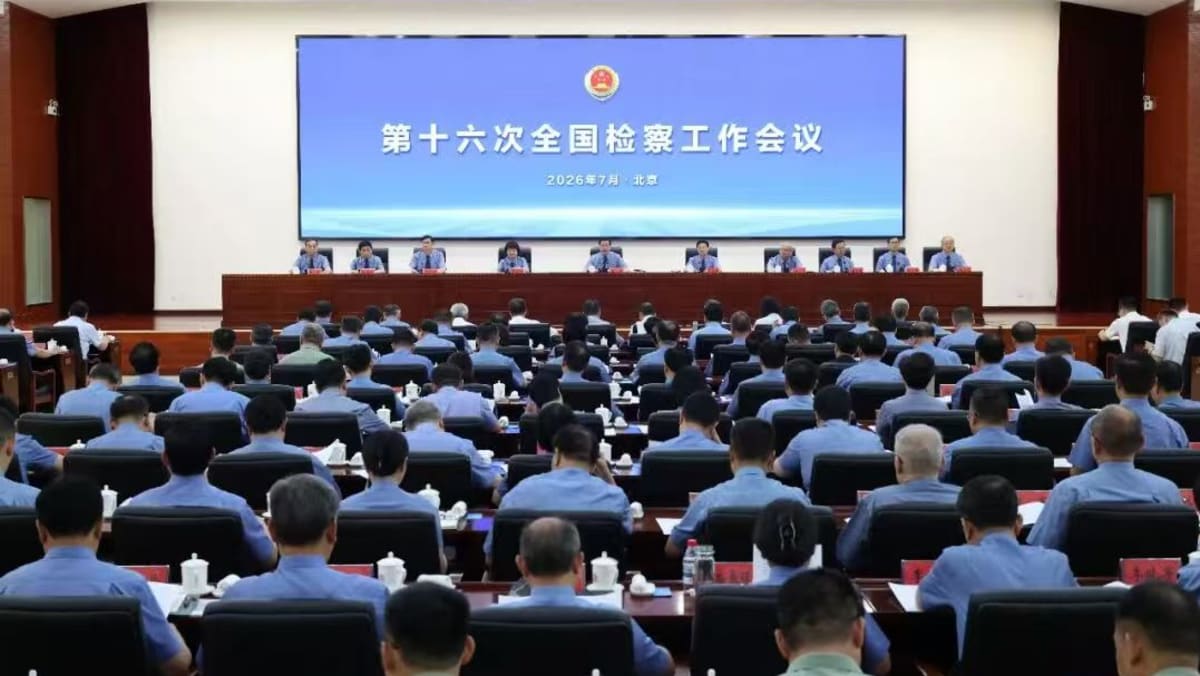
A draft law submitted for second reading in June would allow China’s public prosecutors to sue foreign organisations and individuals deemed to have harmed national or public interests.
BEIJING: As geopolitical tensions deepen, China is expanding the role of domestic law in responding to foreign sanctions, export controls and other forms of external pressure, say analysts.
The latest example is a clause in a draft law, submitted for second reading in June, that would allow public prosecutors to sue foreign organisations and individuals deemed to have harmed China’s national or public interests.
The provision could become the latest addition to the country’s growing body of foreign-related laws and regulations.
The broader effort reflects Beijing’s push to make its legal system “ready and able to handle a variety of international and cross-border disputes”, Jeremy Daum, a senior fellow at the Paul Tsai China Center at Yale Law School, told CNA.
The final scope and application of the draft law remain unclear as it is still under legislative review.
But analysts said it could add another layer of legal risk for foreign actors, further complicating compliance for companies operating across jurisdictions while potentially increasing the exposure of individuals involved in disputes with Beijing.
A CLAUSE WITH A SIGNAL
The draft Procuratorial Public Interest Litigation Law was submitted on Jun 23 to the Standing Committee of the 14th National People’s Congress for its second reading.
The revised draft seeks to expand the scope of public interest litigation and add provisions covering foreign-related cases, according to state news agency Xinhua.
“Specifically, the draft stipulates that procuratorial agencies shall, in accordance with the law, bring public interest litigation against illegal acts committed by foreign organisations and individuals that infringe upon China’s national and public interests,” Xinhua said in a report that same day.
The clause essentially clarifies that the procuratorate, in its obligation to protect the public interest, can pursue foreign defendants, said Daum, who is also a Beijing-based senior research scholar in law.
“It is absolutely part of the broader foreign-related rule of law, which is generally viewed here as part of China asserting its sovereignty.”
The draft law is included in the National People’s Congress Standing Committee’s 2026 legislative plan, although authorities have not announced when it will be put to a vote.
Any use of the provision would likely be selective and shaped by political considerations, said Carolin Kautz, founder of geopolitical risk and China advisory firm SinoVise.
“The vagueness of the legal formulation allows for that,” she told CNA, adding that such broadly defined terms have long allowed Beijing to bring political issues - both domestic and international - within the legal system.
“Bracing itself against an increasingly challenging global environment has been a long-term priority, and an expanding foreign-related legal toolkit is part of this process.”
Donald Clarke, professor of law emeritus at George Washington University Law School, highlighted how the proposed clause broadly references China’s “national interests” and “social public interests”.
Asked how much discretion the wording could give prosecutors and courts, he said: “Limitless.”
MANAGING FOREIGN-RELATED DISPUTES
The draft law fits into a wider effort by Beijing to build a more institutionalised legal framework for managing foreign-related disputes.
China’s response to foreign sanctions and restrictions has gradually moved beyond diplomatic protests and case-by-case countermeasures towards a standing body of laws and procedures, analysts said.
In 2021, China introduced rules allowing it to prohibit compliance with foreign measures it considers improperly applied beyond their jurisdiction. Chinese citizens and organisations harmed by compliance with such measures may seek compensation through the courts.
Months later, China enacted the Anti-Foreign Sanctions Law, authorising measures including entry restrictions, asset freezes and bans on transactions or cooperation with targeted individuals and organisations.
It also allows Chinese citizens and organisations to sue those who implement or assist discriminatory foreign measures targeting them.
China’s foreign-related legal toolkit widened further this year with regulations covering industrial and supply-chain security and what Beijing considers the improper overseas application of foreign laws.
Together, the regulations provide for investigations, prohibition orders and restrictions on activities such as trade and investment. In certain circumstances, Chinese citizens and organisations that suffer losses may also seek compensation in court.
The building of this policy infrastructure “has been underway for a while”, said Kautz of SinoVise, pointing also to the unreliable entity list, introduced in 2020, under which China can restrict foreign entities’ trade, investment and other activities if they are deemed harmful to its national interests.
The expansion continues strategies “that we have seen for a long time”, she said. At the same time, she stressed that China was not alone in using national-security legislation to address geopolitical concerns, pointing to measures adopted in the United States and European Union countries.
On the latest draft law, some lawyers in China have taken a more hawkish view, even as other legal specialists caution against overstating the clause’s immediate impact.
In a joint commentary published on the WeChat account of Guangxi-based law firm Lv Zheng Wen Yuan, lawyers Tang Haitao and Wei Dong described the proposed provision as another expansion of China’s anti-sanctions legal toolkit, arguing it marked a shift from “passive response” to “proactive rights prote
Source: jawawa.id (https://jawawa.id/newsitem/china-is-building-more-legal-tools-for-foreign-related-disputes-what-does-it-mean-for-companies-individuals-1785192617)
Originally published by CNA (https://www.channelnewsasia.com/east-asia/china-law-foreign-disputes-sue-organisations-individuals-6275506)