
China Installs 100 Mbps Internet Link to the Moon — Here's How
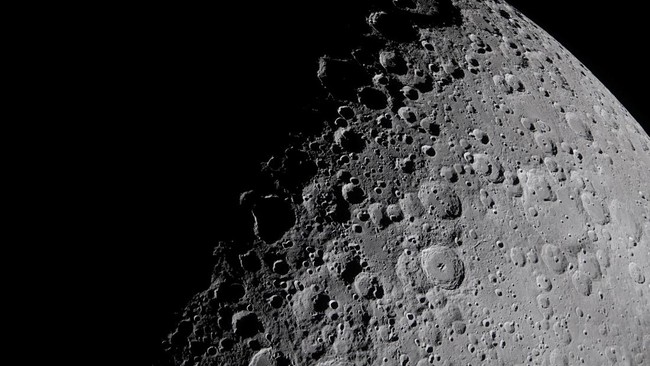
China has successfully established a two-way laser communication link between Earth and the Moon across a distance of more than 400,000 kilometres. The technology enables high-speed data transmission in cislunar space, the region between Earth and the Moon.
According to a report by Science and Technology Daily, the achievement marks China’s first high-speed two-way laser communication in the cislunar region. The technology is projected to support crewed lunar landing missions, the construction of a lunar research station, and deep space exploration.
The mission was led by the Technology and Engineering Center for Space Utilisation under the Chinese Academy of Sciences. The research team used a satellite operating in a distant retrograde orbit to carry out the laser communication tests.
Laser communication technology transmits information using laser beams. It offers several advantages, including large bandwidth, high speed, highly precise transmission direction, and strong security.
However, the technical challenges grow with distance. Communication between Earth and the Moon, for instance, requires the laser to be aimed with extreme precision from around 400,000 kilometres away.
The report likened the process to directing a very thin beam of light through a fast-moving “eye of a needle” from 400,000 kilometres away. The slightest angular deviation on the transmitter’s side could cause the laser beam to miss its target by several kilometres.
The research team therefore had to account for a range of factors, from the satellite’s orbit and telescope assembly errors to atmospheric refraction and the laser’s travel time.
By taking these factors into account, the team managed to keep the satellite in orbit and the ground-based telescope continuously aligned despite both being in motion. This ensured the laser beam could reach its target accurately.
The next challenge arose as the laser signal travelled more than 400,000 kilometres. By the time it reached Earth, the signal had become extremely faint, leaving only a handful of photons.
The telescope on Earth had to capture this very weak signal amid interference from moonlight, starlight and city lights. To overcome this, the team used single-photon detectors with very high sensitivity and developed signal recognition algorithms.
The technology allowed researchers to separate valid signals from a large amount of interference, or noise, Global Times reported on Thursday (3 September 2026).
In terms of speed, the team also achieved a breakthrough in data processing. The experiment produced a speed of 1.25 Mbps on the uplink and reached 100 Mbps on the downlink.
Yang Lei, a researcher at the centre, illustrated the significance of this speed improvement. He cited the example of downloading an 8K high-resolution image of the lunar surface.
With a traditional 5 Mbps microwave connection, downloading such an image takes around four to five minutes. With 100 Mbps laser communication, it takes only about 12 seconds.
“The information highway between Earth and the Moon has now been opened. In the future, we will be able to obtain more scientific data of original value,” Yang said, as quoted in the report.