
China hopes Middle East escalation will not continue
Beijing (ANTARA) - The Chinese government hopes the escalation in the Middle East will not continue amid the exchange of attacks between the United States and Iran, particularly concerning traffic through the Strait of Hormuz.
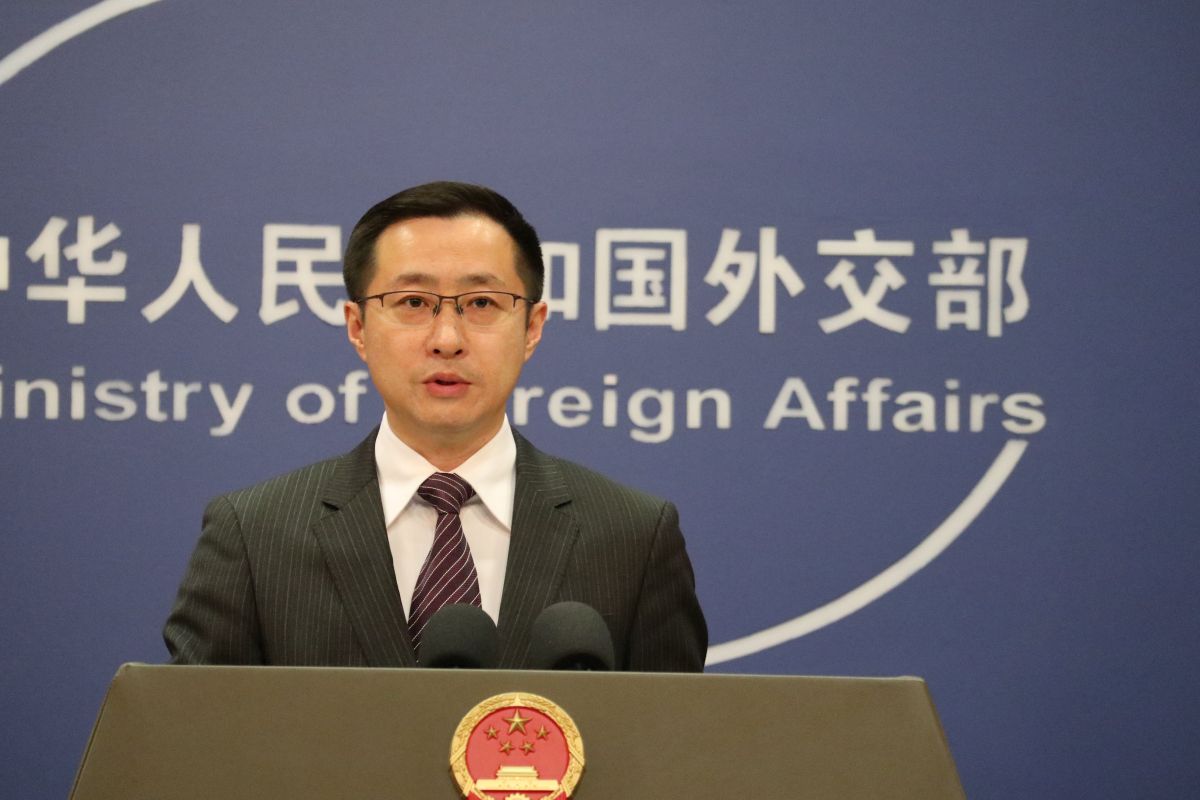
“China is deeply concerned about the latest escalation in the Middle East and Gulf region. We stand ready to continue acting on the four proposals put forward by President Xi Jinping, to make further efforts to facilitate a cessation of fighting, and to work tirelessly to de-escalate the situation and restore peace in the region,” said Chinese Foreign Ministry spokesperson Lin Jian at a press conference in Beijing on Thursday (23 July).
The United States and Iran had in fact signed an agreement on peace and the cessation of hostilities, which began at the end of February, on 18 June 2026.
However, since 8 July, US forces have launched renewed waves of attacks against Iran.
“The results of the negotiations did not come easily, further fighting benefits no one, and the sovereignty, security and territorial integrity of the countries in the region must be respected and upheld,” Lin Jian added.
The parties concerned, Lin Jian said, need to remain calm, exercise restraint, cease hostilities, resume communication and dialogue, resolve disputes through political and diplomatic means, and strive for a comprehensive and permanent ceasefire as soon as possible.
The US Central Command (CENTCOM) stated that the attacks were a response to Iran’s actions against commercial vessels transiting the Strait of Hormuz.
In retaliation, Iran launched attacks on a number of US military bases in the Middle East. President Donald Trump subsequently declared that the ceasefire between the United States and Iran was no longer in effect.
On Wednesday evening (22 July), CENTCOM announced it had completed a new series of strikes against Iranian military targets, marking the twelfth consecutive night of military aggression against Iran.
CENTCOM added that the strikes targeted Iran’s maritime capabilities, missile and drone storage facilities, various coastal surveillance posts, and a number of air defence assets.
“These attacks further weaken Iran’s ability to attack civilian sailors and commercial vessels,” CENTCOM said.
In addition, CENTCOM said US forces had rerouted nine commercial vessels and disabled one ship in an effort to prevent vessels from entering or leaving ports in Iran.
More than 50,000 US military personnel, CENTCOM continued, remain deployed across the Middle East region and are in a state of high alert, focused, lethal and ready.
Iranian state media reported that US missiles struck locations near the cities of Ahvaz, Ramshir and Andimeshk in western Iran, hit a power plant near the Bushehr nuclear power plant in southern Iran, and killed two people in the town of Shalamcheh on the Iran-Iraq border.
On the same Wednesday, Iranian Foreign Minister Seyed Abbas Araghchi said on the social media platform X that Iran would adopt an “eye for an eye” defence doctrine.
“Any aggression against Iran, including our infrastructure, will be met with a strong and decisive response,” Araghchi said.