
China hopes ASEAN rejects external interference in South China Sea negotiations
Beijing (ANTARA) - The Chinese government supports the completion of the Guidelines on the Code of Conduct (Code of Conduct or CoC) for the South China Sea with ASEAN countries by the end of this year but requests that there be no interference from external parties in the talks.
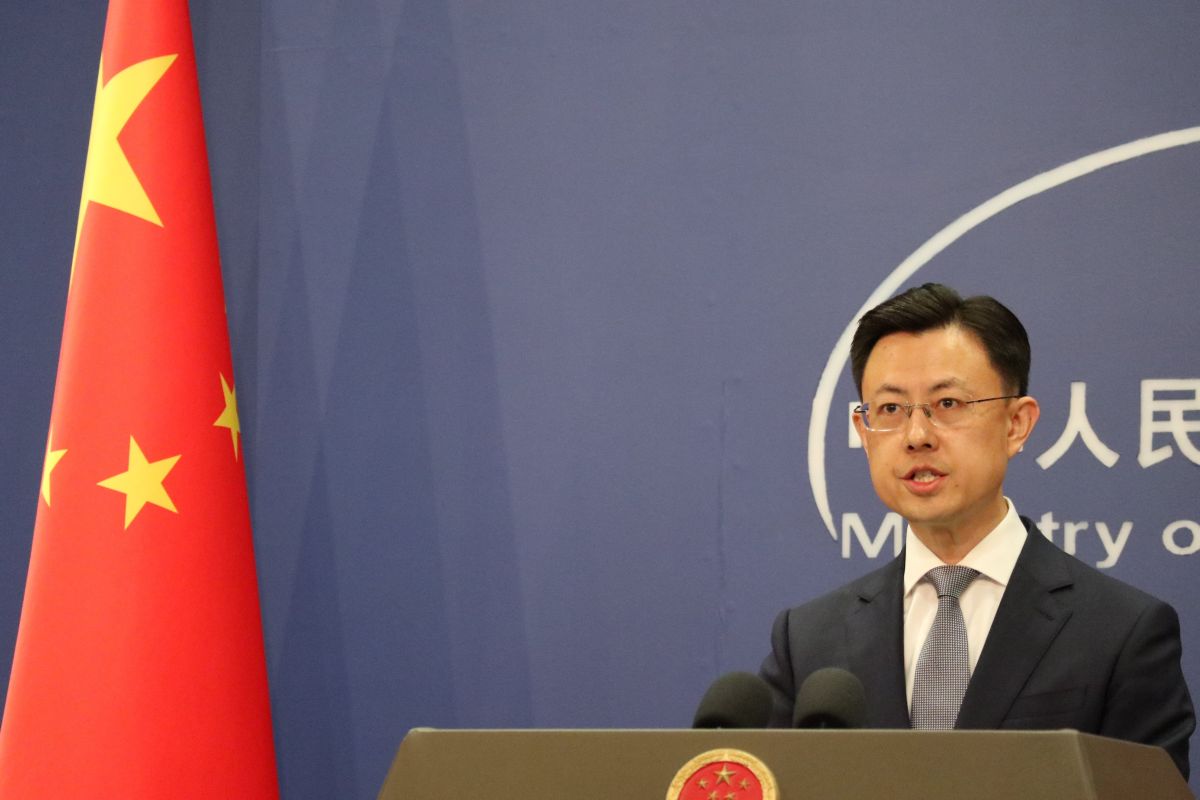
“China is conducting close consultations with ASEAN countries regarding the Code of Conduct text. We hope that all parties can adhere to our common goals, focus on shared views, reject interference, and strive to achieve the Code of Conduct as soon as possible,” said Spokesperson for the Chinese Ministry of Foreign Affairs Guo Jiakun during a press conference in Beijing on Monday.
In the Joint Declaration of ASEAN Leaders on Maritime Cooperation signed at the 48th ASEAN Summit in Cebu, Philippines, on Friday (8/5), ASEAN once again urged the swift completion of negotiations on the Guidelines on the Code of Conduct (CoC) in the South China Sea to manage disputes and reduce tensions in the contested waters.
The ASEAN leaders affirmed that regional maritime cooperation will be implemented in accordance with the UN Charter, the 1982 United Nations Convention on the Law of the Sea (UNCLOS), and other international laws and norms.
ASEAN also called for accelerating the completion of effective CoC negotiations in the South China Sea, as agreed by ASEAN Foreign Ministers and China in 2023.
“The formulation of the Code of Conduct in the South China Sea (CoC) is an important step in implementing the Declaration on the Conduct of Parties in the South China Sea (DoC), and also an important agreement between China and ASEAN countries,” added Guo Jiakun.
This, Guo Jiakun explained, will help the parties to better manage differences, promote cooperation, and maintain peace and stability in the South China Sea.
In the declaration agreed upon last week, ASEAN called for the “full and effective implementation” of the Declaration on the Conduct of Parties in the South China Sea (DoC), signed on 4 November 2002 by ASEAN countries and China, to maintain peace and stability in the South China Sea.
At the press conference following the conclusion of the summit on Friday, Philippine President Ferdinand R. Marcos Jr. expressed optimism that a Code of Conduct (CoC) on the South China Sea would be agreed upon by the end of the year and acknowledged that the situation in the South China Sea is becoming “increasingly difficult to understand.”
“So, once again, that is one of our aspirations as the ASEAN Chair for 2026, that by the end of the year, we really have a code of conduct. You know, ASEAN member countries are all different, they have different approaches when it comes to the People’s Republic of China, when it comes to Beijing,” he said.
China claims a number of coral islands in the South China Sea, such as the Spratlys (Nansha), Paracels (Xisha), Pratas (Dongsha), and Macclesfield Bank (Zhongsha), as part of its jurisdiction, but ASEAN countries – Brunei Darussalam, Malaysia, Vietnam, and the Philippines – also claim those areas.
To resolve the disputes in the South China Sea, in 2002, ASEAN and China signed the Declaration on the Conduct of Parties (Declaration of Conduct or DoC), which contains commitments to “promote conditions conducive to a peaceful and long-term solution to differences and disputes among the relevant countries.”
However, agreement on a binding Code of Conduct (CoC) framework has yet to be found.
As the party most frequently experiencing direct conflicts with the Chinese Coast Guard in the South China Sea, the Philippines, which will serve as ASEAN Chair in 2026, has made accelerating the completion of the South China Sea CoC a priority agenda item.