
China highlights UK plans to raise electric vehicle tariffs
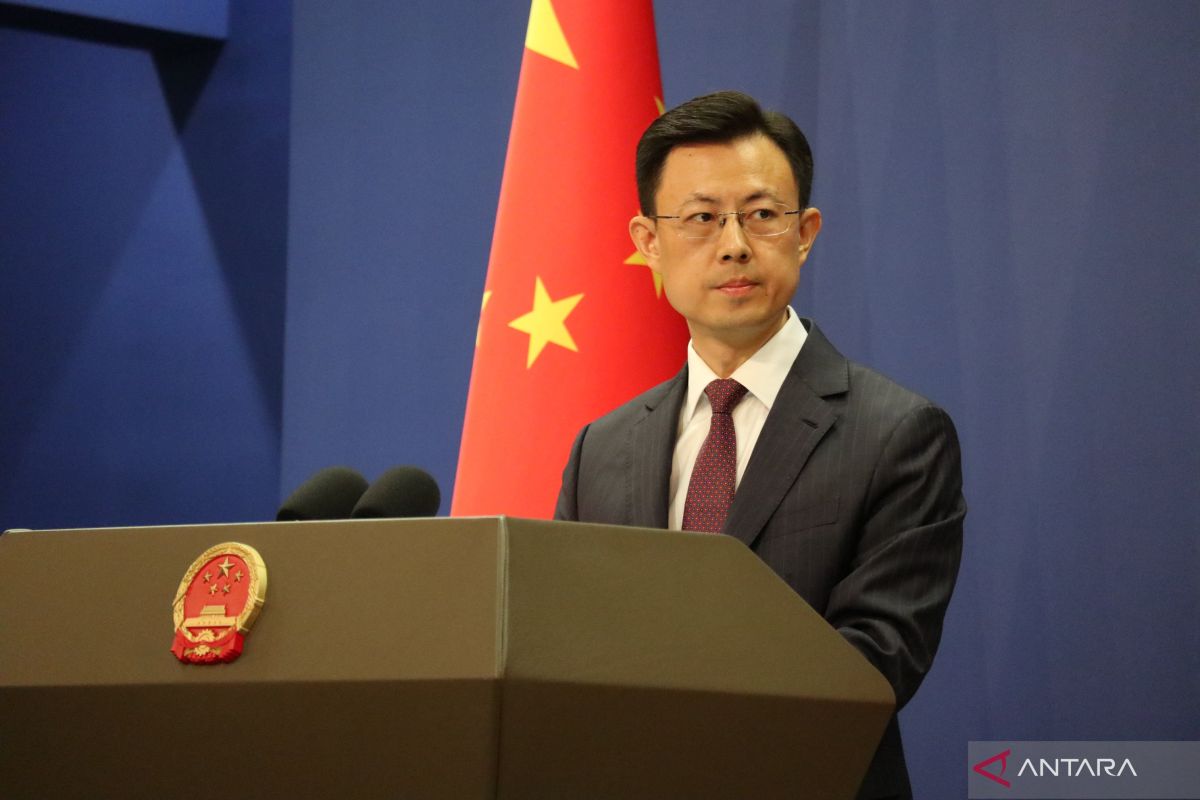
Beijing (ANTARA) - The Chinese government has responded to the United Kingdom’s plan to increase tariffs on Chinese electric vehicle imports, as well as proposals from Germany and France to grant the European Union new trade enforcement powers.
“I must emphasise that economic and trade relations are essentially about leveraging the comparative advantages of each party to achieve mutual benefits,” stated Ministry of Foreign Affairs spokesperson Guo Jiakun in a written statement on the ministry’s website, quoted on Wednesday.
The UK is considering imposing higher tariffs on Chinese car imports to align with European Union (EU) policies and to strengthen its position to be included in new regulatory drafts aimed at protecting European manufacturing sectors, including automotive and chemicals.
The EU has discussed this tariff issue with the UK as part of discussions regarding the ‘Made in Europe’ regulatory draft, known as the Industrial Accelerator Act.
Currently, the UK only imposes a standard 10 per cent import duty on Chinese electric vehicles. In contrast, since 2024, the EU has implemented additional duties of up to 45 per cent, while the US has applied a 100 per cent tariff.
“China’s electric vehicle (EV) industry offers competitive options for global consumers, including in the UK, and contributes to the green and low-carbon transition, while representing high-quality production capacity with significant market demand,” Guo Jiakun added.
The EU considers that the UK needs to implement tariffs to create a level playing field to qualify for the scheme and to match the tariffs of up to 45 per cent that the EU has imposed on Chinese electric vehicles since October 2024.
Within the EU, several Chinese brands are expanding through hybrid vehicles, which have not yet been subject to additional levies. Meanwhile, companies such as BYD have also begun building local production facilities to avoid these duties.
If the tariffs are indeed implemented, the move could represent a shift from previous government policy, given that the UK has consistently argued that trade barriers like those applied by EU member states are unnecessary, as the UK does not face a large trade deficit with China.
EU nations are concerned about the increase in Chinese trade with the region, noting that Chinese exports to the EU include not only electric vehicles but also components, which has the potential to erode local industry.
The spokesperson added that, beyond electric vehicles, France and Germany have also proposed granting the European Commission the authority to establish new EU trade instruments. This would allow the Commission to act swiftly against countries whose economic practices cause serious disruptions to European markets, such as dumping practices, massive subsidies, and restrictions affecting access to essential supplies.
While the French-German proposal does not officially name China as a target, it aligns with long-standing European concerns regarding China’s industrial policies.
Under the proposal, the Commission could initiate retaliatory measures unless a qualified majority of EU member state governments votes to block them.
“It is hoped that the European Union can work with China towards the same goal and resolve each party’s concerns through dialogue and consultation. In doing so, both parties can jointly maintain the stability and smoothness of global industrial and supply chains, while promoting the healthy and stable development of China-EU economic and trade relations,” said Guo Jiakun.
He emphasised that the industrial and supply chains of China and the EU are highly integrated and interdependent, and that their economic and trade relationship is mutually beneficial.
EU leaders are scheduled to discuss trade relations with China at their summit in Brussels on 15-16 October 2026. Meanwhile, EU Trade Commissioner Maroš Šefčovič is expected to hold talks with Chinese officials on Wednesday (7/10).