
China Furious Over Japan's Weapons Export Revision, Potentially to 17 Countries
The Chinese government has firmly stated that Japan’s decision to open the floodgates for weapons exports is a dangerous move. On Tuesday (21 April 2026), the Japanese government revised regulations on restrictions for exporting major weapons systems (alutsista), now allowing exports to 17 partner countries.
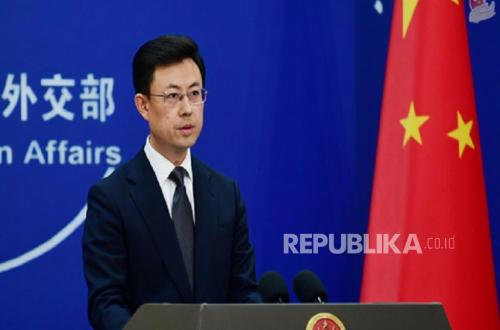
“China expresses deep concern. The recent dangerous steps taken by Japan in the military and security fields contradict their own claims of ‘dedication to peace’ and their adherence to a ‘defence-only orientation’ policy,” said Spokesperson for the Chinese Foreign Ministry Guo Jiakun during a press conference in Beijing on Tuesday (21 April 2026).
Japan now permits overseas arms sales to build its defence industry and deepen cooperation with defence partners. The changes, approved by Prime Minister Sanae Takaichi’s cabinet and the National Security Council, mark a significant shift in the defence policy of the Land of the Rising Sun.
However, Japan has long positioned itself as a “peace-loving nation” under its Constitution that renounces war, since its defeat in World War II. The weapons export revision targets the “three principles on transfer of defence equipment and technology” along with their implementation guidelines, eliminating export restriction rules.
Nevertheless, only five categories of non-combat defence equipment can be exported. These include rescue, transportation, early warning, surveillance, and mine-sweeping equipment.
“Many experts have voiced concerns that Japan is reviving its ‘war machine’ and ‘exporting war’. Japan’s accelerating remilitarisation process has now become a reality, accompanied by a concrete roadmap and tangible steps being implemented,” said Guo.
According to Guo, the international community, including China, will remain vigilant and firmly oppose Japan’s reckless neomilitaristic actions. Moreover, Japan’s Constitution also imposes strict limitations on its military power, the right to engage in hostilities, and the right to wage war.
“The Japanese militarists, during their aggression and expansion in the last century, committed horrific crimes against China and other neighbouring countries in Asia. Post-aggression documents explicitly require Japan to be ‘completely disarmed’ and not maintain industries that ‘enable it to rearm for war’,” said Guo.
After World War II, Guo noted, Japan established even stricter norms such as the “exclusively defence-oriented principle” to limit the development of military power and weapons exports. Although the Japanese rule revision in principle prohibits exports of weapons to countries embroiled in conflicts, it also opens room for exceptions “in special circumstances”.
Japan can consider security needs and US military operations in the Indo-Pacific region when supplying weapons to partner countries. Based on the changes, defence equipment will be categorised into two groups: “weapons” and “non-weapons”, with classification based on the presence or absence of lethal or destructive capabilities in the equipment.
Exports of non-weapon items, such as early warning and control radar systems, face no restrictions. Meanwhile, exports of weapons, including fighter jets, destroyers, and missiles, are limited to countries that have signed agreements with Japan on protecting classified information related to defence equipment and technology.
Currently, Japan has agreements with 17 countries, including Indonesia, the United States, and the United Kingdom. These countries must also obtain approval from the National Security Council, and the government will monitor how those weapons are managed afterwards.