
China Flags Uncertainty in Doing Business in Indonesia
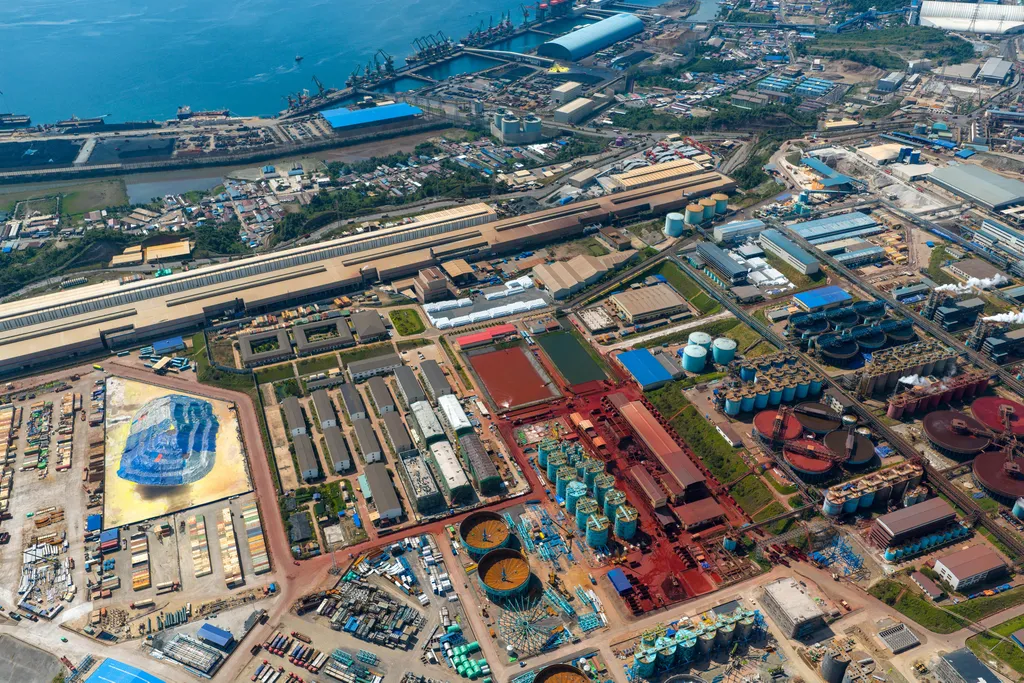
Chinese companies hope Indonesia’s policies will be more stable and consistent, and that the country will foster a business-friendly environment.
In business terms, Indonesia and China have many complementary strengths. However, Beijing has highlighted uncertainty in Indonesia’s business climate as an obstacle to cooperation between the two countries.
Economic cooperation between China and Indonesia has grown closer in recent years. For Jakarta, Beijing is an important partner. China has been Indonesia’s largest trading partner for 13 consecutive years.
China is also one of Indonesia’s largest investors. The Ministry of Investment and Downstreaming/Investment Coordinating Board (BKPM) recorded cumulative direct foreign investment from China of US$34.44 billion across 68,993 projects during 2021–2025. Chinese investment grew by 37 per cent over that period.
Niu Liangliang, head of the China Council for the Promotion of International Trade (CCPIT) representative office in Indonesia, said that despite this progress, China saw problems with Indonesia’s business climate. The biggest obstacles concerned regulation, procedures and legal compliance.
“From a non-business perspective, there have been many regulatory changes in Indonesia. Chinese companies hope Indonesia’s policies will be more stable and consistent, with a business-friendly environment,” Niu said.
He made the remarks at the Global South Dialogue–China-Indonesia Roundtable, organised by Global Times in Jakarta on Monday, 19 October 2026. Speakers at the event also included Kompas daily editor-in-chief A Haryo Damardono and former Indonesian Minister of Tourism and Creative Economy Sandiaga Uno.
Niu said Chinese companies hoped Indonesia would adopt clear and transparent procedures. Businesses also wanted clearer and more consistent explanations of their legal compliance obligations.
“These are the issues Chinese companies are most concerned about, for example environmental impact assessments (amdal) and local content requirements (TKDN). Some companies are unfamiliar with Indonesian labour laws and regulations, so they face compliance risks and incur costs as the process takes time,” Niu said.
Chinese companies also had concerns about standards across the supply chain, from upstream to downstream, Niu said. When companies lack raw materials, not all available suppliers can provide materials of the same quality.
“Companies are looking at how Indonesia can develop high-quality suppliers. They are also seeking the best local suppliers, but sometimes the options are not ideal. So there is still significant scope for investment in Indonesia’s supply chains,” Niu said.
Jona Widhagdo Putri, a special adviser to Indonesia’s National Economic Council, said economic cooperation between Indonesia and China required better alignment of strategies. This alignment should be based on shared development goals: China’s modernisation and Indonesia’s Golden Indonesia 2045 vision.
Indonesia’s and China’s industries are, in fact, complementary. Indonesia, for example, produces nickel and other natural resources that are important to the electric-vehicle battery supply chain. The two countries are also transferring technology in a range of strategic sectors.
However, Jona stressed that investment in hard infrastructure must go hand in hand with investment in soft infrastructure. Both countries need to invest in human resource development.
“A country cannot advance by investing only in physical infrastructure. You must also invest in the people who make policy, build industries, and conduct research and develop technology,” Jona said.
There is, however, an imbalance in the two countries’ commitment to investing in human resources. This gap remains an obstacle to deepening economic cooperation.
Adi Harsono, deputy head of the China Committee at the Indonesian Chamber of Commerce and Industry (Kadin), cited the Whoosh high-speed rail project as a major bilateral investment in physical infrastructure. China, however, was better prepared in terms of human resources.
“China has five specialist transport universities, including in Beijing, Shanghai and Chengdu. Indonesia does not yet have many universities specialising in transport. If we want to extend the KCIC line to Surabaya, we are concerned that Indonesia may lack a sufficient human-resource base. This remains a challenge,” Adi said.
Christine Susanna Tjhin, director of strategic communications and research at Gentala Institute, said deeper Indonesia-China economic cooperation would benefit more than just bilateral relations. The partnership could serve as a model for cooperation among countries of the Global South amid changes to regional and global governance.
ASEAN and BRICS could provide platforms for broader cooperation. Indonesia is a traditional leader in ASEAN, with China as a partner, while China is a founding member of BRICS and Jakarta is a member.
“The two countries can promote concrete cooperation through these forums, including in finance. ASEAN and BRICS are both seeking to reduce their dependence on transactions in particular currencies,” Christine said.
Christine added that think tanks and the media should also help strengthen cooperation between China, ASEAN and countries of the Global South. “We have already seen various transformations in the role of both in facilitating communication and consolidating knowledge assets,” she said.
In a separate session, Kompas editor-in-chief Haryo Damardono said Indonesian media still faced challenges in obtaining information from Chinese companies. Chinese firms were less open than companies from countries such as Japan or the United States.
“In a Kompas public-perception survey on investment, the Middle East ranked at the top, while China was at the bottom. Chinese companies need to do better at providing information transparently,” Haryo said.
Source: jawawa.id (https://jawawa.id/newsitem/china-flags-uncertainty-in-doing-business-in-indonesia-1792489824)
Originally published by kompas.id (https://www.kompas.id/artikel/china-soroti-ketidakpastian-berbisnis-di-indonesia?open_from=Internasional_Page), translated from Indonesian