
China Faces Dilemma: US Dollar or Helping Iran
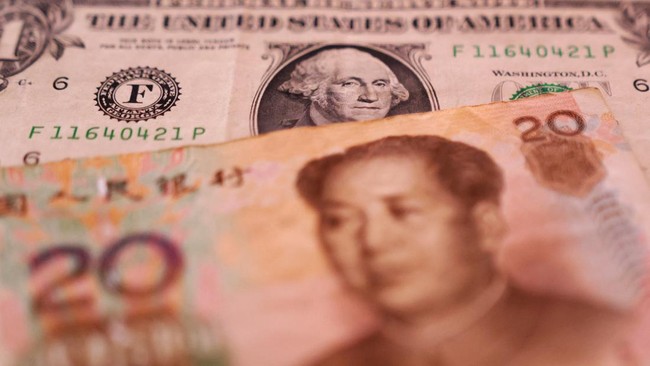
China faces a major dilemma after the United States threatened to cut off access to the US financial system for parties that help Iran evade sanctions.
On one hand, China still heavily relies on the US dollar to support global trade, but on the other, Beijing has begun strengthening alternative financial systems to reduce the risk of pressure from Washington.
US Treasury Secretary Scott Bessent said entities that facilitate money laundering or sanctions evasion on behalf of Iran risk losing access to the US financial system.
“If they facilitate transactions and become part of the ecosystem that turns Iranian oil into money, into a tool of oppression, then they will be targeted,” Bessent said when asked about Chinese banks, as quoted by CNBC International on Wednesday (26/8/2026).
China responded by stating it would take necessary steps to protect its interests. A spokesperson for China’s Ministry of Foreign Affairs reiterated Beijing’s rejection of unilateral sanctions that it considers to have no basis in international law or mandate from the UN Security Council.
The dilemma arises because China is the largest buyer of Iranian oil. Data from Kpler cited by Reuters shows China purchases more than 80% of Iranian oil shipped by sea, making the trade relationship between the two countries a key factor in the effectiveness of Washington’s economic pressure campaign.
Through “Operation Economic Outcast”, President Donald Trump’s administration has expanded pressure on Iran’s economic network while warning other countries to halt business ties with Tehran. However, Washington has so far not imposed sanctions on China’s largest financial institutions linked to Iranian oil trade.
Amid these threats, China retains a strong interest in maintaining access to the US dollar system. The dollar remains the primary currency in international trade and finance, so cutting off access for major Chinese banks could place significant pressure on the country’s economic and trade activity.
However, China has also long been building protection against such risks. The Cross-Border Interbank Payment System (CIPS) has become one instrument to reduce dependence on dollar-centric financial infrastructure, although that does not mean Beijing wants to completely abandon the US currency.
Peter Alexander, managing director of Shanghai-based advisory firm Z-Ben, said the development of the system is a form of financial diversification for China.
“This is a geopolitical hedging instrument,” Alexander said, describing CIPS as one way Beijing is preparing for possible financial pressure from Washington.
Tianchen Xu, senior economist at The Economist Intelligence Unit, said dollar dominance makes cutting off access a double-edged sword.
“China clearly wants to remain in the dollar system that benefits its trade engine, but that does not mean it will do everything to comply with ever-expanding US sanctions,” he said.
“Beijing has not even begun to take a hard line against America,” Alexander said, adding that the main issue ahead is not just what Washington can do, but whether the US will actually take action that risks shaking the economic relationship between the two countries.