
China Expands Military Footprint in Laos: What are the Implications for Southeast Asia?
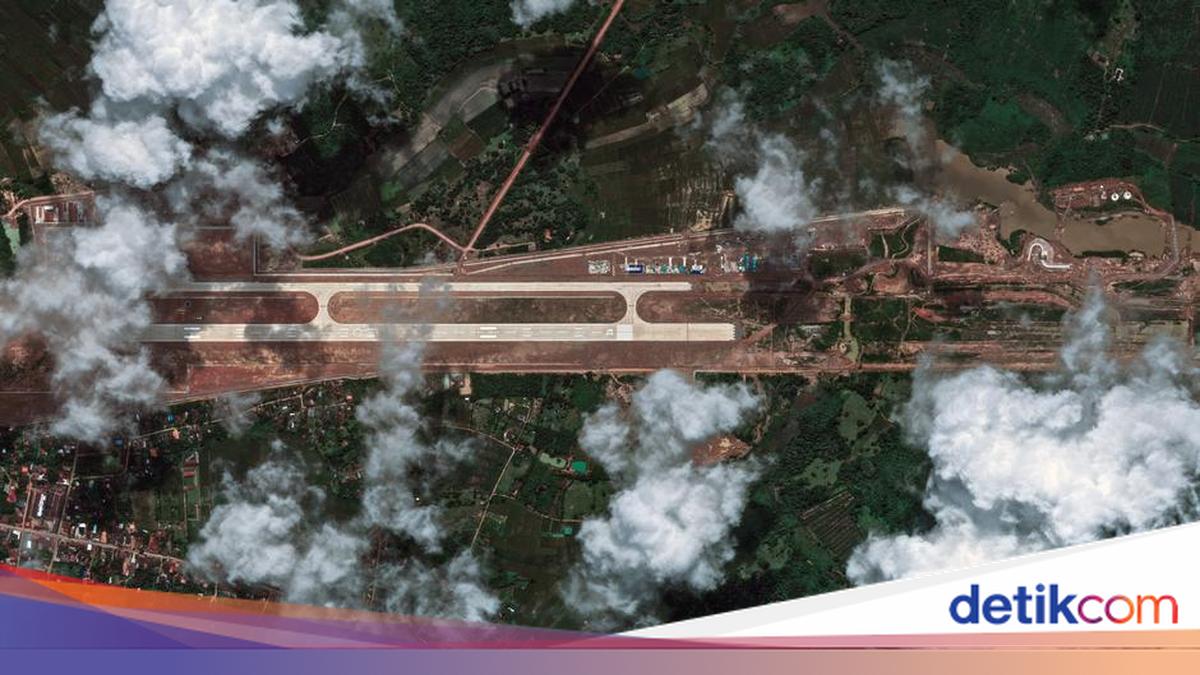
China has opened new military training and logistics facilities in Laos, expanding its security presence in the region. The facilities also have the potential to provide the Chinese Air Force with its first specialised overseas foothold.
The China-Laos Joint Support and Training Centre at Ban Keun Airport, north of the capital Vientiane, officially began operations late last month alongside the opening of the China-Laos Friendship Aviation Academy. Beijing stated that the centre will primarily be used to assist in training pilots of the Lao Air Force, with management and operations conducted jointly by both nations.
The opening of the facilities in Ban Keun simultaneously expands China’s network of overseas military facilities, which has remained relatively limited thus far. Beijing established its first overseas military base in Djibouti, on the Horn of Africa, in 2017. Meanwhile, the expansion project of the Ream Naval Base in Cambodia, funded by China, was officially inaugurated last year, providing Chinese forces with access to strategic facilities near the South China Sea.
Laos and Cambodia have long been viewed as China’s two closest political partners in Southeast Asia. Beijing’s military cooperation with both countries has also grown rapidly in recent years. “Both institutions… are not aimed at any third party and aim to help deepen practical cooperation between the two armed forces and contribute to maintaining peace and stability in this region,” the Chinese Ministry of Defence said in a public statement.
Ban Keun: A new military foothold for China in Southeast Asia?
Hunter Marston, Southeast Asia Programme Director at the Australia’s Lowy Institute, told DW that the infrastructure available at Ban Keument provides Beijing with options to expand the use of the facilities for military purposes in the future. “The focus may indeed be on joint exercises, but these facilities have the potential to become more permanent bases. If Beijing chooses to use it as a permanent base, Beijing has enough political influence over Vientiane to demand exclusive access in the future,” he added.
Over the last two decades, Laos has become increasingly dependent on investment and financing from China. Critics frequently accuse Beijing of engaging in what is termed “debt-trap diplomacy.” The International Monetary Fund (IMF) estimated that Laos’ public debt reached approximately 81% of GDP last year, with China serving as the country’s largest bilateral creditor. In 2020, the Chinese state-owned enterprise, China Southern Power Grid, reportedly acquired a 90% stake in the Electricite du Laos Transmission Company, which operates much of the Lao electricity transmission network.
A more permanent Chinese military presence in Laos also has the potential to add a new dimension to the strategic competition between Beijing and Washington in Southeast Asia. The United States currently maintains much broader military access in the Indo-Pacific region, primarily through its alliances with the Philippines, Japan, and Australia. Historically, Beijing has lacked a comparable network of overseas facilities. However, Ban Keun, along with Ream, has the potential to gradually close that gap by providing additional locations for the Chinese military to train, maintain equipment, and perhaps store supplies.
Vietnam wary of Beijing’s influence in neighbouring country
Euan Graham, a senior researcher at the Australian Strategic Policy Institute, told DW that these developments are particularly concerning for Vietnam. Hanoi and Beijing maintain close relations, both between their governments and economically. However, they remain rivals in the South China Sea, where overlapping territorial claims repeatedly trigger tensions.
Vietnam also traditionally views Laos and Cambodia as strategic buffer zones along the western side of its territory. For decades, Hanoi has sought to maintain significant political and military influence in both countries. “Hanoi has always viewed the Indochinese Peninsula as part of its sphere of influence, serving as a buffer zone against external aggressors, especially given the narrowness of central Vietnam,” said Graham. “Vietnam is now faced with the alarming possibility of being strategically encircled by China. The new airbase in Laos will certainly complicate Vietnam’s defence planning.”
How strategic is China’s military facility in Laos?
Nevertheless, some analysts warn against overstating the strategic significance of Ban Keun. The geographical conditions of Laos are considered to limit the military value of the facility. Collin Koh, a senior researcher at the S. Rajaratnam School of International Studies, Nanyang Technological University Singapore, told DW that China can still expand its presence in the facility gradually.
According to Koh, Beijing could increase the number of personnel, particularly advisers and instructors, and deploy training aircraft before eventually bringing in more advanced aircraft. The facility could also be used to store equipment and supplies. However, “the operational utility for the projection of PLA military power in Southeast Asia is limited by the landlocked nature of Laos.”
Unlike Ream, Ban Keun has no access to the sea. At the same time, Chinese military aircraft already operate from much larger and more complete bases in southern China. Koh said Vietnam will likely continue to monitor Ban Keun closely, especially regarding its potential role in the event of a conflict in the South China Sea. However, the geographical position of the facility does not provide a significant operational advantage for the Chinese military.
Source: jawawa.id (https://jawawa.id/newsitem/china-expands-military-footprint-in-laos-what-are-the-implications-for-southeast-asia-1791356435)
Originally published by detikcom (https://news.detik.com/dw/d-8696208/china-perluas-jejak-militer-di-laos-apa-pengaruhnya-bagi-asia-tenggara), translated from Indonesian