
China Expands Battery Industry into Electric Ships, Indonesia Remains Nickel Supplier
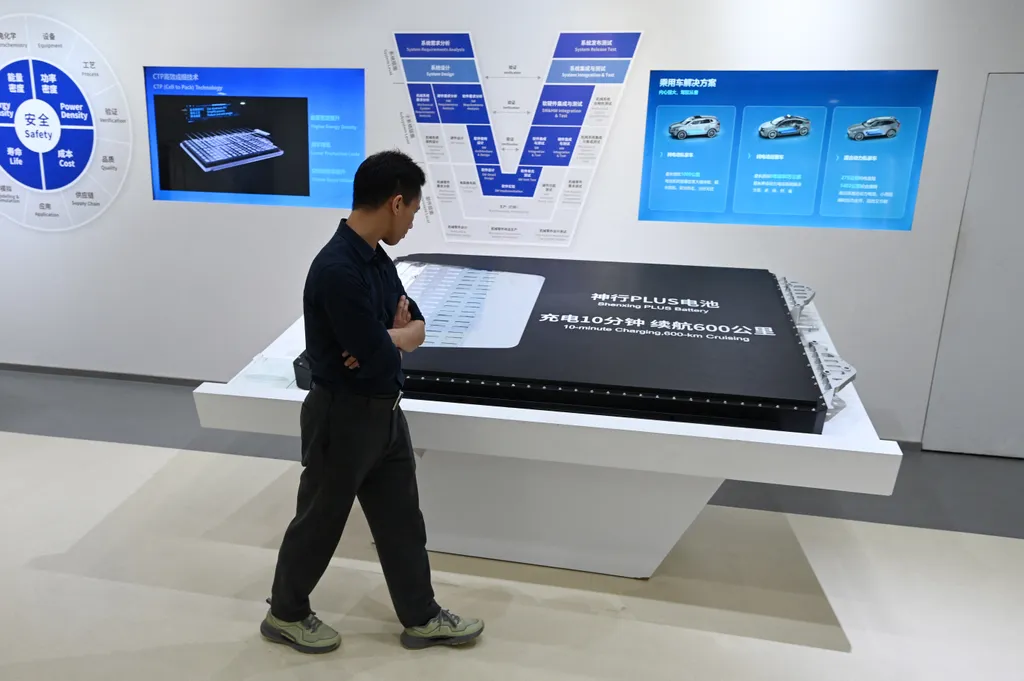
China’s battery industry is no longer limited to electric vehicles. Battery technology is now expanding into electric ships and energy storage systems, with Contemporary Amperex Technology Limited (CATLE) emerging as a key player.
Amidst this expansion, Indonesia continues to supply one of the essential raw materials: nickel. However, the challenge remains to ensure that Indonesia does not remain solely a supplier of raw materials as the battery value chain continues to move downstream.
Contemporary Amperex Technology Limited (CATL), headquartered in Ningde, Fujian Province, China, has been capable of producing batteries for ships for the past four years. A CATL spokesperson stated that, through its subsidiary Shidai Dianchuan, CATL has successfully distributed approximately 1,000 marine batteries per year. Shidai Dianchuan was established in 2022 specifically to produce electric ships.
“Regarding the current target market, our primary focus currently includes electric cruise ships operating in the Yangtze Three Gorges and the Pearl River Delta region,” a CATL spokesperson told a group of ASEAN journalists at CATL’s headquarters in Ningde, China, on Tuesday (22/09/2026).
The spokesperson emphasised that CATL views the market for all types of electric vehicles in Southeast Asian countries as immense, with potential for high growth in the coming years.
“Therefore, we are actively promoting cooperation with partners in ASEAN countries, for example, through the establishment of joint-venture factories or investments in raw material processing facilities,” they added.
According to data from the China Automotive Battery Innovation Alliance (CABIA), there are at least 15 leading battery manufacturers in China, with CATL being one of them. CATL holds a market share of approximately 43 per cent, with installed battery capacity exceeding 330 GWh in 2025.
Citing the South China Morning Post (21 September 2026), CATL controlled more than 41 per cent of China’s electric vehicle battery market in August 2026. CABIA data shows that CATL led the EV battery market in China, followed by BYD (21 per cent), CALB (6.51 per cent), EVE Energy (5.95 per cent), and Gotion High-Tech (5.87 per cent).
According to CNBC, China’s battery industry dominance extends to the downstream portion of the supply chain. According to the International Energy Agency (IEA), the country produces approximately 85 per cent of the world’s active cathode materials for EV batteries and over 90 per cent of active anode materials. China also produces 80 per cent of the world’s battery cells.
During the visit to CATL’s headquarters, the spokesperson noted that CATL employs around 6,000 people, with its global R&D workforce reaching 20,000 personnel, including 700 PhD holders and 5,000 master’s degree holders.
With its massive scale of operation, the company manages five production plants in the Ningde region, some of which supply batteries for BMW electric vehicles.
The founding team originally established Amperex Technology Limited (ATL) in 1999, focusing on batteries for consumer electronics such as mobile phones and iPhones. Building on that foundation, the team established CATL in 2011 to further expand the boundaries of energy technology. Strategic partnerships followed, most notably a major collaboration with BMW in 2012.
“Currently, CATL has expanded to operate six R&D centres worldwide and more than 20 manufacturing plants. CATL’s overseas expansion includes its first international battery plant in Erfurt, Germany, a second facility in Debrecen, Hungary, and technology licensing partnerships in the United States,” said the CATL spokesperson.
When asked about raw material procurement, the spokesperson stated only that supply chain partnerships involve various countries, without elaborating further on specific investments in raw materials with international partners.
For Indonesia, Ningbo Contemporary Brunp Lygend Co Ltd (CBL)—a subsidiary of Guangdong Brunp Recycling Technology Co, Ltd (Brunp) that partners with PT Aneka Tambang Tbk (Antam) and Indonesia Battery Corporation (IBC)—is in the process of constructing the Indonesia Battery Integration Project in Karawang, West Java Province. Brunp is a subsidiary of CATL. The groundbreaking for this project took place in mid-2025.
With a planned investment of nearly US$6 billion, the Indonesia Battery Integration Project covers the entire battery supply chain. This includes nickel mining and processing, battery materials, and battery recycling in the FHT Industrial Area, East Halmahera (North Maluku), as well as battery manufacturing in Artha Industrial Hill (AIH) and Karawang New Industry City in Karawang, West Java.
A group of ASEAN journalists also had the opportunity to visit the offices of Guangxi CNGR New Energy Technology Co Ltd in Qinzhou, Guangxi Province, on Wednesday (16/09/2026). Guangxi CNGR New Energy Technology Co Ltd is a lithium-ion battery manufacturer in China and a subsidiary of CNGR Advanced Material Co Ltd.
At the Guangxi CNGR New Energy Technology Co Ltd office, no company spokesperson was available to answer questions from the ASEAN journalist group; instead, journalists met with company representatives who presented the company’s achievements.
To expand its manufacturing reach and leverage international trade routes, CNGR strategically established operations in Qinzhou in 2021. Its flagship products include ternary precursor materials and integrated battery technologies, such as ternary precursors and lithium iron phosphate (LFP), which are vital components.
Source: jawawa.id (https://jawawa.id/newsitem/china-expands-battery-industry-into-electric-ships-indonesia-remains-nickel-supplier-1790074329)
Originally published by kompas.id (https://www.kompas.id/artikel/industri-baterai-china-kian-maju-indonesia-masih-bergulat-dengan-isu-nilai-tambah?open_from=Section_Terbaru), translated from Indonesian