
China enhances Shenzhou-23 spacecraft window protection against space debris risks
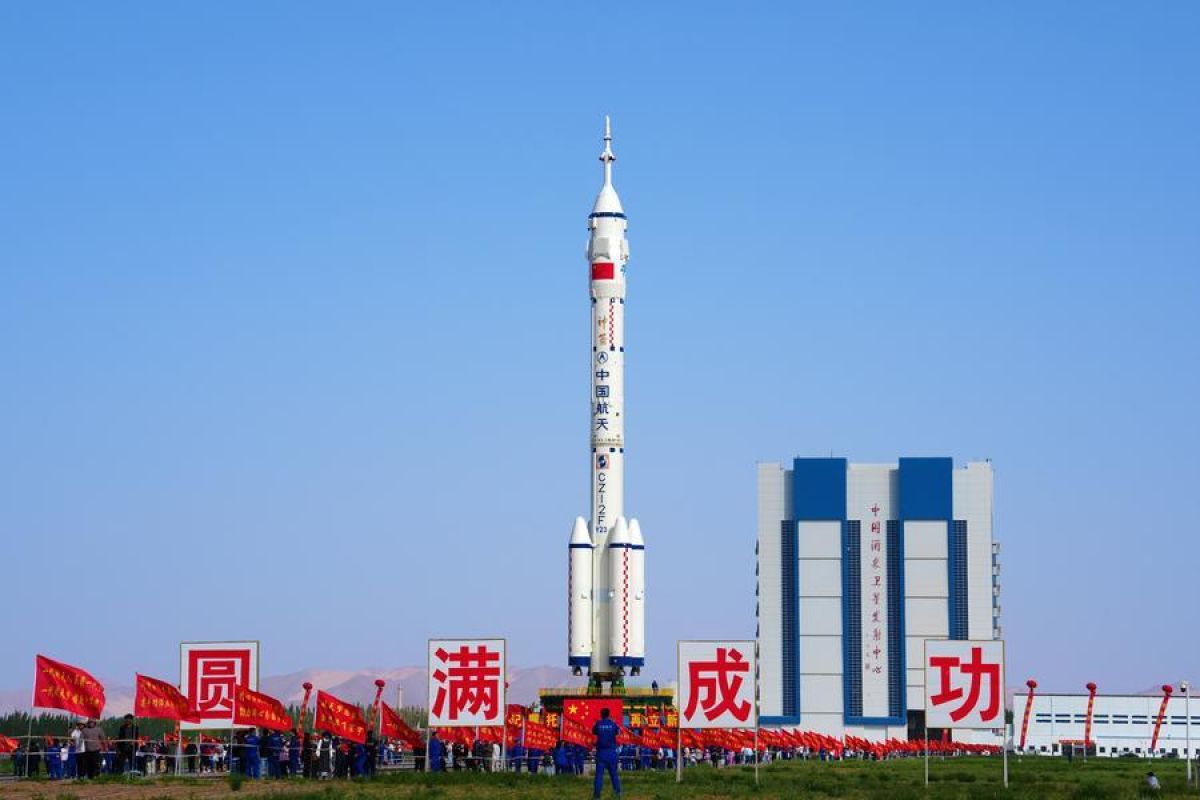
JIUQUAN (ANTARA) — China has enhanced the window protection of the crewed Shenzhou-23 spacecraft to better withstand space debris collision risks, the China Manned Space Agency (CMSA) announced at a press conference on Saturday (23 May), ahead of its scheduled launch on Sunday (24 May).
The upgrade follows suspected impacts on the return capsule window of the Shenzhou-20 spacecraft during its mission.
CMSA spokesperson Zhang Jingbo said China’s first-ever emergency launch mission in its crewed program, conducted late last year, was completed in just 20 days. This success provides valuable practical experience for future missions.
The three Shenzhou-20 astronauts safely returned using the Shenzhou-21 spacecraft on 14 November 2025. On 25 November last year, China launched Shenzhou-22 to provide a return vehicle for the Shenzhou-21 astronauts, who are currently in orbit.
The return capsule of Shenzhou-20, which carried no astronauts, landed safely in northern China on 19 January this year.
Zhang stated that the mission fully validated the “rolling backup” strategy, where one spacecraft-rocket combination is assigned for launch and another serves as a backup for each mission.
In the face of unexpected emergencies, resources were rapidly mobilised, crew return and emergency launch plans formulated, and astronauts safely returned while the backup spacecraft docked with the space station, proving the strategy’s effectiveness for long-term space station operations and offering a model for international emergency response, he added.
The mission also provided deeper insights into space debris risks and orbital protection requirements, Zhang said.