
China Dominates the World’s Undersea Data Centre Patents
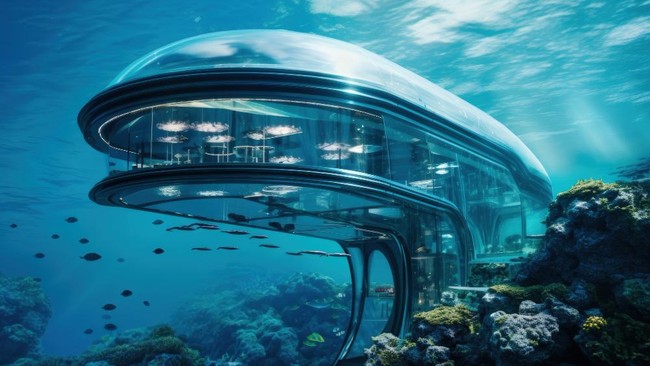
China is demonstrating its dominance in the development of undersea data centres. A study has found that around 80% of the patent documents examined in this field of technology originated from China.
The findings come as the technology industry seeks ways to meet rising computing demand, including for artificial intelligence (AI). One challenge is removing heat from servers without consuming excessive energy.
Reporting by Interesting Engineering on Saturday (14 November 2026) said undersea data-centre technology is moving increasingly towards commercial deployment, having previously focused largely on basic experiments.
China dominates a review of 168 patents
The study, written by Wang Mingfang and Cao Shengwen, was published in the journal Ocean Information Technology and Application on 6 November 2026.
The authors selected 168 core patent documents related to undersea data centres from the period between 2006 and June 2026. Chinese filings accounted for about 80% of the sample.
The study identified four main branches of technology: structural construction; heat and temperature management; energy supply; and operation, maintenance and inspection.
China was considered to have an advantage in engineering for real-world deployment, including modular construction and on-site maintenance.
The large share indicates intense patenting activity in China. However, the number of patents should be distinguished from the ability to build commercial facilities that are economical and reliable.
Why put servers on the seabed?
Servers generate heat while operating. To function properly, that heat must be removed through a cooling system.
On land, this can involve fans, chillers, cooling towers and liquid-cooling systems. All require infrastructure and additional energy.
Undersea data centres seek to use seawater as a medium for absorbing heat. The servers are not left in direct contact with the water.
Instead, the equipment is placed in sealed containers designed to withstand the underwater environment. The modules are then connected to onshore facilities by power and communications cables.
Heat from the servers is transferred through a heat-exchange system to the surrounding seawater. This approach could reduce the energy used for cooling, but it does not automatically reduce the electricity required by processors to perform computations.
China already has a project in Hainan
Deployment in China is no longer limited to designs. On 31 March 2026, People’s Daily reported a commercial undersea data centre in Qingshui Bay, Lingshui, Hainan Province. Capsule-shaped modules have been placed at a depth of about 35 metres.
According to the operator, the project was developed to address land constraints, freshwater needs and high cooling demand in a hot, humid climate.
A representative of Shenzhen HiCloud estimated that, when the first phase is operating at full capacity, it could save about 26,000 tonnes of water and 3.4 million kilowatt-hours of electricity a year compared with a conventional data centre of the same size.
Microsoft tested the technology earlier
Microsoft also developed an undersea data centre through Project Natick. One test took place in waters near Scotland’s Orkney Islands from 2018 to 2020.
Microsoft Research reported that the server failure rate in the Natick Northern Isles module was one-eighth that of the land-based comparison group.
The results point to the potential reliability of sealed underwater systems. However, the findings from one trial do not guarantee the same results across all locations and designs.
Despite the positive findings, Project Natick did not become a Microsoft undersea data-centre business. Interesting Engineering reported that the company confirmed the project’s discontinuation in 2024.
Many patents do not mean control of the entire technology
A dominant share of patent filings should not be confused with control of the market or operational computing capacity.
The World Intellectual Property Organization (WIPO) explains that patent rights are territorial. Protection generally applies in the country or region where a patent is granted, rather than automatically extending worldwide.
The 80% figure is therefore more accurately understood as a measure of China’s dominance in patenting activity within the study’s scope. It does not mean China owns 80% of all operational undersea data centres or controls every technology used in them.
Future success will still depend on the ability to turn research into facilities that are reliable, economical and maintainable over the long term.
Source: jawawa.id (https://jawawa.id/newsitem/china-dominates-the-worlds-undersea-data-centre-patents-1794754265)
Originally published by CNBC Indonesia (https://www.cnbcindonesia.com/research/20261115160649-128-785361/china-kuasai-data-center-bawah-laut-di-dunia), translated from Indonesian