
China Discovers Treasure Trove on the Moon, New Map Holds the Key
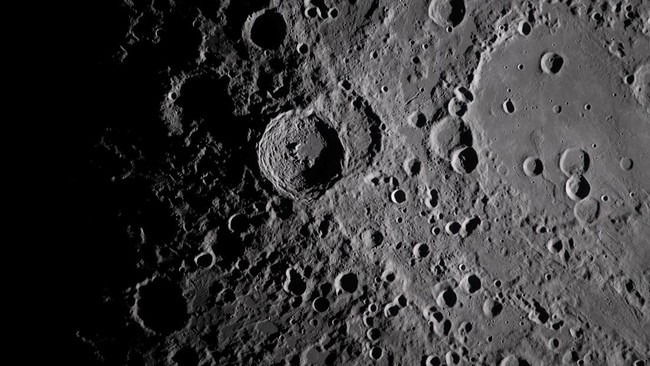
Chinese scientists have successfully completed a geological map of the entire lunar surface at a scale of 1:5,000,000. The map is the first to provide a more detailed global classification of the Moon’s late-stage geological layers and will serve as an important foundation for China’s future lunar exploration missions. Citing Global Times, the achievement was compiled based on the latest data from the Chang’e lunar exploration programme as well as various other lunar exploration missions. The Xinhua news agency reported that the map will provide key scientific support for the construction of China’s lunar research station, landing site selection, and deep space exploration. The lunar geological map measures approximately 280 centimetres by 120 centimetres. It includes detailed mapping of the Moon’s polar regions, identifying more than 13,000 impact craters and 81 basins, as well as classifying 14 types of geological structures and 17 types of rocks. The map compilation team from the Institute of Geology, Chinese Academy of Geological Sciences, stated that the map presents systematic innovation in three main areas by utilising the latest exploration data from the Chang’e missions and other missions, while maintaining a balance between scientific accuracy and ease of use. One important update in the map is the revision of the lunar geological timescale. The researchers updated the starting ages of several major geological periods. The starting age of the Aitkenian Period is now set at 4.33 billion years, the Nectarian Period at 4.17 billion years, while the starting age of the Imbrian Period has been revised to 3.92 billion years. The map also presents, for the first time, a more detailed global classification of the Moon’s late-stage geological layers. In addition, the map updates the inventory of lunar materials with high-resolution mineral distribution data and improved rock classification. Findings from the Chang’e-4 and Chang’e-6 missions led to the identification of gabbronorite rocks in the South Pole-Aitken (SPA) Basin, providing new insights into the deeper interior of the Moon. In terms of visualisation, the scientists developed a special visual system for the 1:5,000,000 scale map. To meet the mapping needs at that scale, the researchers established different minimum representation limits for each geological feature. This approach ensures the map remains easy to read overall while retaining key geological characteristics of important scientific value. Director of the Institute of Geology Yang Zhiming said the newly released lunar geological map will support the construction of China’s lunar research station, landing site selection, and deep space exploration. He also assessed that the map will provide new insights from China in research on the evolution of the Solar System.
Source: jawawa.id (https://jawawa.id/newsitem/china-discovers-treasure-trove-on-the-moon-new-map-holds-the-key-1787795447)
Originally published by CNBC Indonesia (https://www.cnbcindonesia.com/tech/20260827063532-37-762563/china-temukan-harta-karun-di-bulan-peta-baru-jadi-kuncinya), translated from Indonesian