
China Denies Censoring Videos of Nepal Flash Floods, Issues Response
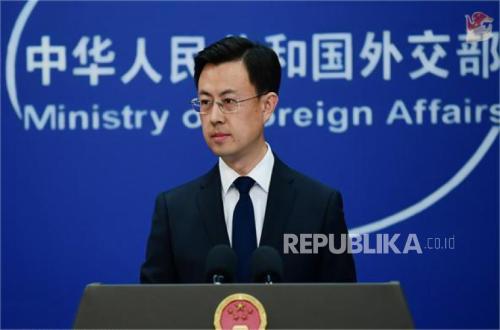
The Chinese government has denied conducting censorship of videos showing the conditions of flash floods and mudslides in Gyirong Port, Xizang Autonomous Region, which borders Nepal. As of Monday (31/08/2026), the death toll from the flash floods and mudslides hitting the Nepal-China border has risen to at least 951 people.
“Intensive search, rescue, and relief operations are still proceeding in an orderly manner in the disaster-affected areas. China has been open, transparent, and timely in releasing information, making slander and disinformation unnecessary and undesirable during disaster response,” said Chinese Foreign Ministry Spokesperson Guo Jiakun during a press conference in Beijing on Monday (31/08/2026).
Guo Jiakun stated that on Saturday (29/08/2026), Chinese Foreign Minister Wang Yi spoke via telephone with Nepalese Foreign Minister Shisir Khanal, explaining that in the face of this disaster, both nations must stand firm together, join hands to overcome difficulties, and demonstrate traditional friendship through concrete actions.
“The Chinese government has provided emergency cash assistance and humanitarian aid to Nepal. The first wave of aid, amounting to 50 tonnes, has arrived in Kathmandu,” added Guo Jiakun.
Two rescue teams, consisting of Chinese tunnel rescue experts, have also rushed to several disaster-stricken areas in Nepal.
“We have also shared critical information with the Nepalese authorities, such as satellite imagery and hydrological data of the affected areas, including early warning information regarding upstream barrier lakes,” added Guo Jiakun.
According to Guo Jiakun, China is actively assisting Nepalese citizens trapped in the area to return to Nepal as quickly as possible. As of yesterday afternoon, all Chinese nationals in the affected regions of Nepal who had been successfully contacted had been safely evacuated to secure locations.
“Currently, we are making every effort to search for and rescue those who are missing, both domestically and abroad,” stated Guo Jiakun.
At the same time, Guo Jiakun mentioned that China maintains close communication with the embassies of other countries in China to jointly identify missing foreign nationals and follow up appropriately. He also emphasised that the floods and landslides were not caused by large-scale Chinese hydroelectric and infrastructure projects.
“Experts and official institutions from both China and Nepal have conducted several analyses of the disaster’s causes; according to them, the landslides were triggered by the collapse of high-altitude glaciers in Nepal. In the face of such a tragic disaster, we reject malicious speculation that lacks a factual basis,” Guo Jiakun asserted.
Following the disaster, Guo Jiakun noted that China and Nepal have communicated smoothly regarding search and rescue, information sharing, and the prevention of secondary disasters.
“We have provided meteorological and hydrological data to Nepal, conducted joint consultations with experts, and shared early warning information. China will continue to provide strong support to Nepal in relief efforts and strengthen cooperation with Nepal in disaster prevention and control for the mutual benefit of both nations,” he said.