
China Defends Iran, but is the Relationship with the US More Important?
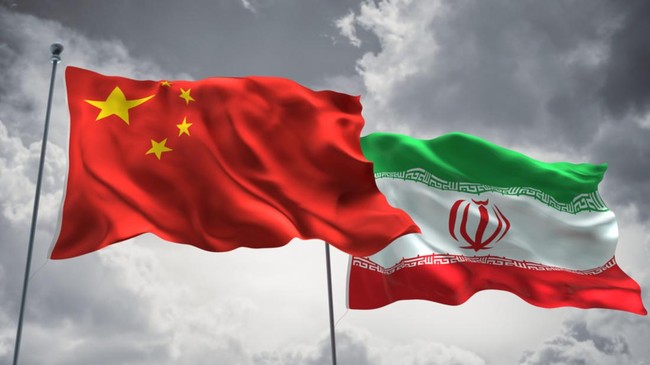
China remains one of Iran’s vital pillars amidst economic and military pressure from the United States. However, Beijing is expected not to provide unlimited support as it must safeguard broader interests, including its relationship with Washington and the Gulf states.
China’s support for Iran is primarily evident through trade relations and oil purchases, which have helped sustain Tehran’s economy. Despite opposing US military attacks and sanctions against Iran, analysts believe Beijing will not take the risk of direct confrontation with Washington for the sake of maintaining Tehran.
“China, with its broader global interests, can only actively promote the de-escalation of the US-Iran conflict, and cannot and will not engage in fierce confrontation with the US for Iran’s sake,” said Hongda Fan, director of the China-Middle East Centre at Shaoxing University, China, as quoted by Al Jazeera.
“Ultimately, the US-Iran conflict must be resolved by the two countries themselves,” he added.
China-Iran economic relations are indeed significant, particularly in the energy sector. However, the dependency between the two nations is asymmetrical, as Iran is far more in need of China, while Beijing still possesses many other energy supplier options, such as Saudi Arabia, Russia, Iraq, and the United Arab Emirates (UAE).
This condition makes Beijing cautious in the face of US pressure. Large Chinese companies such as Sinopec and PetroChina have long avoided Iranian oil due to the risk of sanctions, so trade is largely conducted by small-scale independent refineries, known as “teapot refineries,” which have limited links to the dollar-based global financial system.
Politically, China opposes US secondary sanctions and continues to defend its commercial interests in Iran. However, Zichen Wang from the Centre for China and Globalization (CCG) believes this stance does not mean Beijing is prepared to sustain Iran’s economy indefinitely.
“China will likely continue to oppose US secondary sanctions politically and defend what they consider to be China’s legitimate commercial interests,” said Wang. However, he added that China’s major banks and state-owned enterprises remain extremely cautious regarding the risk of US sanctions.
The limits of Beijing’s support are also evident in the realisation of investments in Iran. China once promised investments of up to US$400 billion over 25 years based on a strategic agreement signed in 2021, but very few projects have materialised. According to Andrea Ghiselli from the ChinaMed Project, Chinese companies have no reason to jeopardise their access to the international financial system to expand business in Iran.
US pressure is also increasingly disrupting Iranian oil exports. Shipments of Iranian crude oil through the Strait of Hormuz, mostly destined for China, fell from approximately 1.85 million barrels per day in March-April to around 240,000 barrels per day in August, according to Kpler data. While Iranian oil is important to Tehran, Beijing still has alternative supplies from other nations.
“For China, Iran is indeed valuable, but its role can be replaced in various aspects. Iranian oil is important, but China can obtain energy supplies from Saudi Arabia, Russia, Iraq, the UAE, and many other suppliers,” said Mordechai Chaziza, a China policy expert on the Middle East.
Chaziza believes China also does not want its support for Iran to compromise its relations with Saudi Arabia and the UAE, which are important partners in energy and trade. Therefore, Beijing’s primary interest is to keep Iran stable, sovereign, and economically connected, but without forcing it to choose sides in the conflict between Tehran and the US, Israel, or the Gulf states.
Kerri Bitsoff, a former senior official at the US Treasury’s Office of Foreign Assets Control (OFAC), assesses the China-Iran relationship as more pragmatic than an alliance.
“In my view, this is not a form of alliance as some might imagine, although there is indeed tangible support. I see it more as a customer relationship that Iran cannot simply abandon,” she said.
Beijing’s cautious stance is also inseparable from the importance of China-US relations. On 14-15 May 2026, US President Donald Trump and Chinese President Xi Jinping met in Beijing to discuss several bilateral issues, including trade and the relationship between the two nations.
The two leaders are also scheduled to meet again on 24 September 2026, meaning Beijing has an interest in ensuring that its support for Iran does not escalate into direct confrontation with Washington.