
China deepens energy industry cooperation with APEC partners
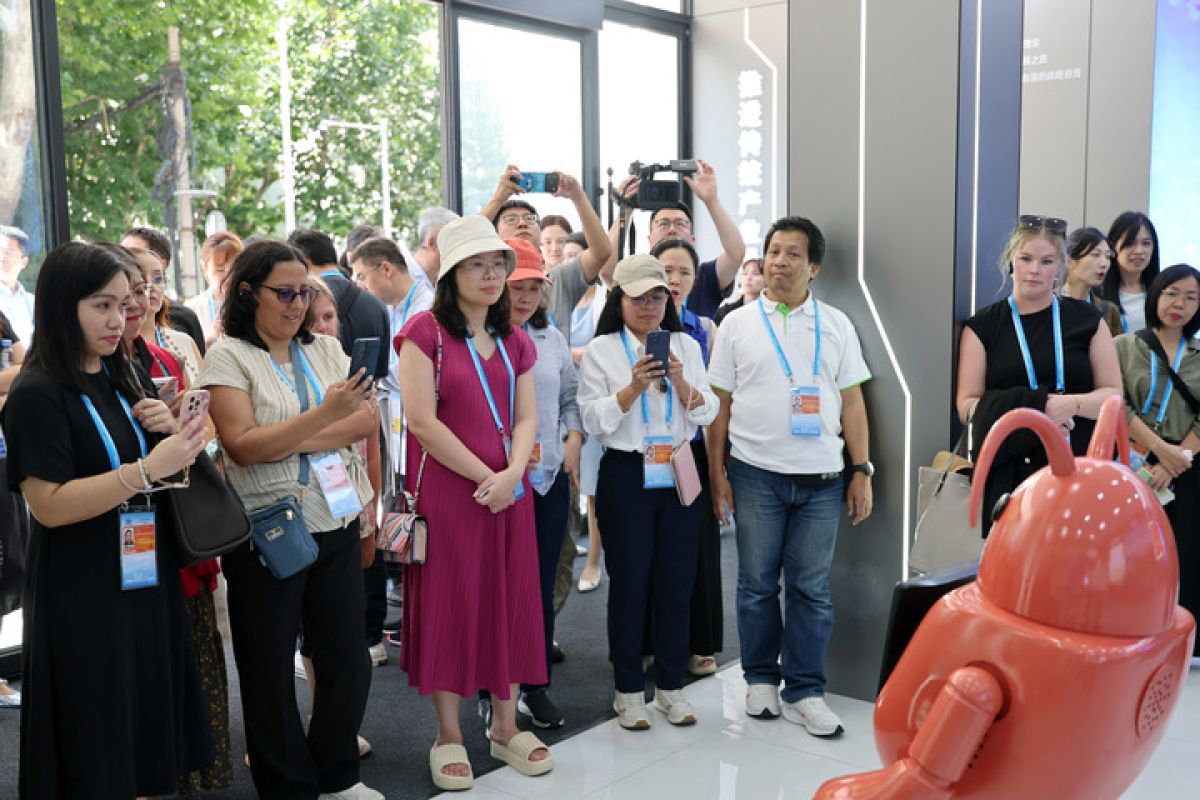
An APEC think tank seminar on energy industry development was recently held in the coastal city of Dalian, Liaoning Province, in northeastern China. During the seminar, representatives of APEC member economies discussed green transport, energy resilience and zero-carbon industrial zones, while highlighting China’s contribution to international energy cooperation.
Latest data show that more than 30 percent of the crude oil and nearly 60 percent of the natural gas imported by China comes from APEC members, and the percentage continues to rise. Meanwhile, Chinese companies are actively participating in oil and natural gas projects as well as LNG infrastructure development in Australia, Indonesia and Papua New Guinea.
According to a report titled “China-ASEAN Cooperation Opens a New Journey: Energy Cooperation Drives Shared Prosperity in the Asia-Pacific” released on 20 August, energy cooperation between China and APEC has recorded notable progress in recent years, covering conventional energy, new energy, power generation, and the entire industrial chain including trade, investment, infrastructure and other aspects.
The report also noted that energy cooperation between China and APEC partners is complementary in terms of supply and demand, enables green energy to empower other industries, and focuses on stabilising industrial chains and coordination.
“Connectivity is also an important aspect of energy cooperation between China and APEC economies, encompassing pipelines, LNG shipping and ultra-high-voltage power transmission,” said Lu Ruquan, executive director and president of the Economics and Technology Research Institute under China National Petroleum Corporation, according to Xinhua.
Behind this connectivity lies close cooperation in investment, trade and policy coordination across various sectors.
Meanwhile, China is intensifying innovative cooperation in green energy with APEC partners. The Jatigede hydropower plant in Indonesia and a floating solar power project in Malaysia, which successfully transformed a former mining area into a solar power generation facility, continue to drive the energy transition in Southeast Asia.
At the APEC Zero-Carbon Industrial Zone seminar held on Friday (21 August), State Power Investment Corporation (SPIC) Deputy General Manager Chen Haibin said that SPIC is the world’s largest clean energy power producer, with a total installed capacity of 310 million kilowatts, 75 percent of which comes from clean energy.
The company’s overseas operations cover 25 countries and regions, including eight APEC economies.
Participants said that the Asia-Pacific region accounts for a significant share of global energy consumption. The region is not only at the forefront of global AI development but is also a major source of growth in electricity demand. The significance of energy cooperation is becoming increasingly apparent, and China is a trusted partner.
Director of the National Energy Authority of Papua New Guinea Ronald Meketa said, “I highlight that China’s installed new energy capacity has been very significant in recent years and we regard the large-scale deployment of renewable energy as a potential solution we need.”
He added that his side expects more cooperation with China in areas such as technological innovation and diversification of energy resources.
Regarding Indonesia-China cooperation, Indonesian academic Veronika Saraswati said that Chinese companies are participating in Indonesia’s nickel industry, which increases added value while providing an opportunity for Indonesia, which is rich in nickel resources, to enhance participation in the nickel value chain and the development of the global new energy industry.