
China cultivates 14 plant species in space station
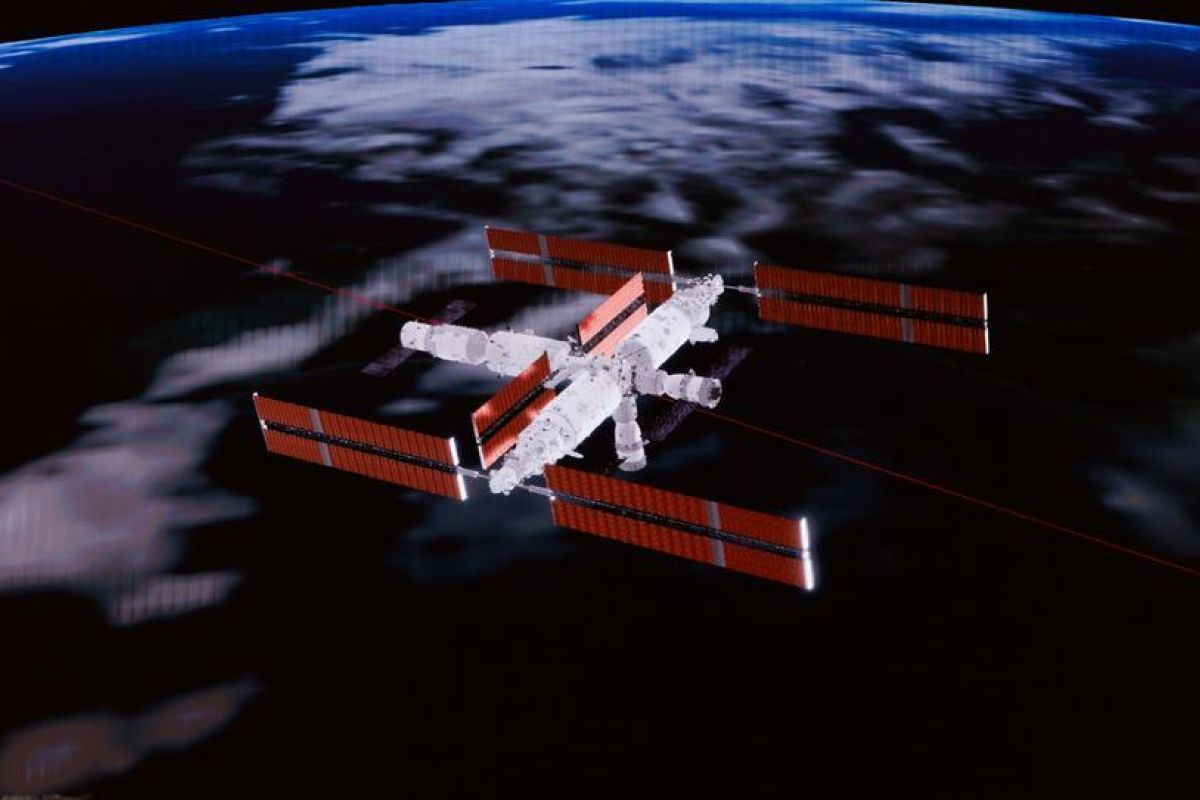
Tianjin (ANTARA) - China is now cultivating more than 20 varieties covering 14 plant species in orbit, a milestone that serves as the foundation for large-scale plant production in space stations, according to the Astronaut Center of China.
This breakthrough was highlighted during an aerospace medicine engineering conference in Tianjin, northern China, where Zhang Hongzhang, an astronaut from the Shenzhou-21 manned mission, shared photos and videos of the thriving “space garden” aboard China’s Tiangong space station. The plants displayed include lettuce, carrots, sunflowers, potatoes, and wheat.
China’s era of long-term manned spaceflight began in October 2021, when the Shenzhou-13 crew—Zhai Zhigang, Wang Yaping, and Ye Guangfu—moved into the Tianhe core module of the Chinese space station.
“Long-term living in space requires us to reduce our dependence on supplies from Earth. The controlled ecological life support experiments we are conducting aim to build an ecosystem in space that can regenerate water, air, and food in situ, thereby reducing dependence on Earth and ultimately achieving self-sufficiency,” said Bian Qiang, an expert at the Astronaut Center of China.
Controlled ecological life support technology utilises a closed and controlled artificial ecosystem to efficiently recycle and regenerate the air, water, and food required by astronauts in orbit to survive, thereby forming a suitable life support and health system for long-term human habitation.
According to Bian, two types of plant cultivation units are currently operating continuously in the space station: one using substrate culture and another using aeroponics.
Together, both provide valuable experience for researchers in building basic life support systems that primarily rely on physical and chemical recycling, with biological regeneration serving as a support.
“A more efficient aeroponic unit was sent into space in 2025. Since then, wheat has completed a full growth cycle in orbit, and a second rotation of cultivation using seeds from that harvest has grown well and is almost ready for harvest,” said Bian.
Looking to the future, Bian stated that China plans to establish a “vegetable garden on the Moon” as the country’s lunar exploration programme progresses.
China’s space station, Tiangong, which means “Heavenly Palace,” has now entered the era of long-term human habitation. One member of the Shenzhou-23 crew will undergo a one-year stay in orbit, while the manned lunar landing mission scheduled for 2030 continues to proceed smoothly.
Source: jawawa.id (https://jawawa.id/newsitem/china-cultivates-14-plant-species-in-space-station-1790002883)
Originally published by Antara (Indonesian) (https://www.antaranews.com/berita/5751713/tiongkok-budi-dayakan-14-spesies-tanaman-di-stasiun-luar-angkasa), translated from Indonesian