
China criticises joint Philippines-US-Japan military exercise in South China Sea
Beijing (ANTARA) - The Chinese government assesses that the Asia-Pacific region requires stability and peace amid increasing military activities, following the joint exercise involving the Philippines, the United States, and Japan in the South China Sea (SCS).
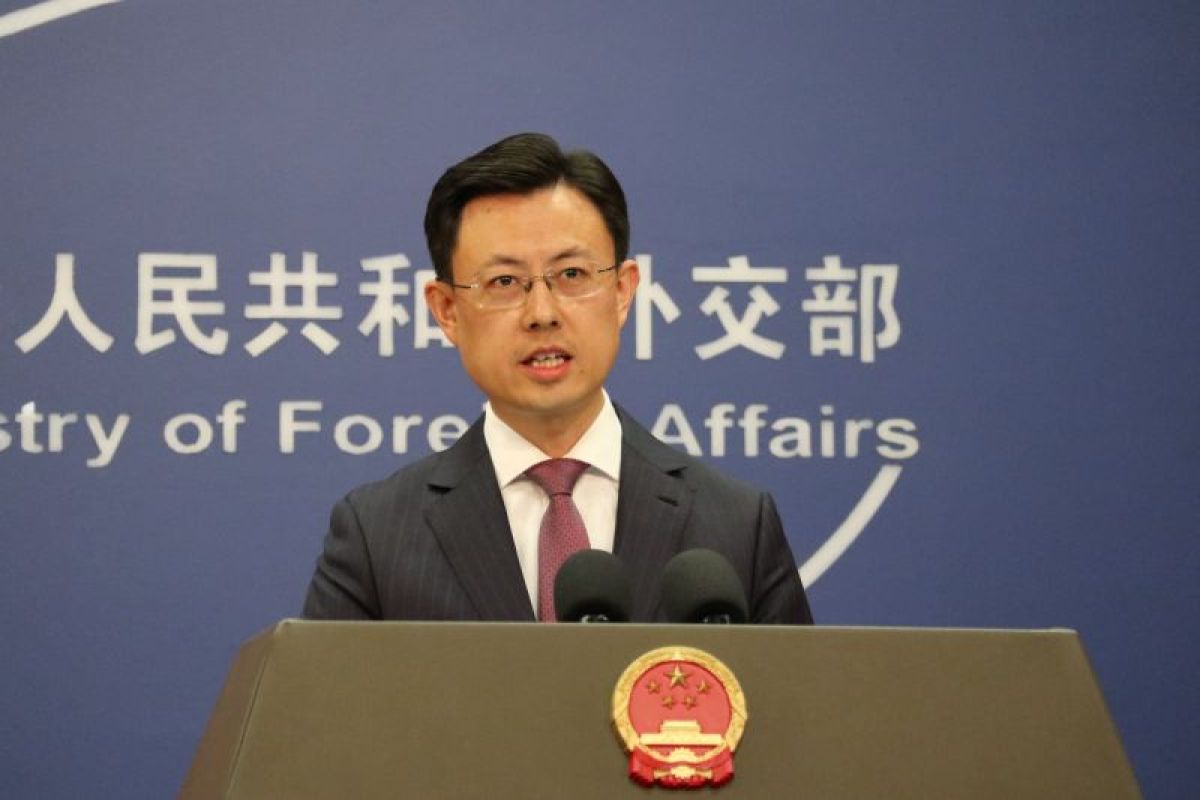
“The world has already witnessed enough destruction caused by unilateralism and the misuse of military power. What the Asia-Pacific region needs most is peace and tranquillity,” said Spokesperson for the Chinese Foreign Ministry Guo Jiakun during a press conference in Beijing on Monday (20/4).
The statement comes amid the start of the annual military exercise, which for the first time involves Japanese contingents alongside thousands of US and Philippine troops. The exercise includes live-fire simulations in northern Philippine areas facing the Taiwan Strait, as well as in provinces bordering the disputed South China Sea.
“The last thing this region needs is division and confrontation due to the involvement of external powers. No military and security cooperation should come at the expense of mutual understanding and trust, as well as peace and stability in this region,” Guo Jiakun stated.
He emphasised that military cooperation must not target or harm third parties. “For countries that rely on others for their security, it is important to always remember that such steps may very well backfire,” he said.
Guo also alluded to Japan’s role in the region, noting that the country bears historical responsibility towards Southeast Asian nations due to its aggression during World War II.
“Japan needs to conduct deep and serious introspection on its history of aggression, and act with full caution in both words and deeds in military and security matters, rather than showcasing its power in the South China Sea and undermining stability in this region,” he asserted.
In one exercise scenario, around 1,400 Japanese military personnel will use Type 88 cruise missiles to sink a World War II-era minesweeper off the northern coast of Luzon Island.
More than 17,000 personnel from army, navy, and air forces are involved in the 19-day Balikatan joint exercise. US Marine Expeditionary Force Commander Christian Wortman said approximately 10,000 US personnel are participating in the exercise.
Philippine military chief Romeo Brawner described this year’s Balikatan as the largest exercise in history.
Japan’s full participation in the exercise follows the signing of a reciprocal access agreement approved by the Japanese parliament in June. Colonel Takeshi Higuchi stated that the exercise will contribute to creating a security environment that does not tolerate unilateral attempts to change the status quo through military force.
Several advanced weapons systems are deployed, including the US Typhon missile system, which has been stationed in the Philippines since early 2024 and previously provoked protests from China. Japan is deploying tank landing ships, destroyers, and helicopter destroyers, while the US is operating patrol vessels and dock landing ships.
The exercise takes place as global security dynamics remain turbulent, including the approaching end of the ceasefire between Iran, the United States, and Israel on 22 April 2026.
Although the United States and the Philippines assert that no exercises are being conducted “near Taiwan,” coastal defence drills are scheduled less than 200 kilometres (120 miles) from the southern coast of that area.
Source: jawawa.id (https://jawawa.id/newsitem/china-criticises-joint-philippines-us-japan-military-exercise-in-south-china-sea-1776768715)
Originally published by Antara (Indonesian) (https://www.antaranews.com/berita/5535512/china-soroti-latihan-militer-gabungan-filipina-as-jepang-di-lcs), translated from Indonesian