
China Condemns Japan's Discussion on Nuclear Weapons as 'Dangerous'
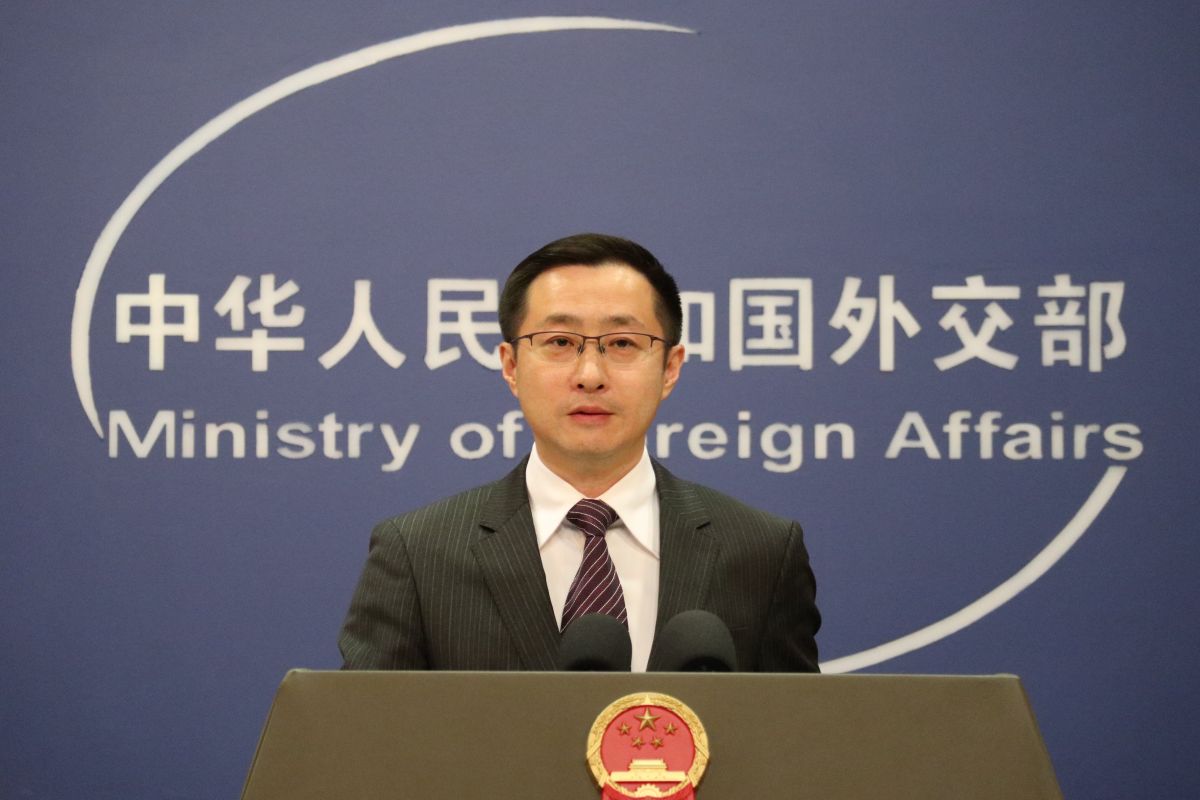
Beijing (ANTARA) - The Chinese government has condemned a statement by Japanese Defence Minister Shinjiro Koizumi regarding the prospect of the country openly debating its nuclear weapons policy.
“It is extremely rare, provocative and dangerous in the post-Second World War era for a serving Japanese defence chief to make such a statement. Those running the Japanese government are no longer concealing their wild ambitions to end the three non-nuclear principles and challenge the post-war international order,” Chinese Foreign Ministry spokesman Lin Jian said at a press conference in Beijing on Tuesday.
Japanese Defence Minister Shinjiro Koizumi said on Friday (18 July) that his country needs to open a debate on nuclear weapons, as a number of European countries begin strengthening deterrence policies based on nuclear capability.
Speaking on an online programme, Koizumi said Japan “cannot avoid” discussing the issue. The remarks came amid plans by the government to revise three key national security policy documents before the end of the year.
“Japan’s current leader advocated revising those principles as a member of parliament. After taking office, he has accelerated Japan’s remilitarisation and taken a series of dangerous steps on nuclear weapons policy,” Lin Jian said.
Lin Jian noted that Prime Minister Sanae Takaichi has strengthened cooperation on so-called “extended deterrence”, promoted the development of nuclear-powered submarines, pursued “nuclear sharing” and introduced medium-range missile systems.
This has been accompanied by statements from other Japanese officials advocating a revision of the three non-nuclear principles.
“Japan has long deliberately maintained the capacity to achieve a nuclear breakthrough quickly, stockpiling some 44.4 metric tonnes of separated plutonium, sufficient to produce a large number of nuclear warheads,” Lin Jian said.
Furthermore, Lin Jian said, Japanese right-wing groups, citing the so-called “external threat” and “self-defence”, have broken free from Japan’s constitution, international law and domestic law, challenging the post-war international order and the international nuclear non-proliferation regime.
“By speeding down this dangerous road, they have posed a real threat to regional peace and stability. The international community must be highly vigilant and firmly oppose it,” Lin Jian said.
Defence Minister Koizumi cited France and Finland as countries now adopting policies supporting the strengthening of nuclear deterrence capabilities.
Last June, Finland’s parliament passed legislation allowing nuclear weapons to be brought into the country’s territory. Meanwhile, French President Emmanuel Macron announced in March that his country would increase the number of its nuclear warheads.
Although Japan is under the protection of the American nuclear umbrella, it remains the only country ever to have suffered a nuclear weapons attack.
Japan also continues to adhere to the three non-nuclear principles: not producing, not possessing, and not permitting nuclear weapons on its territory.
Koizumi said Japan’s security environment has become increasingly complex. For that reason, he argued, Japan needs to change the situation in which certain issues are considered unfit for debate.
In December 2025, a source involved in drafting security policy under the administration of Prime Minister Sanae Takaichi said Japan should possess nuclear weapons.
The statement drew rejection from opposition parties as well as a number of countries.
Former Japanese Defence Minister Itsunori Onodera also said late last year that Japan needs to re-examine the future of the non-nuclear principles the country has long upheld.