
China completes in-orbit test of muscle monitoring device for astronauts
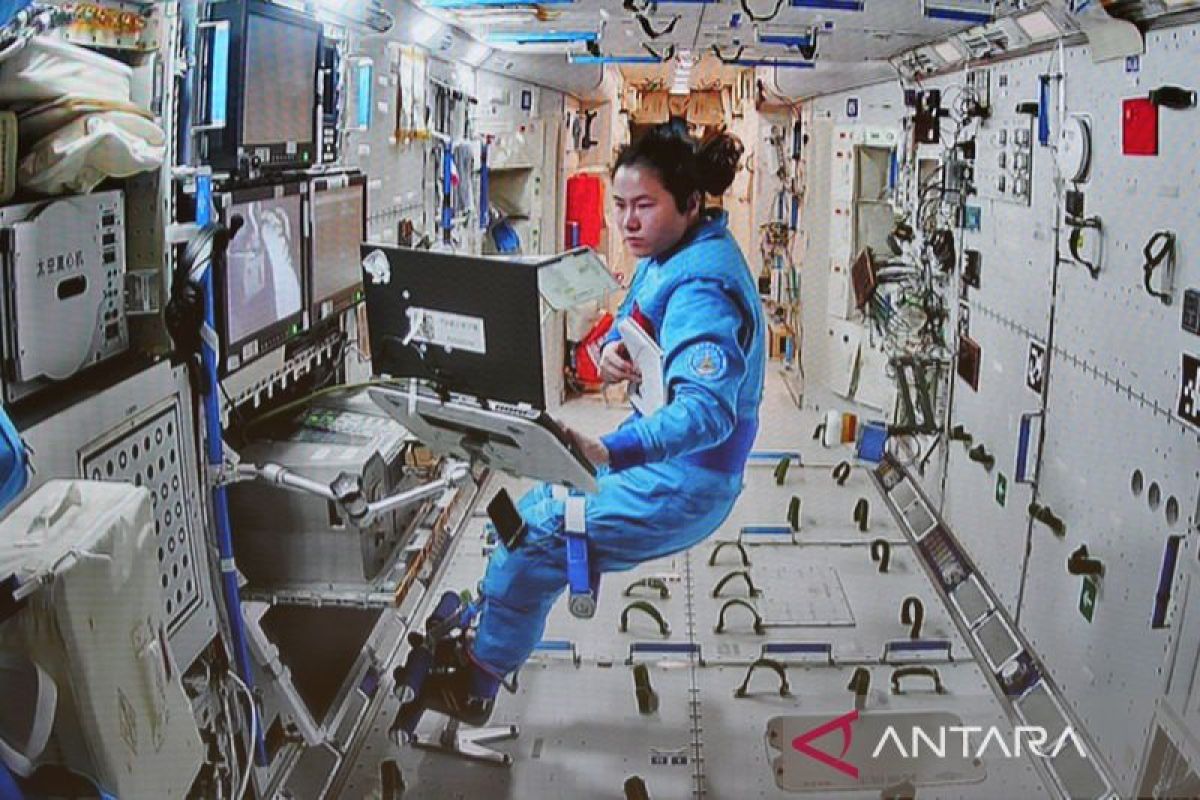
Shenzhen (ANTARA) - An electromyography (EMG) monitoring device developed by a Chinese research team has recently successfully completed orbital experiments. The device can be used in space for real-time assessment of astronaut muscle status and human-machine interaction, providing essential technical support for astronaut health protection and space-based human-machine interaction technology.
The Qingzhou Space Cargo Test Vehicle released the latest batch of orbital test results on Monday (29/6), including the EMG monitoring device developed by a team from the Shenzhen Institute of Advanced Technology (SIAT) under the Chinese Academy of Sciences (CAS), in collaboration with the Shenzhen University of Advanced Technology (SUAT).
The Qingzhou Space Cargo Test Vehicle was launched into space on 30 March 2026. The vehicle carried five medical projects, including the EMG monitoring device, for the world’s first future space hospital proposed by SUAT.
Astronauts spending long periods in microgravity conditions experience a significant reduction in muscle loading. This leads to a decrease in muscle fibre contraction frequency and accelerates protein breakdown, triggering various issues such as muscle atrophy. Accurately, continuously, and in real-time monitoring the muscle health of astronauts remains a major challenge in space life sciences and space medicine.
Currently, the International Space Station (ISS) primarily uses muscle strength testing and ultrasonography (USG), while Chinese space stations evaluate muscle atrophy through operational force and optical measurements. However, existing methods are generally constrained by high costs, inadequate real-time continuity, and the inability to document muscle conditions directly.
The team, led by SIAT researcher Wang Yishan, proposed an EMG monitoring solution based on nerve signal detection, which allows for dynamic evaluation of muscle status through real-time EMG signal acquisition and analysis. Equipped with previously independently developed nerve signal detection chips, the team successfully created the EMG detection device and completed various aerospace adaptation modifications.
To meet the requirements of devices in complex space environments, the team conducted a series of ground experiments, including vibration testing, thermal cycle testing, and interface matching between the payload and the spacecraft, to ensure the stability and reliability of the chips and devices in space.
Following the launch of the Qingzhou Space Cargo Test Vehicle, the team conducted orbital trials. Under remote control from the ground, these tests successfully completed tasks involving the acquisition, storage, and transmission of simulated data.
Data received on the ground indicates that the trials proceeded smoothly. The results obtained from the device were consistent with expected data, indicating that the chips and devices can operate stably and reliably in microgravity conditions and are suitable for space working conditions.
The success of this orbital trial further drives progress in space life-support technology and can contribute to the development of ground-based medical health fields, human-machine interaction, and smart wearable devices.
The results released this time also include a handheld blood cell analyser, which no longer relies on large-scale medical equipment and instructions from the ground.
In July 2025, SUAT signed an agreement with the Academy of Innovation for Microsatellites, under the CAS, to jointly build a future space hospital. This initiative aims to enhance astronaut and human health protection, as well as expand medical monitoring capabilities in orbit and life-support systems, focusing on more advanced disease prevention and treatment technologies.
Source: jawawa.id (https://jawawa.id/newsitem/china-completes-in-orbit-test-of-muscle-monitoring-device-for-astronauts-1782957156)
Originally published by Antara (Indonesian) (https://www.antaranews.com/berita/5631576/china-rampungkan-uji-alat-pemantau-otot-di-orbit-untuk-astronaut), translated from Indonesian