
China comments on G7 plan to reduce critical mineral dependence
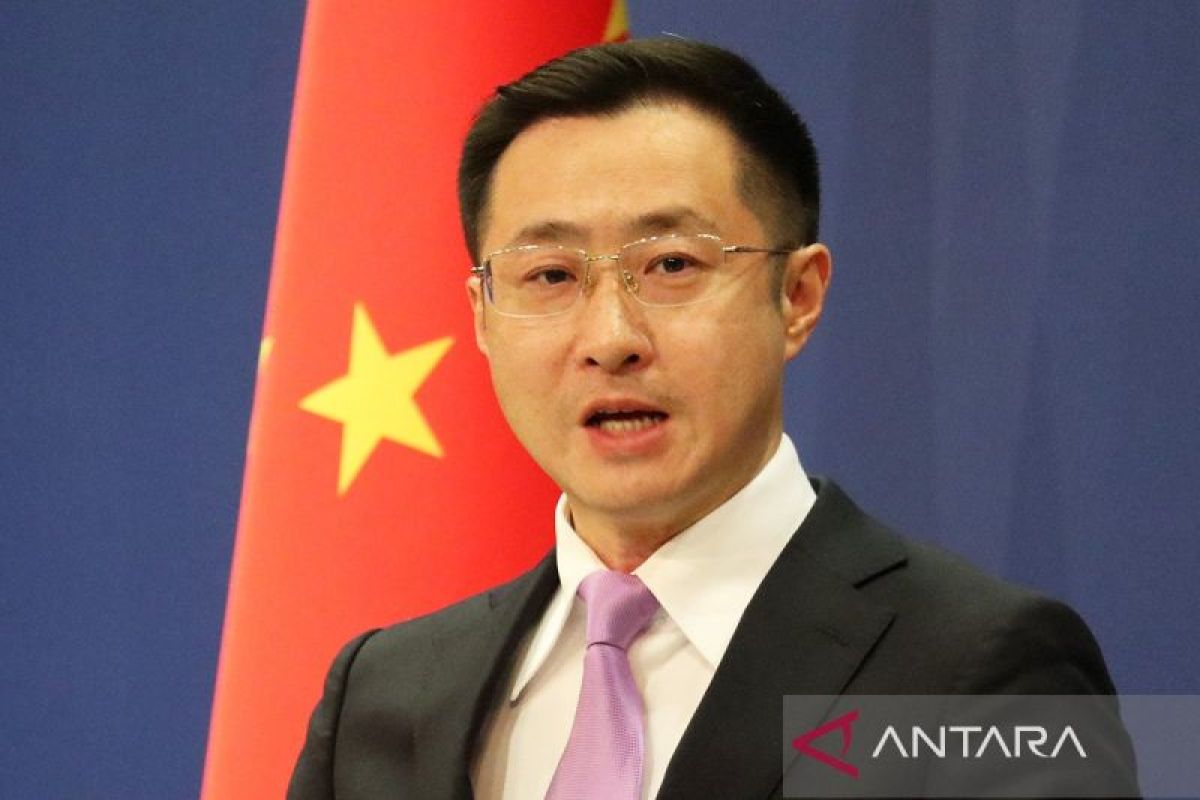
Beijing (ANTARA) - The Chinese government has commented on the G7 group’s plan to reduce dependence on single dominant suppliers of critical minerals and rare earths. “Regarding maintaining the security and stability of global critical mineral industrial and supply chains, China’s position remains unchanged. The standardisation and refinement of China’s export control system is consistent with international practice and is carried out to better protect world peace and regional stability,” said Chinese Foreign Ministry spokesperson Lin Jian at a press conference in Beijing on Thursday (18/6).
G7 leaders, at the summit under France’s presidency, launched an ambitious plan to reduce their dependence on dominant single suppliers such as China for critical minerals essential to the global digital and green energy sectors. In a joint declaration supported by Australia as a partner country, the group expressed serious concern over the use of non-market policies and practices as well as economic coercion. They warned that arbitrary export restrictions and retaliatory measures have actively undermined international economic security. To address these vulnerabilities, the G7 launched the Critical Mineral Resilience and Production Alliance.
“All parties have a responsibility to play a constructive role towards this goal. We only seek to fulfil non-proliferation obligations and other international commitments,” Lin Jian stated. China, according to Lin Jian, also urged the G7 to earnestly abide by market economy principles and international trade rules. “We urge G7 members to stop disrupting the international trade order with self-made rules of a small clique,” Lin Jian stressed.
Lin Jian also specifically commented on Japanese Prime Minister Sanae Takaichi, who at the G7 summit was seen as attempting to rally allies and provoke confrontation. “This will not gain support and is bound to fail. Sanae Takaichi speaks of dialogue but actively engages in confrontation, a glaring contradiction that has exposed Japan’s hypocrisy to the world,” Lin Jian said. Lin Jian also affirmed that China has banned the export of all dual-use goods to Japanese military users and for Japanese military use. “The aim is to curb Japan’s remilitarisation and its attempts to possess nuclear weapons. China’s position on maintaining the security and stability of global critical mineral industrial and supply chains remains unchanged, and all parties have a responsibility to play a constructive role towards this goal,” Lin Jian explained.
The G7’s Critical Mineral Resilience and Production Alliance targets reducing dependence on a single supplier outside the bloc for rare earth elements and permanent magnets to less than 60 per cent by 2030, with the ultimate ambition of reaching 50 per cent as soon as possible. Ministers have also been tasked with setting specific reduction targets for other critical minerals before the end of this year. The strategy marks a major shift towards securing supply chains among trusted allied countries. The initiative will begin with two pilot minerals, lithium and nickel, before expanding to five new minerals each year.
The global critical minerals market is currently sharply divided between raw material-producing countries and China, which still dominates the refining process. China controls more than 90 per cent of the world’s rare earth element refining, 80 per cent of battery-grade graphite, and the majority of global lithium and cobalt processing. While resource-rich countries such as Australia (lithium), Chile (copper), Indonesia (nickel), and Congo (cobalt) lead in mining activities, they remain heavily dependent on China’s infrastructure to process these raw materials into ready-to-use components. This situation leaves Western nations playing catch-up. The United States and Canada have significant mining potential but lack adequate domestic refining capacity. Meanwhile, the European Union remains heavily reliant on imports due to strict environmental regulations and high operational costs.
However, the G7 summit, which ended on Wednesday (17/6), did not issue a final communiqué, repeating a similar failure to the Canadian-led G7 summit in 2025. During the Evian summit, nine working documents addressing specific themes were published, covering areas such as geopolitics, the global economy, and public health. The summit organisers had scrapped plans to issue a final communiqué from the preparatory stage, opting instead to publish thematic documents to avoid highlighting differences between the United States and its allies. The G7 comprises the US, UK, France, Germany, Italy, Canada, and Japan. France holds the rotating G7 presidency this year.