
China Cancelling Coal Purchase Contracts from Indonesia? The Ministry of Energy and Mineral Resources Responds
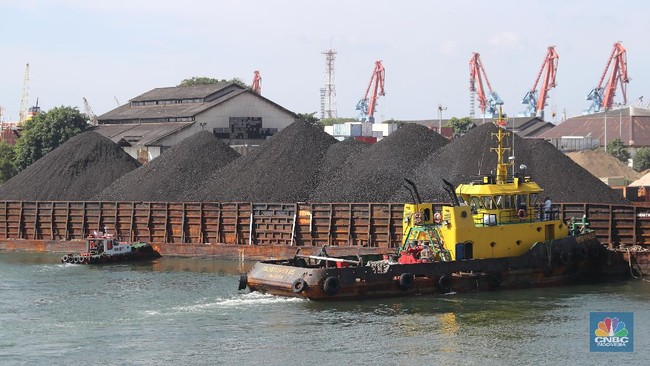
The Ministry of Energy and Mineral Resources (ESDM) has addressed public rumours suggesting that Chinese buyers are delaying or cancelling coal purchase contracts from Indonesia. These rumours have surfaced following the government’s new policy regarding single-door exports through a specialised state-owned enterprise (SOE), PT Danantara Sumberdaya Indonesia (DSI), which is set to commence on 1 June 2026.
The Director General of Mineral and Coal at the Ministry of ESDM, Tri Winarno, stated that the government has not yet received any official reports regarding the cancellation of contracts by Chinese buyers. Tri emphasised that the authorities are continuously monitoring daily mining export developments.
“As of now, regarding China, I have not received any clear information. Which companies have been cancelled by China, what the quantities are, and so on—I have not received any information,” Tri said when met at the DPR RI Building in Jakarta on Thursday (4/6/2026).
Tri confirmed that, to date, there is no specific data or identity of mining companies reporting delays or cancellations of purchase commitments from overseas trading partners. “In fact, I am hearing this news from the media,” he added.
As previously noted, the government officially requires all exporters of coal, crude palm oil (CPO), and ferroalloy to report their export activities through PT Danantara Sumberdaya Indonesia (DSI) starting 1 June 2026. Currently, this policy is in the early transition stage of improving the governance of single-door natural resource exports.
Coordinating Minister for Economic Affairs, Airlangga Hartarto, explained that the policy aims to strengthen supervision and the validity of national export data. He emphasised that the reporting obligation is intended to prevent price manipulation and the flight of export proceeds (DHE) abroad.
The transition period towards full implementation will continue until 31 December 2026. The government targets the full implementation of the export policy through PT DSI to be operational no later than 1 January 2027.
Regarding the stages of implementation, during the transition period starting 1 June 2026, exporters may still conduct international trade independently but are required to synchronise their transaction data with the state. This reporting process will be facilitated by the Directorate General of Customs and Excise through the CEISA 4.0 portal to ensure data validity before the full implementation phase.
“During this period, evaluations will be conducted in the first three months, which will serve as the basis for the next implementation stage. According to the prepared stages, full implementation will apply no later than 1 January 2027,” Airlangga explained.
The designation of these three primary commodities is based on their significant contribution to the national total exports, which reached US$ 66.13 billion (approximately Rp 1,179 trillion) or 23.4% of total national exports. Airlangga noted that these commodities have supported a trade surplus for 71 consecutive months, with coal exports valued at approximately US$ 24.48 billion, CPO at US$ 24.42 billion, and ferroalloys at US$ 16.49 billion.
Airlangga emphasised that the policy is designed to prevent under-invoicing and transfer pricing practices. “The goal is to prevent under-invoicing, transfer pricing, and the flight of export proceeds, ensuring that recorded export values reflect actual transaction volumes, thereby optimising state obligations and national revenue from exports,” he clarified.
Meanwhile, the Chief Operating Officer (COO) of Danantara, Dony Oskaria, stated that the transition period towards full implementation will last approximately seven months, from 1 June to 31 December. Dony added that PT DSI is currently in the process of selecting human resources, with the target to complete this by the current week. Furthermore, PT DSI is preparing advanced technological systems to ensure readiness before the policy is fully enforced next year.
“We from Danantara Indonesia will strive our best, and this programme can be monitored by the Indonesian public,” Dony concluded.