
China Buys Record Amounts of Gold for 23 Consecutive Months: What Is Behind the Rush?
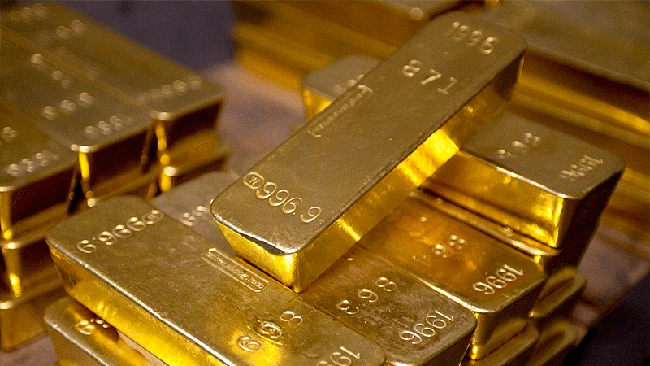
Jakarta — China’s central bank has reportedly bought gold for 23 consecutive months. The country has also imported the precious metal in unprecedented quantities.
The buying spree reflects Beijing’s efforts to reduce its reliance on the US dollar, as well as the lack of safe investment alternatives for Chinese households. Analysts had previously forecast that demand for bullion would continue amid a sluggish economy.
According to CNBC International on Monday (12 October 2026), the People’s Bank of China (PBOC) added about 23 tonnes to its gold reserves in September. State Administration of Foreign Exchange data show this was the largest monthly purchase in nearly three years and extended the longest consecutive buying streak since at least 2015.
Customs data show China spent a record US$158.8 billion importing more than 1,000 tonnes of gold in the first eight months of 2026. This exceeded the US$96.5 billion and 886 tonnes recorded for the whole of 2025.
“Gold imports for consumption in China reached a record high in the first eight months of this year,” said Aakash Doshi, head of gold strategy at State Street Investment Management.
“The surge in premiums for gold prices in China’s domestic market points to stronger seasonal winter demand,” he added.
The accumulation of the precious metal has taken place even as gold prices have fallen. Prices dropped by more than 8% in September to about US$4,176 an ounce, after reaching a record above US$5,500 in January.
Doshi forecast that gold would rise to between US$4,750 and US$5,500 per troy ounce by the end of the first quarter of 2027, driven by strong demand.
Why is China buying so much gold?
Carsten Menke, an analyst at Julius Baer Group, said the PBOC’s main motive was political. He pointed to the use of the US dollar as a weapon and the related desire to reduce reliance on US government bonds, or Treasuries, as reserve assets.
The freezing of Russian central bank assets by Western governments after Russia’s 2022 invasion of Ukraine highlighted how reserves held overseas can be restricted during geopolitical tensions. Gold stored in a country’s own vaults, by contrast, remains secure and unaffected.
Data also show that China has reduced some of its holdings of US government bonds. According to the US Treasury Department, those holdings fell to an 18-year low of US$618 billion in July, as China continued to diversify its foreign-exchange reserves.
Demand in China is also driven by gold’s reputation as a safe store of value. Consumers worried about economic instability have flocked to buy jewellery, bullion and gold coins.
Domestic investors have few alternative investments. The property market, once a primary store of household wealth, has been mired in a prolonged slump. The benchmark CSI 300 index has fallen about 8% this year, compared with a 13% gain for the S&P 500.
Returns on bank deposits and bonds have also declined amid weak demand for loans. The yield on China’s one-year government bonds has fallen to around 1.2%, compared with about 4.46% in the US.
“The opportunity cost of holding gold is also much lower in China than in many Western markets,” said Ole Hansen, head of commodity strategy at Saxo Bank.
China’s large-scale buying is also thought to be part of a plan to build a deeper domestic gold market. Menke estimates that the central bank had bought about 190 tonnes by the end of August this year, including 110 tonnes that had not previously been reported.
Helping to support gold prices?
Demand from China has helped gold prices withstand pressures that might otherwise have driven them lower. High US bond yields have curbed demand for the non-yielding metal. Gold prices typically fall when interest rates rise.
“Chinese buying has become an important source of structural support for gold prices,” said Ewa Manthey, a commodity strategist at ING Bank.
“Central banks buy for the long term and are less price-sensitive than retail investors,” she said.
Menke made a similar point. He noted that gold prices remained above their summer levels despite a sharper rise in interest-rate and bond-yield expectations, while the US Federal Reserve had signalled another rate increase in 2026.
Hansen said that renewed confidence in China’s property and equity markets could dampen gold demand. A weaker yuan, which makes gold more expensive domestically, or higher interest rates, which make deposits more attractive, could also curb buying.
A more significant shift would occur if central banks lost interest in diversifying their reserves and geopolitical tensions eased.
“However, neither of those things seems likely in the near future,” he said.
According to the World Gold Council, China, the world’s fifth-largest gold-holding country, had 2,387 tonnes in August. That is less than a third of the United States’ holdings.
Source: jawawa.id (https://jawawa.id/newsitem/china-buys-record-amounts-of-gold-for-23-consecutive-months-what-is-behind-the-rush-1791777056)
Originally published by CNBC Indonesia (https://www.cnbcindonesia.com/news/20261012085918-4-775220/china-borong-emas-dalam-jumlah-rekor-23-bulan-berturut-turut-ada-apa), translated from Indonesian