
China Builds 'New Hong Kong' Near Indonesia with Rp2,000 Trillion Investment
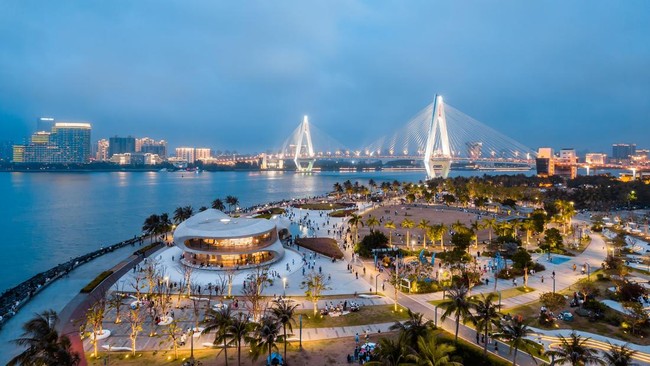
China has officially turned Hainan Island into a special customs zone with a project value reaching US$113 billion, or approximately Rp2,011 trillion (at an exchange rate of Rp17,800 per US dollar). This move marks Beijing’s largest free trade experiment, touted as a new alternative to Hong Kong. The Hainan Free Trade Port (FTP) was launched on 18 December 2024, separating its customs operational system from mainland China. The Chinese government hopes the policy will attract foreign investment and strengthen Hainan’s position as an international trade gateway. Under the new scheme, the proportion of goods eligible to enter Hainan tariff-free has surged from 21% to 74%. The government has also expanded the duty-free goods list more than threefold to cover over 6,600 categories. Goods processed in Hainan can even enter mainland China without tariffs if they meet a local value-added requirement of more than 30%. The policy also grants foreign companies broader access to several previously restricted service sectors and simplifies cross-border investment procedures. Hainan’s geographical position is a strategic asset for Beijing. The island is located in southern China, facing directly towards Southeast Asia, so the project is expected to accelerate supply chain integration while strengthening China’s economic ties with ASEAN countries, including Indonesia. ‘This port can become a vital gateway leading a new era of China’s openness to the world,’ said Vice Premier He Lifeng. The launch of the Hainan FTP also received a positive response from the market. Chinese and Hong Kong stocks strengthened after the policy was launched, amid expectations of new capital inflows into the area projected to become a trade and investment hub. Senior Economist at the Economist Intelligence Unit, Xu Tianchen, assessed that Hainan could serve as a testing ground for China to promote gradual economic openness. ‘The Hainan model essentially offers managed liberalisation, which will be very good for reintegrating supply chains,’ he told Reuters. However, Hainan still has homework to do if it truly wants to rival Hong Kong. Xu noted that the area does not yet have the legal system and level of financial openness that are Hong Kong’s strengths. With an investment scale of around Rp2,011 trillion and various trade incentives, Hainan is now positioned by Beijing as a new economic laboratory. If successful, the area has the potential to become one of China’s main trade hubs, increasingly close to the Southeast Asian economic corridor.