
China Builds a Giant Umbrella in Space, Turns Out to Be Starlink's Killer
China Builds a Giant Umbrella in Space, Turns Out to Be Starlink’s Killer
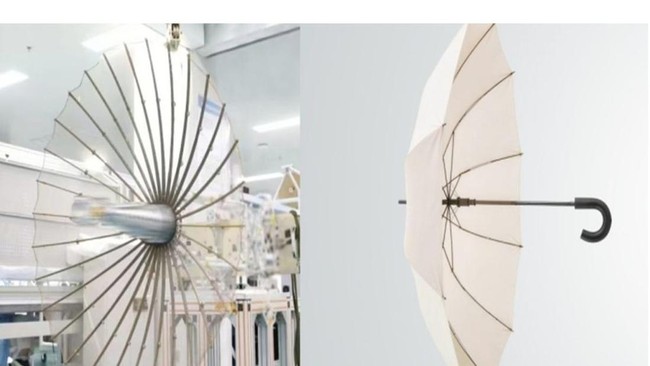
Jakarta, CNBC Indonesia – Chinese private space company GalaxySpace has unveiled a new umbrella-shaped antenna for satellites in low Earth orbit (LEO). The technology is claimed to boost satellite internet capacity by up to ten times compared with previous generations. The launch comes amid China’s ambitious push to accelerate the development of commercial space industry and global satellite internet services.
For the first time, the Chinese government has included the aerospace sector as one of the pillar industries in the 2026 Government Work Report. Quoting Global Times, the antenna features a distinctive design resembling a giant umbrella that can be folded compactly while in the rocket, then automatically unfurls once in orbit.
The company says the giant umbrella technology could be a solution to space constraints in modern launch vehicles. Currently, a single commercial rocket usually carries many satellites at once, making space efficiency a crucial factor.
Xu Zhi, head of GalaxySpace’s payload systems engineering, says the 1-metre-diameter antenna has a storage ratio of less than 12%. With this technology, the antenna can be compacted to only the size of a small computer suitcase before being launched into space.
According to the company, the compact design enables satellites to carry much larger communication reflectors without reducing launch efficiency. The technology is seen as important to support the next generation of broadband satellite constellations.
Not only focused on design, GalaxySpace also claims to have revolutionised the production process of space hardware. Historically, satellite mesh antennas were produced manually through complex, time-consuming processes.
Now the company is developing an integrated mesh-forming technology that it says can boost production efficiency by more than 70%.
This development reflects a new direction for China’s space industry, which is beginning to adopt the industrialised aerospace concept—a high-tech mass-manufacturing approach to speed up space hardware production. GalaxySpace says the new antenna will not only be used for broadband satellite internet but can also support navigation systems, remote sensing, and even direct-to-cell or satellite-to-phone connections, which is currently at the centre of a global technology race.
Source: jawawa.id (https://jawawa.id/newsitem/china-builds-a-giant-umbrella-in-space-turns-out-to-be-starlinks-killer-1779541960)
Originally published by CNBC Indonesia (https://www.cnbcindonesia.com/tech/20260522134920-37-737076/china-bikin-payung-raksasa-di-luar-angkasa-ternyata-pembunuh-starlink), translated from Indonesian