
China Bans Fuel Exports, Leveraging 1.5 Billion Barrel Oil 'Fortress'
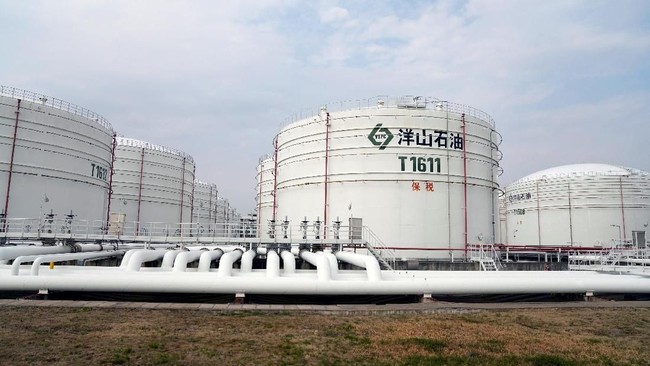
China has once again tightened the tap on fuel product exports. Several refineries in the country have halted the shipment of oil products to various regions outside of Hong Kong and Macau until further instructions are received from Beijing, according to four sources familiar with the matter reported to Reuters on Thursday (1/1/2026).
This move has the potential to further constrict the global fuel supply, which is already disrupted by war and production issues in several countries. Beijing previously restricted fuel exports in March after the outbreak of the US-Israel war against Iran disrupted crude oil supplies from the Middle East to China. These restrictions were temporarily eased during the July to September period.
Now, China is once again prioritising domestic energy supply security. PetroChina has even cancelled several shipments of petrol and aviation fuel that were previously scheduled for October. Trade sources suggest that uncertainty in crude oil supply, combined with a decline in China’s domestic fuel inventories, has led Beijing to focus more on ensuring domestic needs remain secure.
The tightness of the global supply has also driven world oil prices up, maintaining them at high levels. Currently, oil prices are moving in the range of US$90-US$100 per barrel, with Brent remaining above US$100 per barrel and WTI in the US$90 range. This condition makes China’s position in the global oil market increasingly interesting to observe.
China is the world’s largest crude oil importer. However, the country also possesses significant domestic oil production and has been actively increasing its reserves in recent years. So, how large are China’s actual production, requirements, and oil reserves?
China’s oil production continues to rise. Throughout 202 scale, China’s crude oil production reached approximately 216 million tonnes, marking its highest level in history. Using more common units in the oil market, China’s crude oil production in that year was equivalent to about 4.3 million barrels per day. Production is still increasing this year.
Latest data from China’s National Bureau of Statistics (NBS) shows that crude oil production from January to August 2026 reached 146.39 million tonnes, an increase of 0.9% compared to the same period last year. Specifically in August, China produced 18.43 million tonnes of crude oil, up from approximately 18.27 million tonnes in July. Looking further back, China’s oil production has tended to increase in recent years. In 2023, monthly production frequently hovered around 17 million tonnes. Entering 2025 and 2026, production has occasionally breached 18 to 19 million tonnes per month.
The Chinese government is continuously striving to enhance domestic production capabilities. New field explorations are ongoing, while production from older fields is being managed to prevent significant declines. This step is crucial as older oil fields typically experience natural production declines.
However, the scale of domestic production is not yet sufficient for China to be self-sufficient, as the country’s oil requirements are far greater. China is the world’s second-largest oil consumer after the United States. Data from the Energy Institute’s Statistical Review of World Energy 2026 shows that China’s oil consumption in 2025 was around 17.36 million barrels per day. This figure is much larger than China’s crude oil production, which was only about 4.3 million barrels per day during the same period.
While these two figures cannot be compared directly—as consumption figures include various oil products while production only counts crude oil—the vast difference indicates that China cannot meet all its oil needs solely from domestic production. Even if production were expanded to include petroleum and other liquids, the volume of approximately 5.4 million barrels per day remains far below the consumption of over 17 million barrels per day.
This gap must be bridged through imports. In 2025, China imported an average of about 11.6 million barrels per day, the highest in its history. With such volumes, disruptions to the global oil supply can quickly become a problem for China, especially since most imported oil must travel long distances from supplier nations to Chinese refineries.
However, China appears to have been preparing a strategy for such issues for some time. When oil prices were relatively low in 2025, Beijing actually increased purchases and expanded its reserves. The EIA estimates that China added about 1.1 million barrels of oil per day into storage throughout 2025. This strategy has become vital as market conditions shifted in 2026.
Disruptions to oil flows from the Middle East caused China’s imports to drop to an average of about 8.1 million barrels per day in the second quarter of 2026, a decline of approximately 32% compared to the previous quarter. Nevertheless, Chinese refinery activity did not decline as sharply as the drop in imports. This indicates that some requirements are being met from oil previously stored. Therefore, when external supplies decrease, China is not entirely dependent on oil arriving via tankers; Beijing still possesses stocks that were previously accumulated.
China’s oil reserves are massive. In addition to the oil still underground that requires further exploration, China possesses very large oil inventories already in place.
Source: jawawa.id (https://jawawa.id/newsitem/china-bans-fuel-exports-leveraging-1-5-billion-barrel-oil-fortress-1790949161)
Originally published by CNBC Indonesia (https://www.cnbcindonesia.com/research/20261002102111-128-772813/china-larang-ekspor-bbm-punya-benteng-minyak-15-miliar-barel), translated from Indonesian