
China-ASEAN Youth Forum 2026 serves as a space for dialogue
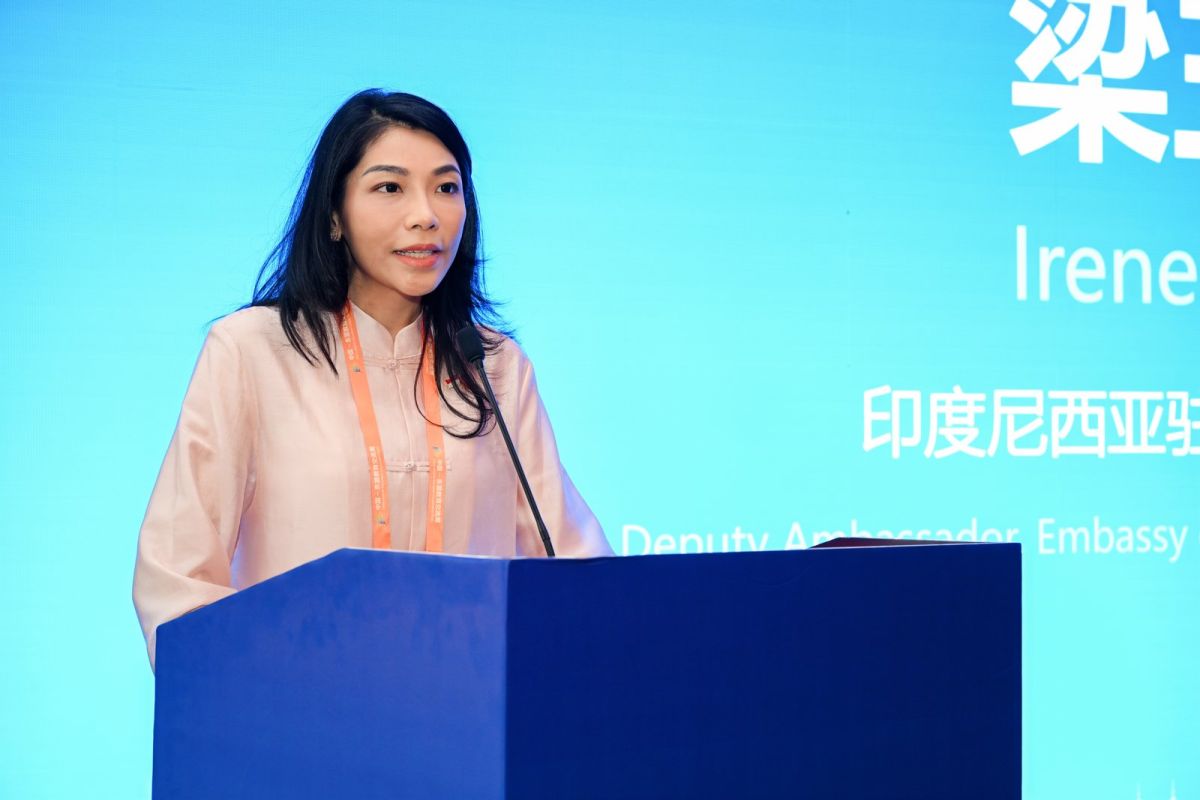
Guiyang (ANTARA) - The China-ASEAN Education Week 2026 was recently inaugurated in Guiyang, Guizhou Province, southwest China. On 30 July, the China-ASEAN Youth Community Forum 2026, organised by Tsinghua University as a primary youth sub-forum, gathered ASEAN diplomatic envoys in China, university experts, and students to discuss artificial intelligence (AI)-based education, cross-border community cooperation, and the mission of the younger generation in a new era.
“I asked about the views regarding the role of youth exchange in the bilateral relations of both countries, as well as what advice could be given to students wishing to engage in China-ASE<0xA0>ASEAN cooperation, particularly China-Indonesia bilateral collaboration,” Brillin stated enthusiastically during an interview following the forum, as reported by Xinhua.
Irene M. Han, the Deputy Ambassador of the Republic of Indonesia to China, was invited to attend the forum and delivered a keynote speech. During the Q&A session, Brillin Yapply, a Master’s student from Surabaya studying Chinese Politics and Foreign Policy at Tsinghua University, posed two questions focused on youth issues to Irene.
The interactive dialogue between the Indonesian diplomat and the 23-year-old student serves as a testament to the close people-to-people ties between Indonesia and China. Responding to the questions, Irene began her speech by highlighting the core value of Indonesia-China people-to-people exchanges, emphasising that connectivity between communities is the foundation of all forms of cooperation.
“Governments negotiate and sign various cooperation agreements. However, all cooperation begins with trust, smooth communication, and people-to-people relations. This is the foundation of all bilateral relations,” Irene asserted. She noted that both China and Indonesia possess ethnic diversity, which serves as a natural basis for mutual empathy between the two nations. “China and Southeast Asian countries share many similarities. China has 56 ethnic groups, while Indonesia has over 1,300 ethnic groups. I like the expression that we do not have to be exactly the same. Difference is natural.”
Regarding the advice provided by the Deputy Ambassador, Brillin expressed being deeply inspired. Drawing from her studies at Tsinghua University, she shared her thoughts on how AI could strengthen educational cooperation between China and Indonesia. Using a metaphor of an Indonesian Youth Symphony Orchestra, Irene described the bilateral relationship: “The piano produces its unique sound, and the violin has its own tone. Each instrument sounds different. This is precisely like the bilateral relationship between Indonesia and China. Nevertheless, we must humbly seek common ground to build a prosperous shared future.”
Brillin shared her ambitions to engage in academic research and deepen studies on Indonesia-China cooperation, noting her intention to work in international relations or organisations such as the UN or the AIIB (Asian Infrastructure Investment Bank). She added that the Deputy Ambassador advised the youth to remain authentic and increase communication with others, noting that regular exchange agendas between China and ASEAN, including student and lecturer exchanges, are crucial for mutual understanding.
Looking at the future prospects of AI cooperation between China and ASEAN, Brillin outlined her vision: “ASEAN and China can cooperate in various AI sectors in the future. Firstly, in the fields of education and community exchange, sharing diverse perspectives to achieve mutual benefits. ASEAN and China are in the same Asia-Pacific region with close geographical and cultural ties, making the promotion of AI more accessible. AI can correct cognitive biases and make cross-border communication more accurate, thereby strengthening mutual understanding. This will further drive community cooperation in the near future.”