
China-ASEAN Make Progress as South China Sea Code of Conduct Nears Completion
Chinese Premier Li Qiang will visit Manila, the Philippines, this week to attend the ASEAN Summit, China’s Ministry of Foreign Affairs said on Wednesday (11 November). He will join several world leaders, including US President Donald Trump.
China and the Philippines have long been at odds over competing territorial claims in the South China Sea. The two countries have also exchanged diplomatic criticism ahead of the summit.
In October, Beijing accused Manila of “creating various obstacles” to China’s participation in that month’s Association of Southeast Asian Nations (ASEAN) meetings in the Philippines. Philippine defence officials denied the allegation.
China’s top diplomat, Wang Yi, also urged the Philippines to rein in politicians who repeatedly “slander” Beijing and violate what China calls its “red lines”.
“Through these meetings, China hopes to strengthen solidarity and mutual trust with ASEAN member states,” Foreign Ministry spokesman Guo Jiakun told reporters at a regular press conference.
“We aim to deepen cooperation in various areas, such as artificial intelligence, the digital economy, energy security, connectivity, poverty alleviation and development,” Guo added.
Trump, Brazilian President Luiz Inácio Lula da Silva and Canadian Prime Minister Mark Carney are among the world leaders confirmed to travel to Manila for the ASEAN Summit and related meetings, scheduled for 15–18 November.
Japan and South Korea, two other ASEAN dialogue partners from East Asia, will also be represented at the meetings.
China-ASEAN code of conduct nearly complete
China and ASEAN began negotiations in 2005 on what is known as the South China Sea Code of Conduct (CoC). The talks aim to prevent occasional confrontations in disputed waters from escalating into a major conflict that could threaten the Asian economy.
Broadly, the agreement would set out principles of self-restraint and encourage the parties concerned to avoid aggressive actions that could trigger clashes in the strategically important waters, which form one of the world’s main trade routes.
After years of closed-door negotiations, repeatedly delayed by rising tensions and clashes in the disputed waters, China and ASEAN agreed in 2023 to accelerate the talks and complete discussions on the agreement this year.
Three senior Southeast Asian diplomats familiar with the negotiations told the Associated Press (AP) that, following the latest round of talks last month, China and ASEAN had provisionally agreed on about 80 per cent of the paragraphs intended for the agreement.
The diplomats said key outstanding issues include the geographic scope of the area covered by the agreement, the definition of several sensitive terms, and whether the accord will be legally binding.
They spoke on condition of anonymity and declined to provide further details because they were not authorised to discuss the matter publicly.
Negotiations are expected to continue into next year, when ASEAN’s rotating chairmanship passes to Singapore. The diplomats said the Philippines, which holds the chairmanship this year, had initiated more meetings—at least once a month—effectively giving negotiators more time to find solutions to outstanding issues.
China and Malaysia, which currently coordinate ASEAN’s overall relations with Beijing, jointly led at least 10 major rounds of negotiations this year.
Progress on the draft agreement, along with continuing incidents in the South China Sea, is expected to be a key item at the annual ASEAN Summit in Manila, which begins this weekend.
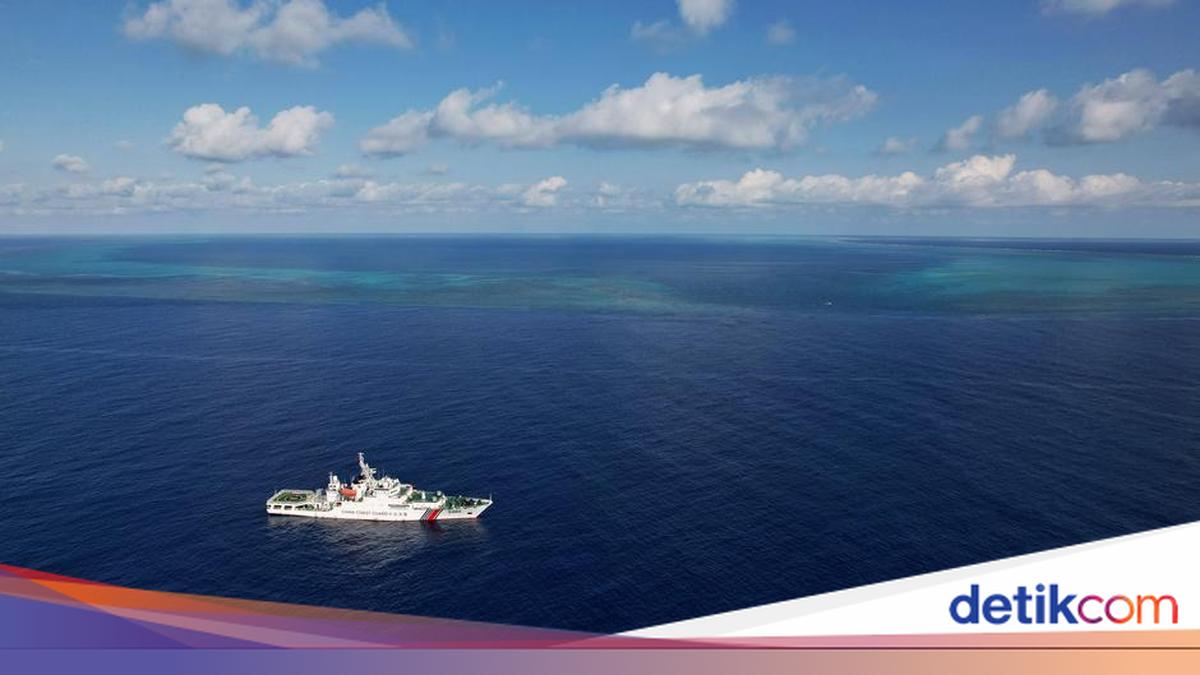
China and four ASEAN member states—Brunei Darussalam, Malaysia, the Philippines and Vietnam—as well as Taiwan, have been embroiled in territorial disputes for decades in the busy shipping corridor. The area is also believed to hold reserves of oil and gas beneath the seabed.
In recent years, confrontations between China’s coast guard and navy and the Philippines have intensified, particularly around disputed shoals and reefs.
In 1988, a clash between Chinese and Vietnamese forces over a disputed reef killed dozens of Vietnamese military personnel. It remains one of the deadliest recorded incidents in the South China Sea conflict.
Can it prevent future incidents?
Julio Amador III, a Manila-based geopolitical analyst, said the draft Code of Conduct might not be sufficient on its own to prevent aggressive actions in the disputed waters.
However, combined with other measures—including diplomacy with foreign countries and stronger military capabilities—the agreement could make potential aggressors think twice before acting.
“Deterring powerful countries takes considerable effort,” Amador said, referring to China.
“As a country, we cannot rely on just one approach. We need all the tools available, whether that means the Code of Conduct, filing a case against China or increasing military spending.”
The disputed waters have long been seen as a potential flashpoint in Asia. The area has also become one of the sensitive fronts in regional rivalry between the United States and China.
Washington has repeatedly said it is obliged to defend the Philippines, its oldest treaty ally in Asia, if Philippine forces come under armed attack, including in the South China Sea.
China, however, has warned the United States not to interfere in what it describes as a dispute that is entirely a matter for Asian countries.
Source: jawawa.id (https://jawawa.id/newsitem/china-asean-make-progress-as-south-china-sea-code-of-conduct-nears-completion-1794397971)
Originally published by detikcom (https://news.detik.com/dw/d-8748672/china-asean-capai-kemajuan-kode-etik-laut-china-selatan-nyaris-rampung), translated from Indonesian