
China-ASEAN FTA 3.0: A New Journey in All-Round Economic Cooperation
..By deepening open cooperation, China and ASEAN will undoubtedly tighten the bonds of a community with a shared future,Jakarta (ANTARA) - On November 16, 2026, at the China-ASEAN Leaders’ Meeting held in Manila, the Philippines, leaders of both sides jointly announced that the China-ASEAN Free Trade Area (CAFTA) 3.0 Upgrade Protocol will come into force from December 1, 2026.
This is a landmark achievement in implementing the important consensus reached by President Xi Jinping and ASEAN leaders at the China-ASEAN Special Summit to Commemorate the 30th Anniversary of China-ASEAN Dialogue Relations in 2021. It is also a major initiative for China to implement the the 15th Five-Year Plan regarding promoting high-standard opening up and creating new horizons for mutually beneficial cooperation.
The Upgrade Protocol will further deepen and expand bilateral cooperation between China and ASEAN partners, including Indonesia, in an all-round manner, injecting new momentum into Asia-Pacific regional economic integration.
Stabilizing Expectations and Boosting Confidence
Currently, the rules-based multilateral trading system is facing severe challenges and uncertainty has significantly increased in the global economic and trade environment.
Against this backdrop, China and ASEAN are jointly facilitating the implementation of the Upgrade Protocol, with their concrete actions to demonstrate their firm support for multilateralism and free trade and their shared commitment to resisting protectionism and unilateralism.
This will inject greater confidence and momentum into regional and even global economic growth, serving as a typical practical of addressing global challenges through regional cooperation.
Aiming to promote the open, mutually beneficial and inclusive cooperation, the Upgrade Protocol is specifically tailored to the characteristics and needs of regional economic and trade cooperation.
It will further propel China-ASEAN economic and trade cooperation from mere flow of production factors to the synergy of rules, building a comprehensive, high-quality and sustainable cooperation framework.
It will create a more open, convenient, secure, stable and predictable regional market, as well as more integrated industrial and supply chain system for all enterprises within the region, further reinforcing stable institutional guarantees and fostering a favorable business environment.
Fostering Momentum and Promoting Cooperation
Focusing on rules and cooperation, the Upgrade Protocol goes beyond traditional areas “at the border” such as trade facilitation to advance systematic cooperation frameworks and institutional arrangements in emerging“beyond the border”areas , including the digital economy, green economy and supply chain connectivity.
In the digital economy sector, both sides have agreed to enhance cooperation in “hard connectivity” such as logistics and digital infrastructure, and improve system interoperability in “soft connectivity” such as single windows, electronic invoicing, electronic payments and electronic bills of lading to lower enterprise costs.
Cooperation also extends to emerging areas such as artificial intelligence, to cater for the market and corporate needs.
In the green economy sector, a comprehensive cooperation framework has been established guided by the goals and principles of the Global Development Initiative.
This framework identifies eight priority areas, including green trade, green investment and the circular economy, which cover R&D, financing, production, consumption and recycling. Within this framework, China and ASEAN will focus on key sectors such as new energy vehicles and photovoltaics, striving for tangible outcomes.
In the area of supply chain connectivity, both sides make high-standard commitments to enhance the free flow of key goods and services.
Efforts will be made to improve infrastructure connectivity and address logistics and transportation bottlenecks, thereby improving the efficiency of regional supply chain resource allocation and risk early-warning capabilities, and enhancing the resilience and connectivity of regional supply chains.
In addition, the Upgrade Protocol has upgraded institutional rules and cooperation frameworks in emerging areas with significant cooperation potential for both sides, including customs procedures and trade facilitation, standards, technical regulations, and conformity assessment procedures, sanitary and phytosanitary measures, economic and technical cooperation, competition and consumer protection, and micro, small, and medium enterprises.
Strengthening Ties and Promoting Mutual Benefit
As a major contributor and stabilizing anchor to world economic growth, China remains firmly committed to expanding high-standard opening up, promoting the liberalization and facilitation of trade and investment and proactively sharing its development opportunities with the world as “China Opportunities 2.0”.
Driven by the CAFTA 1.0 and 2.0, China has remained ASEAN’s largest trading partner for 17 consecutive years, and ASEAN has been China’s largest trading partner for 6 consecutive years.
In 2025, the trade volume between China and ASEAN exceeded US$1 trillion. The continuous expansion of bilateral trade and investment fully demonstrates the powerful driving force of regulatory synergy.
The implementation of the Upgrade Protocol will serve as a new historical starting point for deepening economic and trade cooperation between China and ASEAN.
The year 2026 marks the 5th anniversary of the establishment of the China-ASEAN Comprehensive Strategic Partnership, as well as the first year of implementing the Plan of Action to Implement the ASEAN-China Comprehensive Strategic Partnership (2026-2030).
The implementation of the Upgrade Protocol comes at a highly timely moment, injecting new essence and vitality into the bilateral relationship. As the dividends of the agreement continue to be unleashed, institutional advantages will be translated into tangible development outcomes.
This will bring more pragmatic results and well-being to businesses and people across the region, continuously enhancing their sense of gain, fulfillment and happiness. By deepening open cooperation, China and ASEAN will undoubtedly tighten the bonds of a community with a shared future, injecting more certainty and positive energy into a world fraught with turbulence and change.
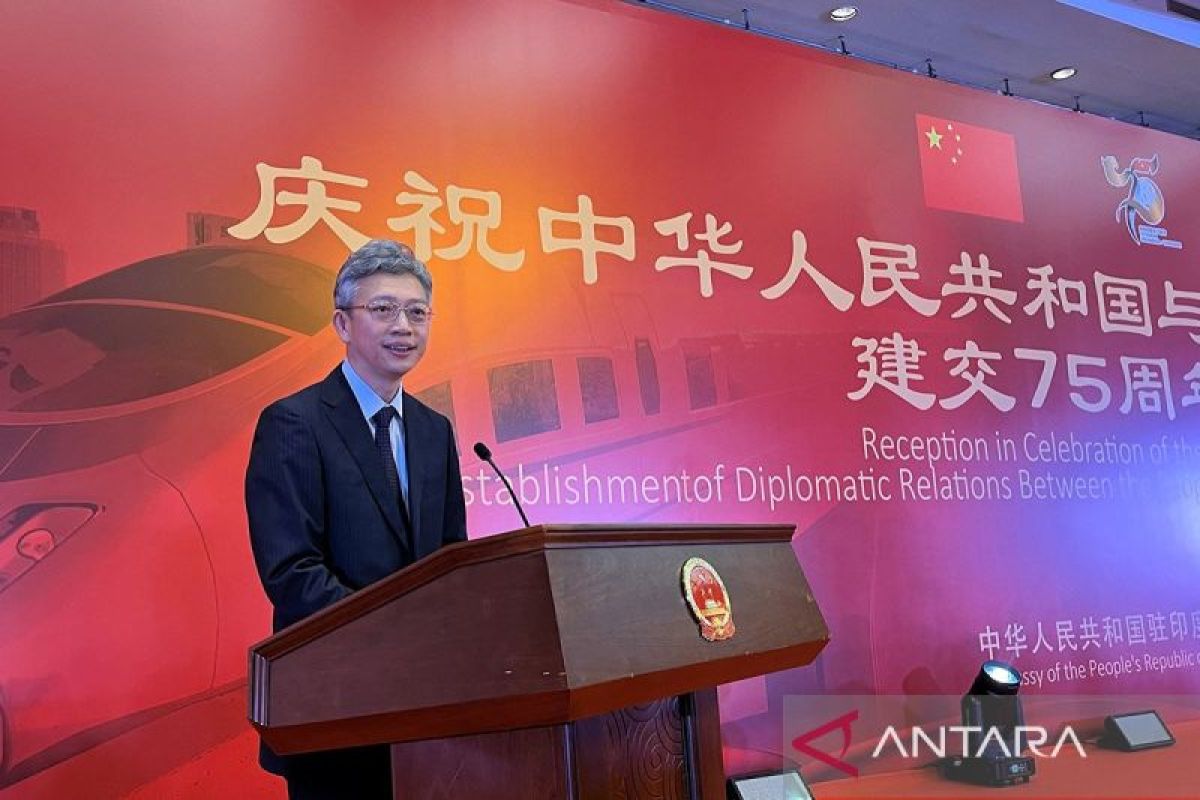
*) Wang Lutong is Chinese Ambassador to Indonesia
Disclaimer: The views and opinions expressed here are those of the author and do not necessarily reflect the official policy or position of the ANTARA News Agency.
Source: jawawa.id (https://jawawa.id/newsitem/china-asean-fta-3-0-a-new-journey-in-all-round-economic-cooperation-1795596618)
Originally published by Antara (English) (https://en.antaranews.com/news/445227/china-asean-fta-30-a-new-journey-in-all-round-economic-cooperation)