
China-ASEAN Cooperation Gains Stronger Momentum
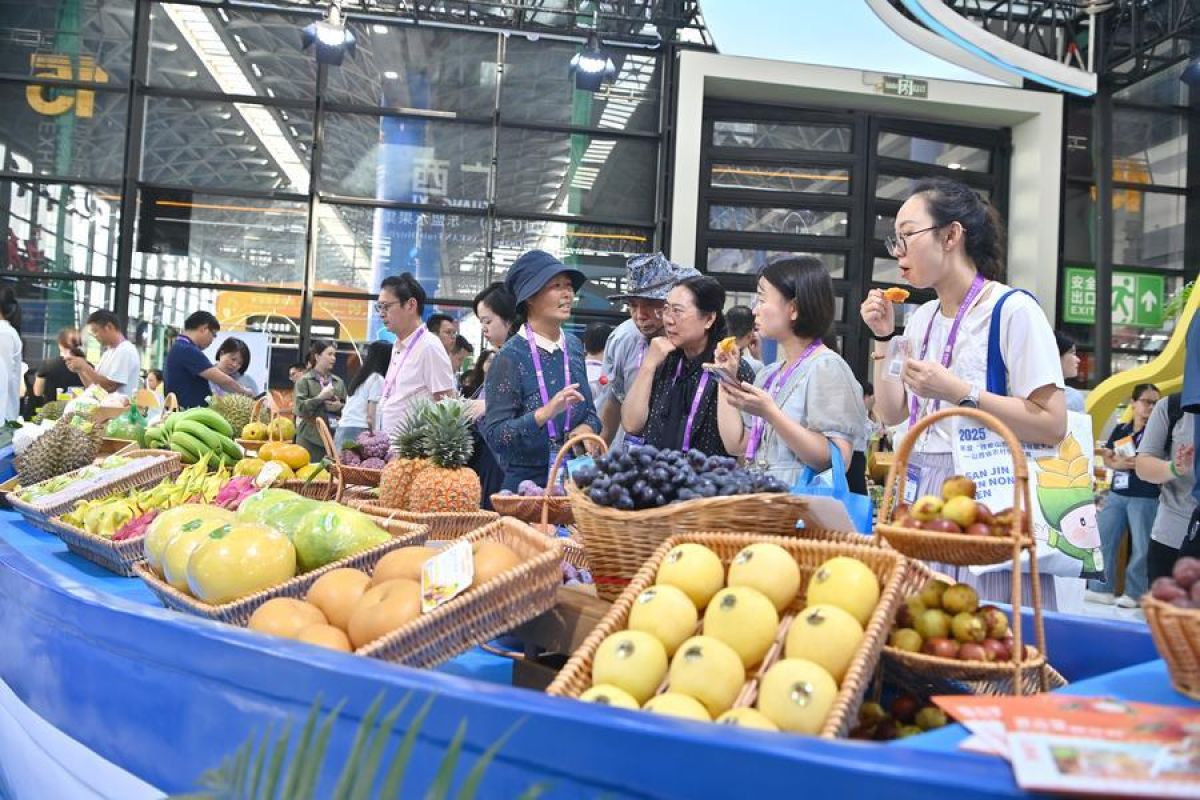
Nanning (ANTARA) - Various “firsts” at the ongoing 23rd China-ASElar Expo (CAEXPO) provide a glimpse into the potential and vitality of economic and trade cooperation, which has provided a significant boost to shared development in the region.
Timor-Leste participated in the exhibition in Nanning, Guangxi Zhuang Autonomous Region, southern China, for the first time, as the 11th member of ASEAN and an official co-host this year. Additionally, an exhibition area was prepared for the first time to showcase the technological needs and applications of ASEAN nations. As a new frontier for mutually beneficial cooperation, artificial intelligence (AI) has now become one of the primary focuses.
China has remained ASEAN’s largest trading partner for 17 consecutive years, while ASEAN has been China’s largest trading partner for six consecutive years. The value of bilateral trade exceeded US$1 trillion last year. Furthermore, it is noteworthy that total cumulative two-way investment has surpassed US$510 billion.
The rapid pace of economic and trade cooperation, reflected in the presence of cross-border industrial zones which serve as important milestones across the region, has created local employment while providing tangible benefits to community welfare.
A new dynamism will further drive China-ASEAN cooperation, and such momentum is unlikely to wane.
Aligned with the characteristics and needs of the region, the China-ASEAN Free Trade Area (CAFTA) 3.0 Upgrade Protocol—which has adopted high-standard trade and economic rules and explored ways to build more robust cooperation frameworks and institutional arrangements—will provide sustained momentum for economic development.
The Pinglu Canal, a 134.2-kilometre waterway connecting Nanning with the Beibu Gulf, officially opened for navigation on 16 September. The presence of this canal creates a new corridor for the two-way movement of goods between the Chinese and ASEAN markets. This waterway will also stimulate cross-border investment and industrial cooperation.
As strong supporters of multilateralism and free trade, China and ASEAN continue to work diligently to deepen the integration of industrial and value chains.
Furthermore, the commitment to higher-standard arrangements for trade liberalisation, facilitation, and investment demonstrates the confidence and determination of both parties in facing shared challenges in the international economic and trade arena.
China remains committed to open and mutually beneficial cooperation, continuing to expand high-standard openness and working with ASEAN nations to promote the development of a China-ASEAN community with a closer shared future, while creating more benefits for the people on both sides.