
China and the US Suddenly Unite to Storm the Middle East
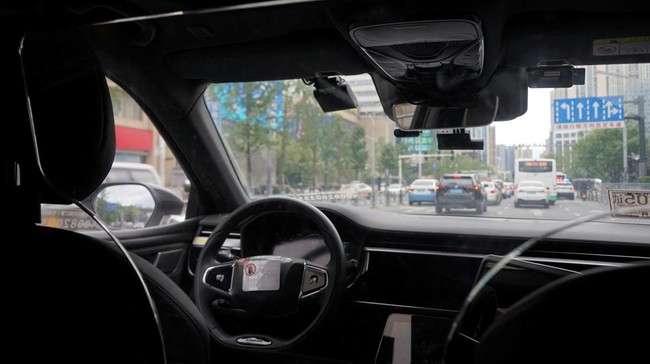
China and the United States may be locked in geopolitical conflict, but their autonomous driving industries are apparently getting along. This is evident in the collaboration between the US ride-hailing giant Uber and the Chinese autonomous driving developer Pony.ai.
Uber and Pony.ai have announced plans for a massive expansion to deploy 2,000 robotaxis in Europe and the Middle East. The announcement, made on Friday (14/8) local time, marks an aggressive move by both companies following the successful launch of their first commercial robotaxi service in Europe, in Zagreb, the capital of Croatia, at the end of March.
Through this latest partnership, Pony.ai’s autonomous vehicle fleet will roll out to four new cities in Europe. However, both parties are still keeping the list of target cities and the exact launch schedule under wraps.
Fleet size is becoming a critical factor in the commercialisation of autonomous vehicles. The more units on the road, the more data can be gathered to prove safety standards to regulators, whilst simultaneously reducing operational costs. Currently, Waymo, a subsidiary of Alphabet, leads the global robotaxi market with a fleet of approximately 5,000 vehicles operating predominantly in the US. Waymo is now testing services in London and has reportedly established new entities in four European Union member states, whilst also eyeing Tokyo for global expansion.
Meanwhile, Chinese players like Baidu Apollo Go and WeRide are also increasingly aggressive in testing their autonomous services in Europe. Interestingly, Uber is the strategic partner behind the expansion of these Chinese giants. Previously, Uber and WeRide collaborated to launch the first robotaxi pilot project in Madrid, Spain, and operate similar services in Abu Dhabi and Dubai. Furthermore, Uber’s subsidiary in Japan recently signed an agreement with a local taxi operator to test robotaxis in Tokyo by the end of this year.
This move underscores Uber’s business direction under CEO Dara Khosrowshahi. The company’s ambition is not just to be a ride-hailing app provider, but to become the parent of the world’s autonomous vehicle ecosystem. “Uber’s goal is to be the leading platform for the commercialisation of autonomous vehicles,” Khosrowshahi stated in the company’s financial performance report. He added that the main strategy is to gather a ‘super set of data’ from global fleet operations, which will then be shared with technology partners to accelerate the development of future vehicles. Market players are now awaiting Pony.ai’s quarterly financial report, scheduled for release on Tuesday, to assess the financial impact of this aggressive expansion. The advancement of the robotaxi industry represents a sophisticated innovation to boost efficiency and productivity, but it also brings negative consequences for the online driver profession. If taxis can operate fully automatically without drivers, the profession will become irrelevant in the future.
Source: jawawa.id (https://jawawa.id/newsitem/china-and-the-us-suddenly-unite-to-storm-the-middle-east-1786706421)
Originally published by CNBC Indonesia (https://www.cnbcindonesia.com/tech/20260814135332-37-759369/china-dan-amerika-mendadak-bersatu-serbu-timur-tengah), translated from Indonesian