
China and the Changing Map of World Oil Power
The Iran war has reminded the world of an old reality: oil is not merely an economic commodity. It is also an instrument of geopolitical power. When the conflict nearly halted shipping through the Strait of Hormuz, concerns immediately emerged that world oil prices would spiral out of control. This narrow strait is one of the most strategic energy chokepoints in the world.
What happened did not entirely match expectations. Oil prices did spike. Brent even reached around 126 US dollars per barrel at the end of April. But five months after the war began, the price had fallen by about 40 dollars from that peak. This was despite around 14 million barrels of oil per day, or nearly a fifth of world production, being at risk of being trapped in the Gulf region due to disruptions at Hormuz.
One interesting explanation came from The Economist’s 15 August 2026 edition. The magazine even used the provocative phrase that China had seized part of the oil market’s control from OPEC. That statement need not be taken literally. China is not a major oil exporter and is not a member of the producers’ cartel. Yet the experience during the Iran war showed the emergence of a new form of power in the world energy market: the power of a giant buyer.
For decades, power in the oil market was mainly associated with producers. OPEC could influence prices by raising or lowering production. The logic was simple: cut supply and prices tend to rise; add supply and prices tend to fall. Before the war, OPEC and its allies controlled about half of world crude oil production.
China has shown the other side of that equation. As one of the world’s largest oil consumers and importers, Beijing has the ability to influence the market from the demand side. When supply from the Gulf was disrupted, China slashed its oil imports drastically. The magazine noted that imports fell by nearly half to around 5.5 million barrels per day.
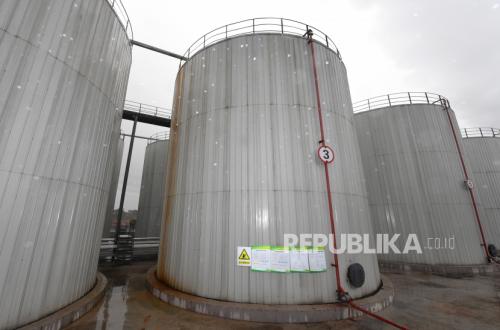
That move was possible because China had built up large oil reserves when prices were relatively low. Beijing also restricted exports of oil products and managed its domestic demand. In other words, when global supply was disrupted, China did not have to scramble for every available barrel on the international market.
The impact was significant. Saudi Arabia and the United Arab Emirates did divert around 5 million barrels per day through pipelines, while several countries such as the United States and Japan released strategic reserves. But the sharp drop in Chinese demand became one of the main shock absorbers that prevented the supply disruption from turning into a much larger price explosion.
Recent developments further underscore China’s ability to manage its oil demand. Reuters noted that China’s oil imports in July were still 24.3 percent lower than a year earlier. Beijing was able to cope with that decline partly because it has oil inventories estimated to exceed 1.2 billion barrels.
This is where the analogy of China as a ‘new OPEC’ arises. Yet the two actually use opposite instruments. OPEC gains market power because it can control supply. China is beginning to gain market power because of the size of its demand and its ability to determine when to buy, how much to buy, and when to use its own reserves.
If OPEC can be called a swing producer, China in certain circumstances is beginning to function as a kind of swing buyer. This change is important. In the old energy geopolitics, power lay mainly with those who owned oil wells. In the emerging energy geopolitics, power also lies with those who have markets, reserves, refining capacity and the state’s ability to manage consumption.
However, it is too early to say that the OPEC era has ended. In the long term, the position of Gulf producer countries may even strengthen again. Oil fields continue to experience natural production declines, while global investment to replace that supply is considered insufficient after 2030. State-owned oil companies in the Gulf region are among the few players still making large investments.
China’s own power also has limits. When inventories fall and refinery activity picks up again, Beijing will eventually have to return to the market. Reuters even noted that China began adding to stocks again in July. This means the position of swing buyer cannot be used indefinitely.
These changes are important for Indonesia. Indonesia is now a net oil importer, so price volatility and disruptions to international supply routes have a direct impact on the economy, energy subsidies, the trade balance and the exchange rate. We do not have the luxury that China has of influencing the world market through the size of its purchases.
But China’s experience offers a lesson about the meaning of energy security. Security is not only determined by the ability to produce oil domestically. It is also determined by the ability to build reserves, diversify supply sources and routes, improve energy efficiency and reduce structural dependence on imported oil. The development of biodiesel, renewable energy and transport electrification is therefore not merely an environmental agenda, but also part of a geopolitical and energy security strategy.
From this development there is an important lesson for oil-importing countries: the current momentum should be used to diversify supply sources and reduce oil consumption. Ultimately, the safest way to reduce dependence on a particular regime or region is to reduce dependence on oil itself.
Source: jawawa.id (https://jawawa.id/newsitem/china-and-the-changing-map-of-world-oil-power-1787442649)
Originally published by Republika (https://analisis.republika.co.id/berita/tk712c393/china-dan-berubahnya-peta-kekuatan-minyak-dunia), translated from Indonesian