
China and Russia Deliver a Stark Warning to Indonesian Coal Producers
Jakarta, CNBC Indonesia — Coal prices have slumped for seven consecutive days, driven by weaker oil prices and demand from China.
For Indonesia, the coal downturn over the past week is also bad news amid negative developments involving China, Russia and India.
According to Refinitiv, coal closed at US$137.40 a tonne on Tuesday (10 November 2026), down 0.25%. The decline extended the negative trend, with prices plunging 9.9% over seven consecutive days.
China, the world’s largest coal consumer, cut coal imports by 6% year on year in October 2026. Customs data released on Tuesday showed buyers were holding back from replenishing stocks while coal prices remained high.
Cited by oilprice.com, Fitch Ratings senior director Jenny Huang said Chinese buyers appeared reluctant to increase purchases aggressively, owing to adequate inventories and expectations of higher domestic supply.
China imported 39.43 million tonnes of coal in October, down from 41.74 million tonnes in the same period a year earlier. The figure was also below September’s 43.37 million tonnes.
The World Bank’s October edition of its Commodity Markets Outlook said Australian thermal coal prices had briefly exceeded US$150 a tonne in September and remained high throughout October.
This was driven by renewed tensions in the Middle East conflict, the closure of several mines in China, strong demand for electricity in Asia, and uncertainty over Indonesian supply.
Expectations of a warmer winter in parts of China due to El Niño have also led buyers to defer purchases. This could reduce demand for coal used for heating.
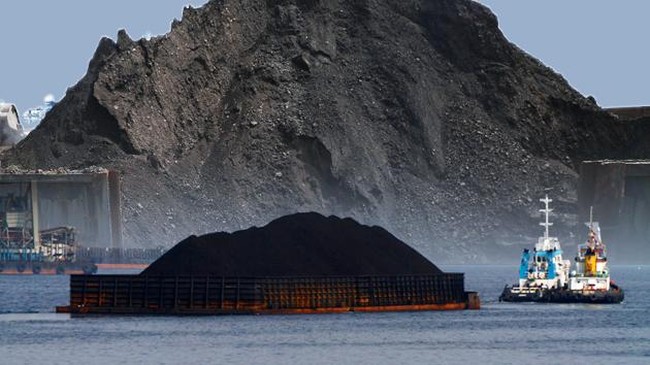
Meanwhile, shipments from Indonesia, China’s main supplier, remain hampered by low river levels in some production areas, disrupting the transport of coal by barge.
Despite the decline in October, China’s coal imports for January to October 2026 rose 1% year on year to 392.96 million tonnes.
Imports had risen in June and August after a deadly coal mine accident in May prompted widespread safety inspections and constrained domestic supply.
Meanwhile, electricity generation from fossil fuels in China, most of which is coal-fired, fell 1.2% in September as increased clean energy output reduced coal’s share of the power mix.
China rejects Indonesian proposal?
Chinese coal buyers have rejected Indonesian exporters’ request to include a waiver clause in new supply contracts. The clause would release exporters from their delivery obligations if the Indonesian Government again restricted production or export quotas.
Bloomberg, citing sources familiar with the negotiations, reported that Indonesian exporters wanted flexibility in the event of policy changes, including production quota cuts, export restrictions or delays in shipping approvals.
Indonesia is the world’s largest thermal coal exporter. However, repeated changes to production and export policies this year have disrupted shipments to international markets.
The Government had previously cut production quotas for several mining companies. At the same time, El Niño reduced rainfall and lowered river levels in several mining areas.
These conditions have hampered barge transport to export ports. As a result, Indonesian supply has become more limited, adding to uncertainty for overseas buyers.
Chinese buyers, however, appear unwilling to take on the additional risk. They are reluctant to agree to contracts that would allow exporters to reduce or delay shipments without clear consequences.
Russia takes Indian coal market share from Indonesia
Russia is expanding its share of India’s thermal coal market. From January to October 2026, Russian coal’s share of India’s total imports almost doubled to 8.2%, amid competition among global suppliers.
According to a 10 November report by Kommersant, citing data from Indian commodity consultancy BigMint, Russian coal shipments to India surged 63% year on year to 10.4 million tonnes.
That made Russia India’s fourth-largest thermal coal supplier, after Indonesia, South Africa and the United States.
Russian shipments reached 1.6 million to 1.8 million tonnes a month between May and August, before falling to 900,000 tonnes in October.
India is now one of the markets still able to absorb increased Russian coal exports. Since the European Union embargo took effect in August 2022, the European market has been closed to Russian coal.
Russia’s coal industry also faces high logistics costs because of long rail journeys to ports, as well as thin profit margins.
Russia’s expansion in India has mainly displaced Indonesia and South Africa. Indonesian thermal coal shipments to India in the first 10 months of 2026 fell 14% to 71.4 million tonnes. Indonesia’s share declined from about 60.2% to 56.5%.
South African supply fell 12% to 24.3 million tonnes, while US exports rose 11% to 12.3 million tonnes.
Despite the changing supplier landscape, India’s total thermal coal imports contracted. From January to October 2026, imports stood at 126.3 million tonnes, down 8.5% from the same period a year earlier.
However, imports in October rose 34% month on month and 19% year on year to 14.5 million tonnes, the highest monthly level of 2026.
Alexander Kotov, a partner at consultancy NEFT Research, estimated that India’s share could rise to 15%-20% in 2026. At the current pace, Russian thermal coal exports are forecast to grow 15%-17% to 185 million-190 million tonnes.
But Russia’s export growth could face constraints towards the end of the year.
Chinese consultancy SXcoal said most of Russia’s thermal coal export volumes for 2026 had already been sold, leaving relatively little available for shipment in November and December.
High mining and logistics costs, combined with rising coal demand for heating ahead of winter, are also limiting Russia’s export potential.
Coal India recorded its highest monthly coal supply to the power sector in October 2026. The Indian state-owned mining company delivered 57.1 million tonnes, up 19% from the same period a year earlier.
This was Coal India’s highest monthly supply on record. In October last year, the company supplied about 48 million tonnes of coal to the power sector.
The increase highlights Coal India’s important role in meeting India’s energy needs, particularly for power stations that remain dependent on coal.
The surge in supply also reflects the substantial coal required to maintain electricity availability as energy demand continues to grow.
Source: jawawa.id (https://jawawa.id/newsitem/china-and-russia-deliver-a-stark-warning-to-indonesian-coal-producers-1794365434)
Originally published by CNBC Indonesia (https://www.cnbcindonesia.com/research/20261111081912-128-784092/china-rusia-beri-peringatan-keras-buat-pengusaha-batu-bara-ri), translated from Indonesian