
China and North Korea Open Bridge After 12-Year Delay
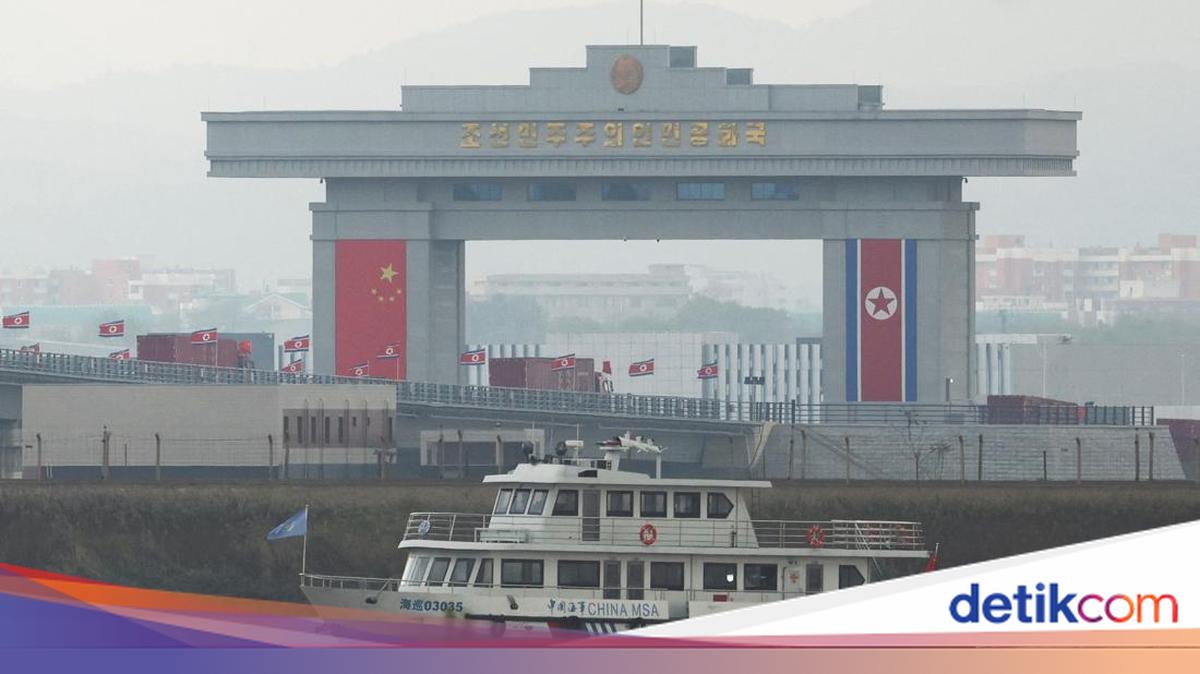
China and North Korea have officially opened a bridge linking the two countries. The bridge, completed in 2014, has opened only after a 12-year delay.
The opening ceremony took place on Thursday (15 October 2026), local time. The bridge is called the New Yalu River Bridge.
It is expected to revive trade and economic activity after relations between the two countries deteriorated for several years and the COVID-19 pandemic disrupted cross-border exchanges.
The bridge spans 3 kilometres — 3,026 metres, to be precise — over the Yalu River, which separates China and North Korea. North Korea calls it the Amnok River.
The four-lane bridge, reserved for vehicles, connects Dandong in China with Sinuiju in North Korea.
A Chinese customs facility stands at the end of the 1.3-kilometre approach. It has seen increased activity in recent days. Trucks decorated with Chinese flags were seen waiting on the bridge ahead of the opening of cross-border traffic on Thursday (15 October), local time.
Crowds also gathered on the Chinese side of the border along the road facing the bridge. Chinese and North Korean flags were displayed along the cable-stayed crossing, whose towers rise high above the river.
“It’s incredible,” said a woman who had come to watch the opening in Dandong, a quiet border city in northern China.
“Ten years have passed. This will certainly be good for business,” she said, asking not to be named.
The bridge was completed in 2014, but its opening was delayed because the connecting roads and customs complex on the North Korean side were unfinished. Pyongyang also closed its borders during the COVID-19 pandemic.
The new bridge is intended as an alternative to the decades-old China–North Korea Friendship Bridge, located elsewhere along the Yalu River.
On Thursday (15 October), China’s Xinhua news agency reported that the two countries had held an inauguration ceremony for the new bridge. North Korean state media had not reported on the ceremony.
The opening marks progress in bilateral relations between Beijing and Pyongyang, following two summits between the countries’ leaders over the past year.
China remains North Korea’s largest trading partner, despite a series of UN sanctions banning the flow of goods and movement of workers to and from North Korea in response to its development of missiles and nuclear weapons.
Lim Eul Chul, an analyst at Kyungnam University’s Institute for Far Eastern Studies, said the bridge was “unlikely to immediately trigger a full-scale revival of trade to pre-sanctions levels”.
However, Lim said it would facilitate the transport of heavy equipment, raw materials and energy products needed for North Korean development projects.
Delayed by more than a decade
The four-lane bridge connects Dandong in north-eastern China with Sinuiju in North Korea. The two cities were already linked by the ageing, single-lane Sino-Korean Friendship Bridge.
The old bridge, built in 1937, has long carried a heavy load. It handles more than 70 per cent of official trade between the two countries, by rail and road, but vehicles can cross in only one direction at a time.
The new bridge was originally scheduled to open in 2014. However, North Korea had not completed the customs and border-control facilities required for its operation. The reason for the delay was never officially announced. Possible explanations include disputes between Beijing and Pyongyang and North Korea’s closure of its borders during the COVID-19 pandemic.
Prospects for large-scale industrial investment remain limited because of UN sanctions, according to an analysis published in late August by South Korea’s Institute for National Security Strategy.
China–North Korea ties improve
Analysts say the new bridge is likely to gradually increase bilateral trade and improve logistical efficiency.
“China and the Democratic People’s Republic of Korea (DPRK), North Korea’s official name, are friendly neighbours connected by rivers and mountains,” Chinese Foreign Ministry spokesperson Mao Ning said. She added that the bridge was an important connectivity project for both countries.
Relations between the two countries have recently shown clear improvement. North Korean leader Kim Jong Un visited Beijing in September 2025, on one of his rare trips abroad. Chinese President and Communist Party leader Xi Jinping subsequently returned the visit by travelling to Pyongyang in June this year.
In the short term, trade is not expected to surge, as Beijing will continue to take Pyongyang’s interests into account, according to a recent report by Kim Gyubeom, an expert at South Korea’s Institute for National Security Strategy. Nevertheless, North Korean exports to China, including processed goods, food products, cosmetics and alcoholic drinks, could increase, Kim said.
The New Yalu River Bridge began operating about a month after the opening of the first road bridge linking Russia and North Korea across the Tumen River.