
China and Indonesia Expand Cooperation in New Energy Sector
China and Indonesia continue to accelerate cooperation in the new energy sector, from the construction of solar power plants to the development of supply chains and manufacturing, as Indonesia seeks to speed up its energy transition.
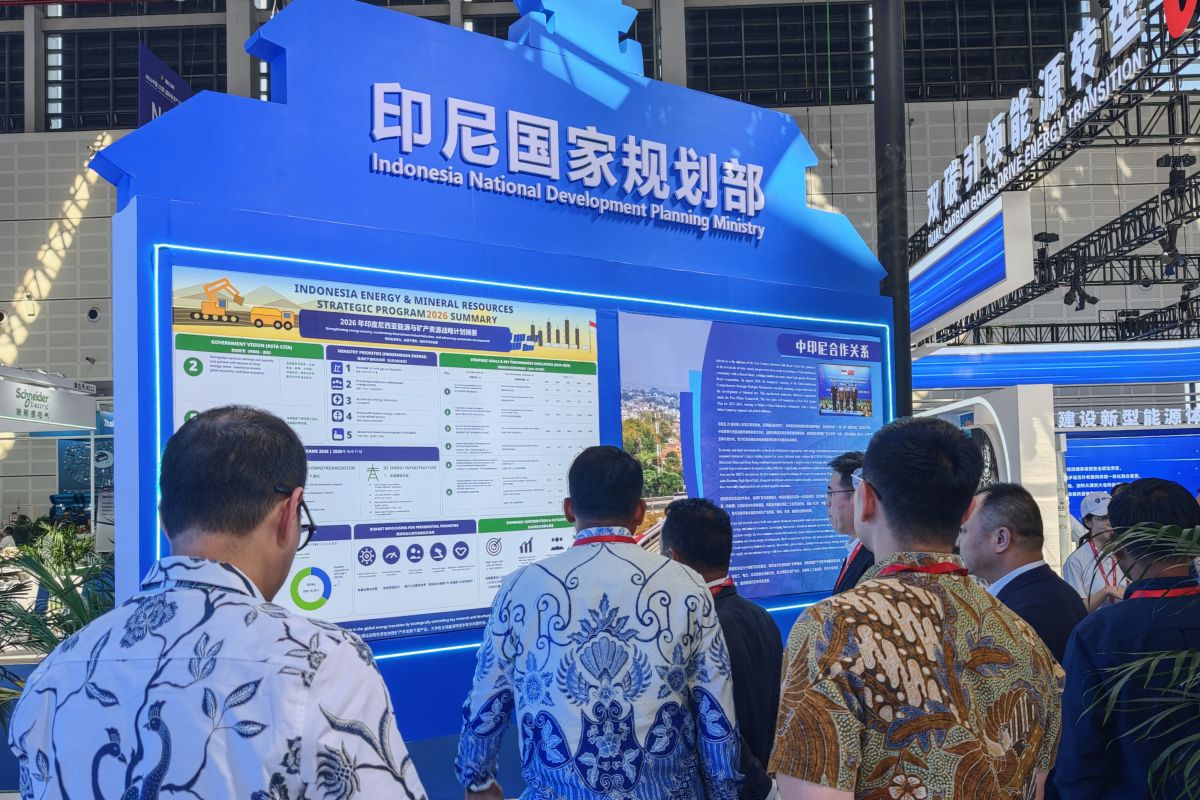
At the recently held 2026 China (Taiyuan) International Energy Industry Exhibition, an Indonesian delegation participated for the first time. New energy became the primary topic discussed by companies from both nations.
Qiu Xingyi, a representative of the Indonesian participants, stated that China and Indonesia possess great potential for cooperation in the new energy sector, such as wind and photovoltaic power, alongside coal. According to Qiu, his company has assisted several Chinese firms in developing new energy businesses in Indonesia in recent years.
Shanxi Province, where the exhibition was held, is a major energy-producing province in China and is actively promoting energy transition and increasing the proportion of new energy within its energy system. In 2025, the installed capacity of new and clean energy in Shanxi reached 90.48 million kilowatts, an annual increase of 18.29 million kilowatts. This capacity accounted for 55.1 per cent of the province’s total installed power capacity, surpassing coal-fired power plants for the first time.
“We hope to utilise this exhibition to find more new energy technologies and products that can be applied in Indonesia,” said Liu Chen Zhi, a representative from an Indonesian energy company.
A special exhibition area for new energy and new power systems was provided at the event to showcase the latest technologies, equipment, products, and business models in the sector. This area attracted many Indonesian exhibitors for exchange and consultation.
Indonesia is rich in renewable energy resources, including solar, hydro, and geothermal energy. Meanwhile, China possesses strong industrial capabilities in new energy equipment manufacturing, project construction, energy storage, and digital operations.
Xu Zaishan, Executive Vice Chairman of the Indonesia China Business Council (ICBC), stated that Indonesia hopes to leverage China’s mature technologies to develop various related projects. “Indonesia is an archipelagic nation with massive energy needs, yet the proportion of new energy in its energy mix remains relatively low. Meanwhile, China has developed relatively mature technology in the new energy sector. This is where both countries can find opportunities for cooperation,” said Xu.
In recent years, several new energy projects involving Chinese companies have begun operations in Indonesia. The Cirata floating PV project in West Java, built by PowerChina, has a total installed capacity of 192 megawatts and is one of the flagship floating solar projects in Indonesia and Southeast Asia. The project successfully connected to the grid at full capacity in 2023 and has since been supplying clean electricity to the Java-Madura-Bali grid, while also contributing to skills training and job creation for local communities.
In 2024, the 100-megawatt Karawang PV project in Indonesia, built by a Chinese company, was officially handed over for operation. This project can generate more than 150 million kilowatt-hours of clean electricity annually, meeting the annual electricity needs of approximately 112,000 households and reducing carbon dioxide emissions by about 114,700 tonnes. Its development also created over 1,000 jobs for the local community.
Cooperation is also expanding into the new energy industry supply chain. In August 2025, Indonesia’s Minister of Energy and Mineral Resources, Bahlil Lahadalia, held discussions with solar PV companies during his visit to China to explore the expansion of cooperation in the solar industry chain and ecosystem.
The Indonesian government stated its hope to accelerate the development of solar cells, modules, energy storage, and related industries through the influx of investment and technology.
Industrial cooperation is also evolving from project construction towards manufacturing. According to information released by the Economic and Commercial Office of the Embassy of the People’s Republic of China in the Republic of Indonesia, industries involving Chinese investment, such as new energy batteries and electric vehicles, are growing rapidly. This development is helping Indonesia gradually transition from being a raw material exporter to becoming an important global base for metal processing and the new energy industry.
At the policy level, new energy cooperation between China and Indonesia continues to receive support. During the seventh China-Indonesia Energy Forum held in September 2024, both parties stated they would strengthen cooperation in renewable energy and new energy technologies while consolidating traditional energy cooperation.
Indonesia stated it would optimise the country’s vast potential in the clean energy sector, including photovoltaics, wind, and hydro power. Indonesia also expressed its hope to further strengthen exchange and cooperation with China in the field of clean and low-carbon energy.
Several industry players noted that as China-Indonesia cooperation deepens in technology, industry chains, and human resources within the new energy sector, it is expected to evolve beyond individual projects towards broader coordination across the entire industry chain. This will create more opportunities for Indonesia’s energy transition and the global expansion of Chinese new energy companies.
Source: jawawa.id (https://jawawa.id/newsitem/china-and-indonesia-expand-cooperation-in-new-energy-sector-1789062884)
Originally published by Antara (Indonesian) (https://www.antaranews.com/berita/5735767/china-dan-indonesia-perluas-kerja-sama-sektor-energi-baru), translated from Indonesian