
China and Australia Deliver Positive News for Indonesian Coal Producers
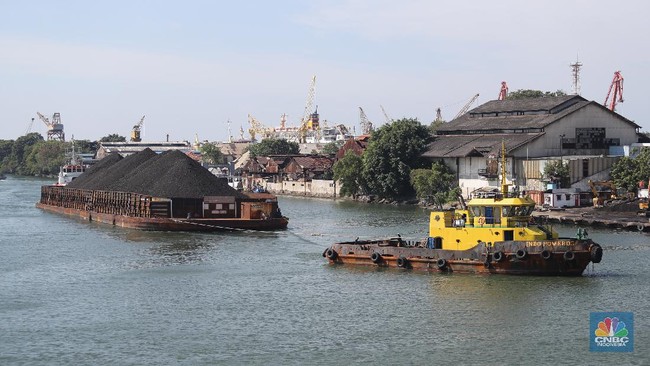
The price of coal remains in an upward trend. According to Refinitiv, coal prices on Thursday (9/7/2026) closed at US$131.65 per ton, strengthening by 0.61%. Yesterday’s closing price was the highest since 17 June 2026, or three weeks ago. This strengthening extends the positive trend for coal with a 2.8% increase over the past two days. The rise in coal prices was supported by still-high oil prices and a number of positive news items.
Australia is optimistic that exports will increase. Australia forecasts stable metallurgical coal prices until 2031 and rising exports. According to a quarterly outlook report from Australia’s Department of Industry, Science and Resources, Australia remains the world’s largest exporter of metallurgical coal in 2025-2026, with exports reaching 147 million metric tons, of which more than 95% of its production is shipped to overseas markets. Metallurgical coal prices are expected to remain relatively stable in real terms until 2031. Meanwhile, export volumes are projected to increase as production from major mines grows. However, export revenues are expected to decline gradually over the period despite relatively stable prices. The report also noted that the conflict in the Middle East has only had a limited impact on metallurgical coal supply. However, rising insurance, shipping, and diesel costs have increased trade expenses. Global seaborne metallurgical coal imports remain in the range of 25-30 million metric tons per month. Steel production using basic oxygen furnaces (BOF) still dominates, although the use of electric arc furnaces (EAF) has continued to increase since 2020. Longer shipping routes, especially between the Atlantic region and Asia, have increased freight costs, thereby enhancing the relative competitiveness of Australian suppliers. Although a global economic slowdown due to the Middle East conflict could affect demand, Australia expects global metallurgical coal trade to remain stable as long as no additional disruptions occur. India and Southeast Asia are expected to be the main sources of demand growth as steel production gradually shifts away from China. On the other hand, the increasing use of EAF technology is expected to reduce the share of BOF-based steel production, which is more coal-intensive, thus limiting long-term growth in metallurgical coal demand.
China has raised its renewable energy target, but coal remains high. China is targeting 25% of its energy consumption to come from non-fossil sources by 2030, up from 21.7% in 2025. In its 2026-2030 plan, the government is also targeting a 17% reduction in carbon emission intensity and a roughly 10% reduction in energy consumption per unit of Gross Domestic Product (GDP) compared to 2025. To achieve this, China will accelerate the construction of clean energy so that all growth in electricity demand is met by new renewable energy-based power plants. The government is also targeting the construction of 100 zero-carbon industrial parks, 500 zero-carbon factories, and increasing the share of new energy vehicles to 30% of total vehicles by 2030. However, China has stressed that developing renewable energy does not mean reducing coal. On the contrary, coal-fired power plant capacity will still be added as a backup generator when electricity production from wind and solar declines due to weather factors. One such development will be in the Inner Mongolia region. Inner Mongolia is also the centre of the West-to-East Power Transmission project, which sends about 40% of the electricity it generates to eastern China, including Beijing. In addition to building clean energy plants, the government is also strengthening transmission networks, energy storage, and adjusting industrial electricity consumption to be more aligned with renewable energy production. This step is being taken to meet the surge in electricity demand from artificial intelligence (AI) data centres, electric vehicles (EVs), and the manufacturing sector. On the other hand, Inner Mongolia continues to expand its coal downstream industry, such as coal-to-oil, coal-to-gas, and coal-based chemicals. According to the government, this development aims to reduce China’s dependence on oil and gas imports, especially after the Middle East conflict and disruptions in the Strait of Hormuz highlighted the risks of foreign energy supply.
Source: jawawa.id (https://jawawa.id/newsitem/china-and-australia-deliver-positive-news-for-indonesian-coal-producers-1783648256)
Originally published by CNBC Indonesia (https://www.cnbcindonesia.com/research/20260710071320-128-749638/china-australia-beri-kabar-baik-buat-pengusaha-batu-bara-ri), translated from Indonesian