
China Allocates £14.5 Trillion to Boost Declining Birth Rates
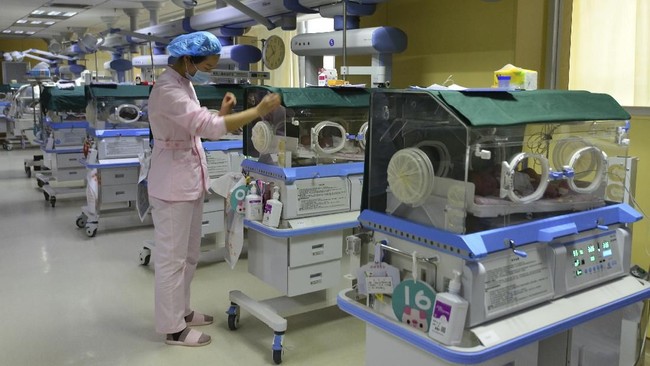
The Chinese government has once again injected massive funds to support families and encourage birth rates that continue to decline. The latest move involves increasing the budget for childcare subsidies as part of an effort to address the demographic crisis looming over the nation’s economy.
The Chinese Ministry of Finance announced on Tuesday (2/6/2026) that the central government will allocate 99.9 billion yuan, or approximately £23.5 billion, to support various infant and early childhood care programmes managed by local governments. This figure represents a 10.6% increase compared to the previous year.
“This additional funding signifies a greater willingness to use fiscal policy to support families,” said Xiujian Peng, a senior researcher at the Centre for Policy Studies at Victoria University Australia, as reported by Newsweek.
With this additional funding, the total childcare subsidies distributed by the government are expected to reach 110 billion yuan, or roughly £24.7 billion. The Ministry of Finance stated that the distribution of subsidies throughout this year is proceeding smoothly and regularly.
Beijing’s aggressive move comes amidst a growing lack of interest among China’s younger generation in having children. High living costs, expensive education, intense competition in the labour market, and changing views on marriage and parenting have led many couples to delay or even avoid having offspring.
In recent years, both central and local governments have continuously launched various incentives. These range from cash subsidies of US$500 for every child under the age of three and the abolition of tuition fees in public kindergartens, to the coverage of all medical costs related to childbirth.
The government has also taken controversial steps, such as removing the Value Added Tax (VAT) exemption for contraceptives that had been in place for over three decades. Since last January, condoms have been subject to a 13% VAT.
This policy is said to have impacted the market. According to estimates from investment bank Jefferies, cited by the Financial and Financial Times, sales of Durex, the best-selling condom brand in China, fell by approximately 5% in the first quarter of this year.
Nevertheless, several experts believe these incentives are not yet sufficient to reverse the long-standing decline in birth rates. According to Peng, while subsidies can help ease the burden on families, their impact on increasing birth rates will depend heavily on broader policies aimed at reducing the overall cost of raising a child.
“Its effectiveness ultimately depends on whether the subsidies are accompanied by wider measures to address the overall cost of childcare,” she said.
The challenges facing China are significant. The country’s fertility rate was recorded at just 0.97 births per woman in 2025, down from 1.02 the previous year. This figure is far below the population replacement level of 2.1 births per woman.
At the same time, China is also facing a surge in the number of retirees and a slowdown in domestic consumption. This situation has sparked concerns that a shrinking workforce and a rapidly ageing population could become a burden on the world’s second-largest economy.
Data from China’s statistics bureau shows that the number of births last year reached only 7.92 million, a 2.4% decrease compared to the previous year. Meanwhile, the number of deaths reached 11.31 million, causing the population of the ‘Celestial Empire’ to continue its contraction.