
China-Affiliated Coal Power Plants in Indonesia Reach 17.1 GW
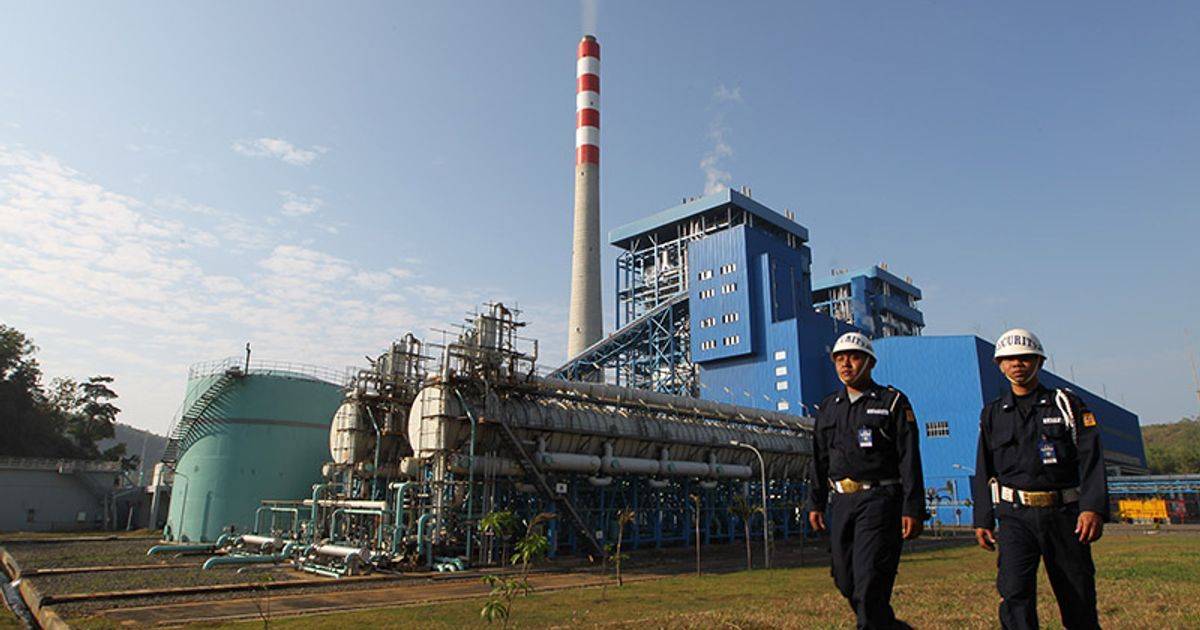
The expansion of coal-fired power plants (PLTU) affiliated with Chinese companies in Indonesia continues to show significant growth, even as global trends move in the opposite direction. Since Chinese President Xi Jinping committed in 202cap to halting the construction of coal plants abroad, the capacity of China-affiliated coal plants operating in Indonesia has reached 17.1 gigawatts (GW).
These findings are detailed in a report by the Centre for Research on Energy and Clean Air (CREA) titled ‘Five Years On: China Seeds Overseas Renewables Growth But Coal Ban Gaps Persist’. Globally, 61.5 GW of China-related coal projects have been cancelled since the commitment, which is estimated to avoid 6.4 billion tonnes of CO2 emissions over their operational lifespan.
Indonesia is the largest contributor to the capacity of China-related coal plants operating since Xi Jinping’s commitment, far exceeding Vietnam at 3.8 GW and Pakistan at 3.4 GW. Indonesia also holds the largest capacity of China-related coal plants currently in the construction phase among the countries analysed by CREA.
CREA Industry Analyst Syahdiva Moezbar stated that the high expansion of coal plants in Indonesia is partly influenced by regulatory loopholes. Presidential Regulation Number 112 of 2022 regarding the Acceleration of Renewable Energy Development for Electricity Supply does limit the construction of new coal plants for the national grid, but it still provides exceptions for national strategic projects and downstreaming activities.
“Indonesia’s downstreaming expansion, such as nickel and aluminium, has created a massive energy demand. On the other hand, limitations in the power grid and available energy options can drive dependence on captive coal plants,” Syahdiva said in Jakarta on Thursday.
According to CREA, the capacity of China-affiliated captive coal plants in Indonesia surged from 0.3 GW in 2021 to 12.5 GW in 2026. Of this capacity, more than 9 GW is used for the nickel industry, while approximately 6 GW is related to the aluminium industry and projects producing both nickel and aluminium. Industrial estates contribute around 2.7 GW.
Indonesia even hosts approximately 94% of the total capacity of China-affiliated captive coal plants operating within CREA’s analysis. This dominance primarily stems from private Chinese companies in the nickel sector, while Chinese companies listed on stock exchanges are heavily involved in aluminium projects. Several Chinese State-Owned Enterprises (SOEs) also serve as EPC contractors.
Conversely, the involvement of Chinese companies in Indonesia’s clean energy sector is also beginning to grow. CREA noted there are approximately 13.6 GW of hydropower projects and 8.2 GW of solar PV projects being developed by Chinese companies. However, most of these projects are still in the pre-construction and construction phases, with only about 0.5 GW of capacity currently operational.
Bhima Yudhistira, founder and Executive Director of the Centre of Economic and Law Studies (Celios), stated that Chinese investment in the critical minerals sector needs to be directed towards supporting the energy transition. One step that can be taken is encouraging the replacement of captive coal plants with renewable energy plants in industrial estates.
“If Indonesia wants to increase the added value of critical minerals, then Chinese investment must also provide low-carbon power sources in every industrial estate. PLN (the state electricity company) also needs to help strengthen the transmission grid so that renewable energy can enter these industrial zones,” Bhima said.
The CREA findings indicate that Indonesia’s energy transition challenges lie at the intersection of industrial expansion, grid limitations, and the need for reliable and affordable green energy. Amidst the launch of China’s 15th Five-Year Plan, CREA suggests that strengthening commitments should focus on cancelling or repurposing unbuilt coal plants, establishing retirement pathways for operational plants, and expanding the ban on coal plant construction to include captive plants.
Source: jawawa.id (https://jawawa.id/newsitem/china-affiliated-coal-power-plants-in-indonesia-reach-17-1-gw-1790225502)
Originally published by investortrust.id (https://investortrust.id/business/117277/pltu-afiliasi-china-di-indonesia-tembus-17-1-gw), translated from Indonesian