
Chillies in the Backyard, Hope in the Market
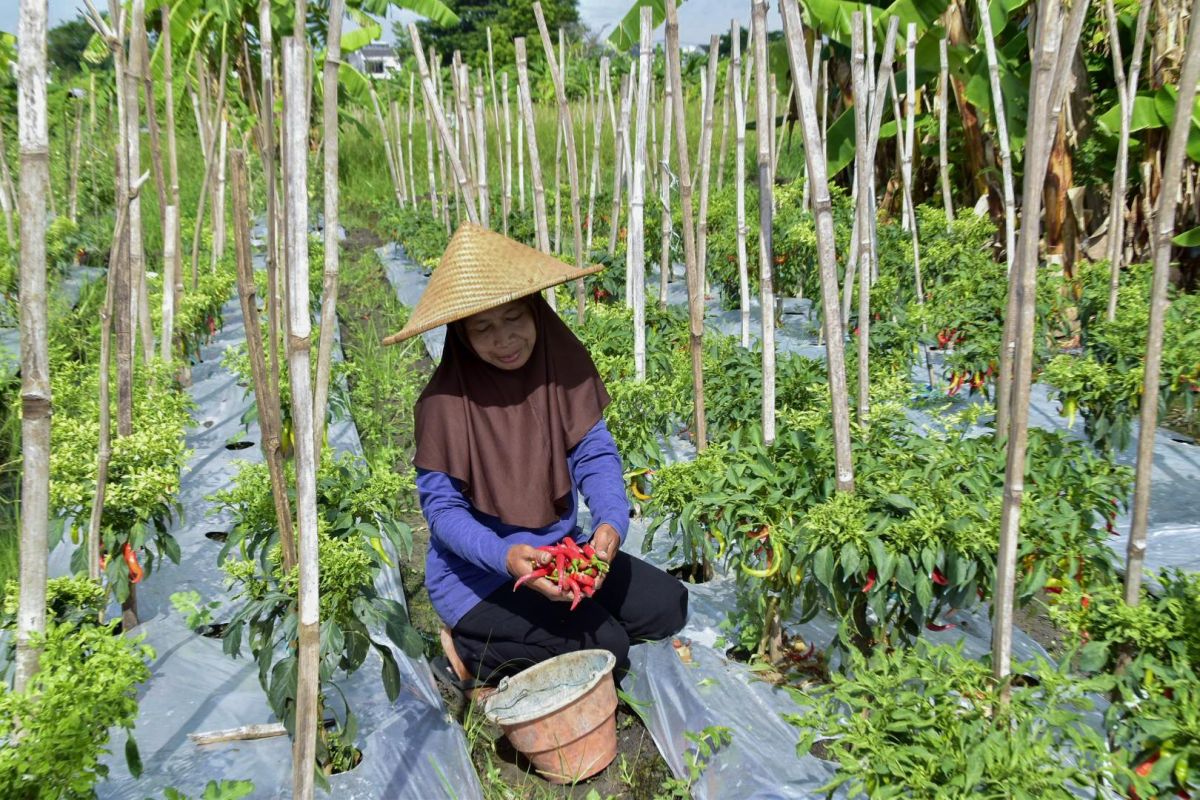
If supported with data, assistance and effective distribution networks, urban farming can be more than a temporary response to high chilli prices: it can become a productive habit that strengthens urban resilience.
Surabaya (ANTARA) – Chillies may take up only a small space on a shopping list, but price fluctuations can alter a family’s household budget.
For some households, a rise of several thousand rupiah per kilogram is keenly felt because chillies are an almost constant accompaniment to Indonesian dishes. For the government, the commodity has wider significance, as price movements also affect food inflation.
As the end of 2026 approaches, concern about chilli price volatility is well-founded. Statistics Indonesia (BPS) recorded a 23.47 per cent increase in red chilli prices in the fourth week of October compared with September 2026, while bird’s eye chilli prices rose by 12.49 per cent.
For bird’s eye chillies, the increase since December 2025 had reached 29.71 per cent. The national average price stood at Rp88,642 per kilogram, well above the upper limit of the Reference Sales Price (HAP) of Rp57,000 per kilogram. Red chilli prices rose in 327 regencies and municipalities, while bird’s eye chilli prices increased in 269.
In East Java, the price pressure was reflected in monthly inflation of 0.07 per cent in October 2026 and annual inflation of 3.09 per cent. BPS East Java said red chillies contributed 0.05 percentage points to monthly inflation, while bird’s eye chillies contributed 0.02 points. Both were among the commodities driving inflation, alongside tomatoes, chayote and milkfish.
Production problems are also linked to weather conditions. BPS East Java reported that most of the province had yet to enter the rainy season by October 2026. Limited water and unfavourable weather have damaged crops, reduced harvests and constrained market supplies.
Nationally, the Meteorology, Climatology and Geophysics Agency (BMKG) forecast a delayed start to the 2026/2027 rainy season in 529 seasonal zones, covering 61.08 per cent of Indonesia’s land area. The National Food Agency (Bapanas), meanwhile, warned that demand for chillies tends to rise towards the end of the year.
Although national supplies are expected to be sufficient, smooth distribution from production centres to consumer areas remains crucial to maintaining price stability.
Source: jawawa.id (https://jawawa.id/newsitem/chillies-in-the-backyard-hope-in-the-market-1793757072)
Originally published by Antara (Indonesian) (https://www.antaranews.com/berita/5830363/cabai-di-pekarangan-harapan-di-pasaran), translated from Indonesian