
Chilli Prices Rise, Supply Readiness from Upstream to Distribution Needs Strengthening
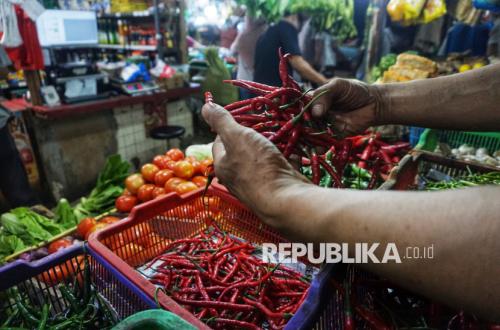
The price of bird’s eye chilli in the third week of September 2026 reached Rp77,596 per kilogram, experiencing an increase in 265 regencies/cities, covering approximately 73.61 per cent of Indonesia. This condition serves as a momentum to strengthen the readiness of chilli supply, from production and reserves to inter-regional distribution.
Member of Commission IV of the House of Representatives (DPR), Sonny T. Danapembara, stated that the rise in bird’s eye chilli prices is not solely influenced by weather conditions. According to him, changes in weather patterns should serve as a basis for the government to prepare anticipatory production measures from the outset.
According to Sonny, a strong El Niño and the delayed rainy season in hundreds of seasonal zones can indeed affect agricultural yields. However, supply readiness is also determined by planting area, harvest patterns, productivity, availability of reserves, inter-regional distribution, and logistics costs.
He noted that production disruptions in agricultural centres can quickly affect supply if other regions are not prepared to meet the demand. Distribution routes, transport costs, and supply limitations can also cause prices at the consumer level to move higher.
“I understand that El Niño has an impact on the agricultural sector, but we must prepare mitigation. We must arrange anticipatory measures from the beginning so that risks can be managed,” said Sonny on Friday (25/9/2026).
According to Sonny, price increases at the consumer level do not necessarily increase farmers’ profits. Rising production and shipping costs can reduce farmers’ income even when chilli prices in the market increase.
Therefore, he requested that the government pay attention to production readiness, especially to face changing weather patterns. Small dams (embung), alternative water sources, irrigation improvements, water-saving technology, and the use of varieties suitable for regional conditions should be prepared to maintain production.
“Price control cannot wait until chilli becomes expensive. Preparation must begin from the planting season, from production centres, through to the distribution routes. In this way, farmers are not disadvantaged and the public is not continuously burdened by high prices,” said Sonny.
Source: jawawa.id (https://jawawa.id/newsitem/chilli-prices-rise-supply-readiness-from-upstream-to-distribution-needs-strengthening-1790340895)
Originally published by Republika (https://ekonomi.republika.co.id/berita/tlx68h416/harga-cabai-naik-kesiapan-pasokan-dari-hulu-hingga-distribusi-perlu-diperkuat), translated from Indonesian