
Children Marched in Support of Free Nutritious Meals, KPAI Calls It Child Exploitation
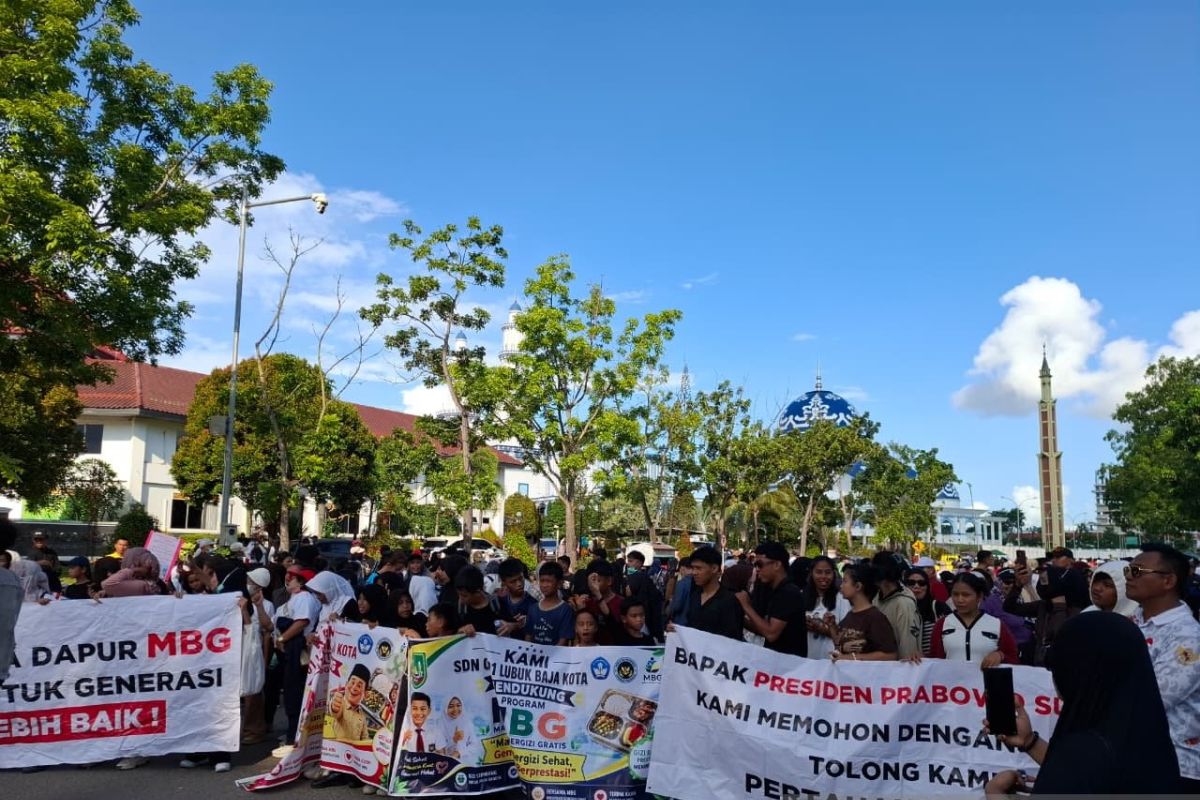
The Indonesian Child Protection Commission (KPAI) has deplored the involvement of hundreds of primary and junior secondary school students in a march expressing support for the Free Nutritious Meals Programme (MBG) held in Batam City and initiated by the Batam City Education Agency. KPAI Commissioner Sylvana Apituley asserted that mobilising children in such activities contravenes the principle of Meaningful Child Participation and potentially constitutes a form of exploitation and manipulation of children for adult agendas.
“Mobilising children as carried out by the Batam City Education Agency is a form of exploitation and manipulation of children for the political agendas of adults. The action was initiated and led by adults, while the children had neither access nor opportunity to provide substantive input regarding the objectives and substance of the action undertaken,” Sylvana said in a statement on Tuesday.
According to KPAI, the students involved also lacked adequate knowledge about the complexity of the policy to discontinue the MBG programme, which has become a national issue. Therefore, their involvement in the expression of aspirations was deemed not to reflect meaningful participation.
Sylvana explained that Meaningful Child Participation must be based on seven main principles: being carried out ethically, being relevant to children’s lives and voluntary, providing a safe and comfortable environment, ensuring equality of access and respect for children’s diversity, ensuring adult involvement aligns with child rights principles and child protection standards, prioritising the safety and protection of children, and guaranteeing evaluation and follow-up known to the child participants.
KPAI stressed that educational units have an obligation to facilitate children’s meaningful participation, including in public decision-making processes. Children need to be encouraged to build critical thinking skills, form their own opinions, and confidently express their views politely and without violence.
Furthermore, schools are obliged to fulfil children’s rights as stipulated in Law Number 23 of 2002 on Child Protection and its amendment in Law Number 35 of 2014. These regulations guarantee children’s rights to live, grow, develop, participate fairly, express opinions according to their age and level of intelligence, and obtain protection from abuse in political activities.
KPAI revealed that over the past decade it has consistently found various cases of political exploitation and manipulation of children in protest actions. This phenomenon indicates the persistently weak implementation of the Meaningful Child Participation principle in various environments, including within educational units.
“Without the application of the Meaningful Child Participation principle, children are vulnerable to violations of their basic rights due to manipulation and political exploitation by adults, even within school environments that should be safe spaces supporting the fulfilment of children’s rights,” Sylvana stated.
KPAI urged all regional governments, educational institutions, and relevant parties to ensure that every involvement of children in social activities or public expression of aspirations is carried out in accordance with child protection principles and prioritises the best interests of the child.