
Children Learn How to Punish from Us
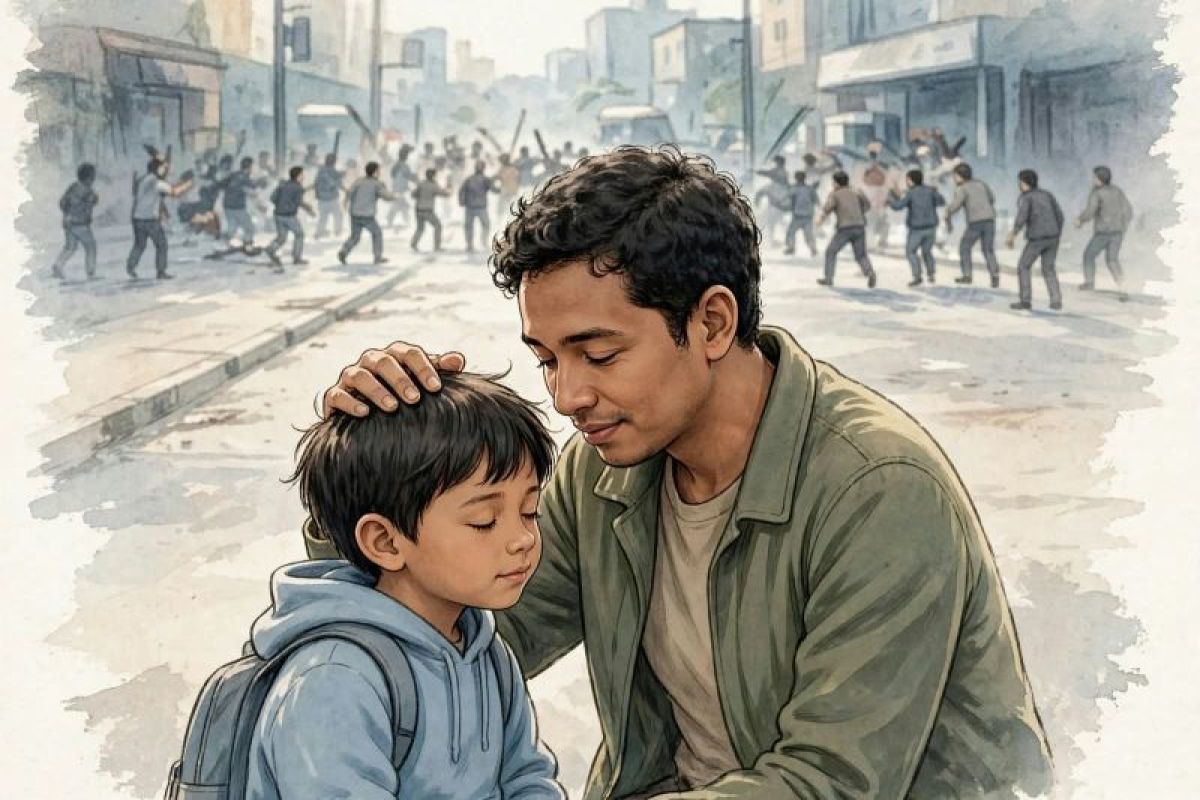
The Malang tragedy invites us to examine the social environment in which children grow up and develop their understanding of right and wrong.
Jakarta (ANTARA) - In the space of three days, Malang witnessed two acts of violence. The first claimed the life of a child. The second followed public anger over the child’s death. The first act drew condemnation. The next only added to the legal problems.
On Wednesday, 25 November 2026, a 17-year-old female high-school student died after allegedly being assaulted by several teenage girls. Two days later, Malang City Police named four children as suspects after questioning eight witnesses and collecting a number of pieces of evidence.
From Friday night into the early hours of Saturday, a crowd went to a house in Malang Regency linked to one of the suspects. Property was damaged and two police patrol vehicles were set alight. Police brought in additional personnel to control the situation.
The two incidents, with different contexts and legal consequences, raise an uncomfortable question: how can we teach children not to resolve problems through violence when we ourselves are showing them violence as a way to deliver justice?
A family has lost its daughter, friends have lost a companion, and a teenager has lost the chance to live out her future. The victim’s family is entitled to justice. They are also entitled to grieve without having to watch their daughter’s death used to justify further violence.
The Malang tragedy invites us to examine the social environment in which children grow up and develop their understanding of right and wrong.
Open social media and you may find footage of suspected thieves being beaten by crowds, motorists hitting one another after road disputes, seniors intimidating juniors, officials using excessive force, and neighbourhood disagreements ending in group assaults.
Consider the comments accompanying these posts. Some people cheer when someone is beaten, regret that the blows were not harder, or turn another person’s suffering into a joke. Even before the facts are established, punishment is already deemed deserved.
Punishment also takes place without physical contact. Someone’s personal data is shared publicly, their family’s social media accounts are targeted, and their workplace is pressured to impose sanctions. Anger towards one person can spread to people who had no involvement in the alleged wrongdoing.
All of this takes place in digital spaces that children also inhabit.
Parents have long worried that children might imitate violence in films, video games and other entertainment. But the moral lessons children draw from adults’ reactions to violence often go unnoticed.
A child watching footage of a group assault may see someone being hurt, while also seeing many people approve of it.
From adults’ reactions, children may learn a dangerous lesson: violence is wrong, but can be justified when directed at someone considered guilty.
In his book Social Learning Theory (1977), psychologist Albert Bandura explained that people can learn behaviour by observing others’ actions and their consequences. Acceptance of, or rewards for, an action also influence this learning process.
In a 1999 study, Bandura described the concept of moral disengagement: mechanisms that allow people to act against their moral principles by using various justifications.
Source: jawawa.id (https://jawawa.id/newsitem/children-learn-how-to-punish-from-us-1795841533)
Originally published by Antara (Indonesian) (https://www.antaranews.com/berita/5884511/anak-anak-belajar-menghukum-dari-kita), translated from Indonesian