
Chicken Prices Plunge as Large Corporations Allegedly Seize Small Farmers' Market Share
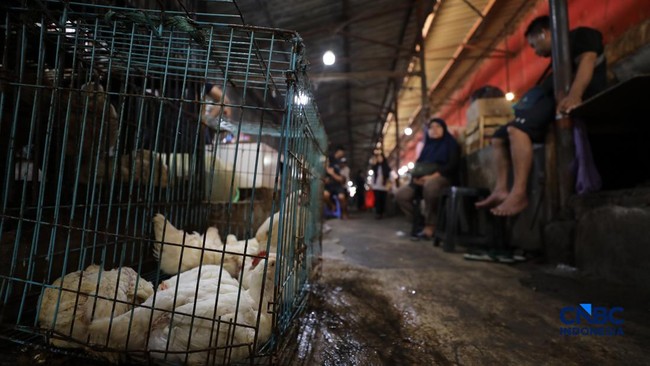
The National Poultry Breeders Association (GOPAN) has revealed the primary cause behind the plummeting prices of live birds at the farmer level.
According to GOPAN Secretary General Sugeng Wahyudi, the price drop is not caused by the management of feed ingredient imports, but rather by an influx of chicken supply into the market that is not matched by an increase in demand.
Sugeng stated that current live bird prices at poultry farms are only in the range of Rp14,000 to Rp15,000 per kilogram (kg). This figure is far below the cost of production (HPP), which reaches approximately Rp20,000 per kg.
“Currently, the supply of chicken production is not being balanced by an increase in demand for chicken meat. Consequently, live bird prices in poultry farms are under pressure,” Sugeng told CNBC Indonesia on Tuesday (30/6/2026).
He noted that this is not the first time such a condition has occurred, as a similar pattern was observed during the same period last year when prices fell due to oversupply.
Sugeng emphasised that GOPAN does not believe the drop in live bird prices is triggered by government policies regarding the management of feed ingredient imports by the food SOE, Berdikari. This is because a portion of those imports can still be managed by private companies.
“Therefore, we do not see that the drop in live bird prices is an effect of the policy regarding the management of feed materials by Berdiklar, as part of it can still be managed or imported by the private sector. This is purely the effect of the increase in chicken supply in the market,” Sugeng explained.
He argued that one of the root problems stems from the continued dominance of live bird marketing by large-scale business actors. In reality, businesses with a production capacity of more than 50,000 birds per week should already possess poultry slaughterhouses, as regulated under the Minister of Agriculture Regulation Number 10 of 2024 concerning the Provision, Circulation, and Supervision of Commercial Poultry and Eggs.
Sugeng noted that currently, almost all industry players are engaged in broiler chicken cultivation. Meanwhile, a market that still relies on the sale of live birds makes price pressure at the farmer level unavoidable.
Consequently, he urged the government to immediately realise the downstreaming programme that has been promised. He believes downstreaming can be implemented through the state-owned food enterprise, Berdikari, so that chicken absorption no longer depends on the live bird market.
Furthermore, GOPAN has requested that the expansion of live chicken cultivation businesses be limited, particularly for large-scale actors. According to Sugeng, many new investors are entering the cultivation sector without considering market conditions, which triggers oversupply.
“This includes limiting the expansion of businesses in the live chicken final stock sector, as many new players are investing without considering the market. Especially large players who control feed and DOC (Day Old Chick),” he said.
As a result of these conditions, small-scale farmers are now facing losses of approximately Rp5,000 per kg of chicken sold. With production costs at around Rp20,000 per kg and selling prices only at Rp14,000-Rp15,000 per kg, the poultry farming business is under increasing pressure.