
Chicken Price Crash: Farmers' Association Reveals Structural Roots Beyond Oversupply
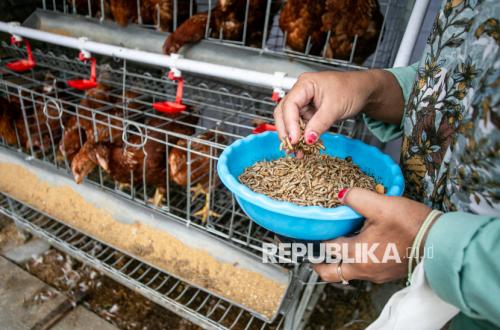
The Perhimpunan Peternak Rakyat Mandiri Indonesia (Permindo) has revealed that the recent slump in live bird prices is not solely caused by oversupply. The association argues there are structural problems within the poultry supply chain.
Currently, live bird prices at various national production centres range from Rp15,000 to Rp17,000 per kilogram. This figure is far below the farmers’ cost of production (HPP), which has reached approximately Rp22,000 per kilogram.
“The prolonged low chicken prices are not merely a result of oversupply, but an accumulation of domino effects from the governance of imported feed raw materials, industry liquidity pressures, panic selling by farmers, and an imbalanced market structure that ultimately depresses prices far below the production costs of smallholder farmers,” said Permindo Chairman Kusnan in a statement on Wednesday (24/6/2026).
According to Permindo, the current situation indicates that farmers are facing a margin crisis. While selling prices continue to weaken, production costs have risen due to increased feed prices. The organisation noted that feed prices are now in the range of Rp8,600 to Rp9,500 per kilogram, an increase of around Rp1,000 per kilogram compared to the previous period. This has resulted in farmers bearing losses of approximately Rp5,000 to Rp7,000 for every kilogram of chicken sold. With an average harvest weight of two kilograms per bird, the loss per bird can reach between Rp8,000 and Rp10,000. This situation is described as a cost-price squeeze, where production costs rise while selling prices fall.
Permindo explained that the root of the problem lies in changes to the procurement mechanism for imported feed raw materials, which has become increasingly concentrated through a single gateway with a cash-before-delivery (CBD) payment system. Key raw materials such as soybean meal (SBM) and feed wheat require significantly larger working capital than before, placing severe liquidity pressure on the feed industry, particularly medium and small-scale mills.
“The liquidity pressure experienced by the feed industry then cascades down to the farmer level. To maintain cash flow, feed mills accelerate billing to farmers, making the capital requirements at the farm level even greater,” Kusnan stated.
Under these conditions, many farmers are forced to sell their chickens prematurely to meet payment obligations for feed, day-old chicks, medicines, and labour. This selling, occurring when prices are low, triggers a phenomenon of panic selling across various production centres. When many farmers sell simultaneously, their bargaining position weakens, and intermediary traders with the capacity to buy in bulk exploit this situation, further depressing live bird prices.
Permindo views this phenomenon as a real-world illustration of the bullwhip effect in the supply chain, where a disturbance in the upstream sector ultimately produces a much larger impact downstream. In the context of the national poultry industry, the liquidity pressure originating from imported raw material procurement has culminated in a crash in live bird prices at the farm level. As a result, the market price no longer fully reflects the balance between supply and demand.
The organisation cautioned that large corporations are relatively better able to survive due to strong working capital, broader access to financing, and product storage facilities. In contrast, smallholder farmers and medium to small-scale feed mills, which are highly dependent on daily cash flow, are the most vulnerable groups.
Permindo is urging the government, through the National Food Agency (Bapanas), the Ministry of Agriculture, the Ministry of State-Owned Enterprises, and state-owned food enterprises, to take corrective measures. Their proposals include evaluating the governance of feed raw material imports, providing supply chain financing, establishing a national buffer stock of raw materials, strengthening programmes for the absorption of live birds and carcasses, and building a more transparent poultry data system.