
Checking 5-Year STNK Physical Inspection: Costs and Regulations
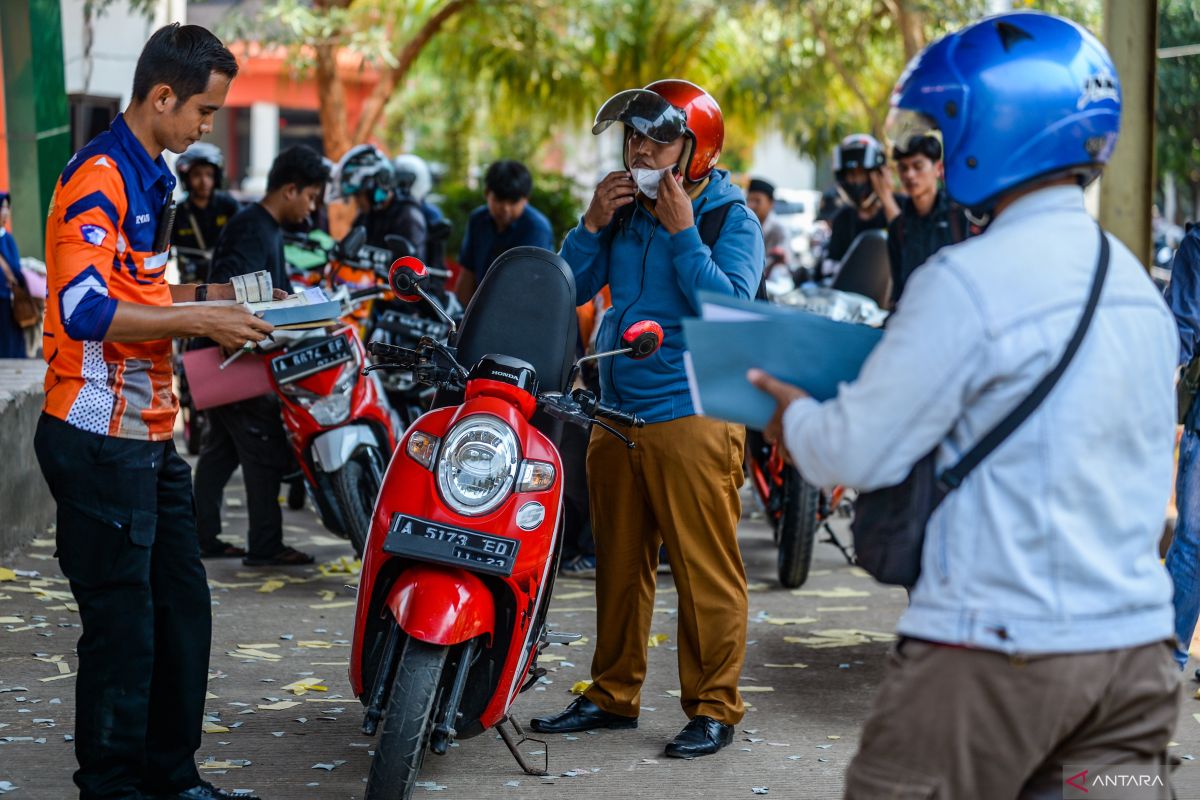
Jakarta (ANTARA) - The five-year renewal of the Vehicle Registration Certificate (STKB) involves a different procedure compared to annual vehicle tax payments. Vehicle owners are required not only to bring administrative documents but also to present the vehicle for a physical inspection at the Samsat office.
This raises the question: must vehicle owners pay a specific fee for the physical inspection process?
Physical vehicle inspection is mandatory
Physical inspection is an integral part of the five-year STNK renewal process. The inspection is conducted to match the vehicle’s identity, specifically the chassis and engine numbers, with the data recorded in the vehicle documents.
Korlantas Polri has emphasised that physical inspections are mandatory for five-year STNK renewals. This regulation is stipulated in Police Regulation Number 7 of 2021 concerning the Registration and Identification of Motor Vehicles.
Korlantas Polri also explained that the validity period of the STNK is five years, and every five-year renewal requires a physical inspection.
Is there a fee for vehicle physical inspection?
For the physical inspection of vehicles by police officers during the five-year STNK renewal, the public is not charged a separate inspection fee or tariff.
However, this does not mean the entire five-und-year STNK renewal process is free. Vehicle owners must still pay several official obligations arising from the re-registration process, such as the issuance of the STNK and Vehicle Number Plate (TNKB), as well as vehicle tax and other obligations in accordance with regulations.
The types and rates of the National Police’s Non-Tax State Revenue (PNBP) are currently regulated under Government Regulation Number 76 of 2020. This regulation remains in effect and governs various police service tariffs, including the issuance of vehicle documents.
The amount of cost that vehicle owners must prepare depends on the type of vehicle and the components being charged.
For two-wheeled or three-wheeled vehicles, the STNK issuance fee is set at Rp100,000. Meanwhile, four-wheeled or larger vehicles are charged Rp200,000.
Additionally, there is a fee for the issuance of TNKB. For two-wheeled or three-wheeled vehicles, the rate is Rp60,000 per pair. For four-wheeled or larger vehicles, the rate is Rp100,000 per pair.
These fees constitute PNBP for police services and are distinct from the Motor Vehicle Tax (PKB) and the Mandatory Road Traffic Accident Fund Contribution (SWDKLLJ).
Therefore, vehicle owners need to distinguish between the physical inspection cost and the STNK renewal administrative costs. The physical inspection itself is not a separate cost component, but the five-year renewal process still involves several payment obligations.
Requirements for 5-year STNK renewal
Korlantas Polri has listed several documents that need to be prepared before proceeding with the five-year STNK renewal.
These documents include:
Original and photocopy of the STNK.
Original and photocopy of the BPKB (Vehicle Ownership Book).
Original and photocopy of the vehicle owner’s ID (KTP).
The vehicle intended for renewal must be present for the physical inspection.
The identity details on the ownership documents must also be checked to ensure they match the registered vehicle data. Once the physical inspection is complete, the results will be validated before the applicant proceeds with the registration and payment process.
Upon arriving at the Samsat, vehicle owners must bring their vehicles to the physical inspection site. Officers will then inspect the vehicle’s chassis and engine numbers.
After the inspection is complete, the physical check results are validated. The vehicle owner then proceeds with registration by submitting the required documents.
The next stage is the payment of obligations according to the regulations. Once the administrative process is finished, the vehicle owner can collect the new STNK along with the newly issued TNKB or number plate.
Beware of unauthorised levies
Vehicle owners should be aware of the difference between official fees and levies that are not stipulated in the regulations. The PNBP for police services has a tariff basis regulated by the government, and payments are recorded as state revenue.
If the public encounters requests for payments that lack a clear legal basis or breakdown, applicants may request an explanation from Samsat officers regarding the type of service and the charges applied.
In conclusion, the physical inspection for five-year STNK renewals is not a service with its own separate inspection fee. However, vehicle owners must still prepare funds for the issuance of the STNK, TNKB, PKB, SWDKLLJ, and other obligations applicable to the specific vehicle type and administrative region.