
Check! Here Are the Listed Companies Affected by the Mount Anak Krakatau Eruption
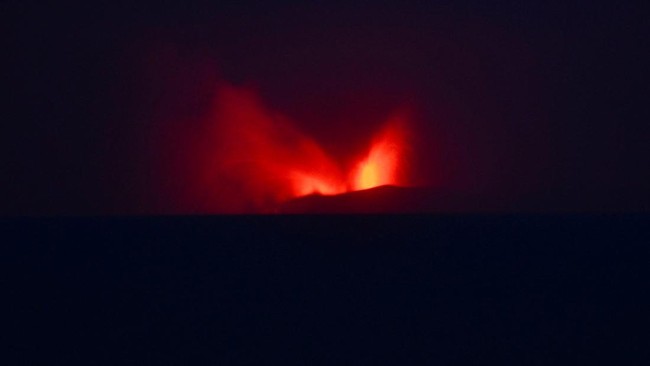
The activity of Mount Anak Krakatau is affecting economic activity, particularly due to the large number of cancelled flights. In the long term, the eruption could disrupt many economic activities, ranging from tourism and transport to food supplies.
This situation will naturally affect a number of listed companies operating in these sectors.
The Meteorology, Climatology and Geophysics Agency (BMKG) identified two clusters of volcanic ash covering Banten, DKI Jakarta, West Java, Lampung and as far as Bengkulu. The spread led to the temporary closure of eight airports: Soekarno-Hatta Airport in Tangerang, Halim Perdanakusuma Airport in Jakarta, Radin Inten II Airport in Lampung, Husein Sastranegara Airport in Bandung, Budiarto Airport in Curug, Tangerang, Pondok Cabe Airport in South Tangerang, Taufik Kiemas Airport on the west coast of Lampung, and Atung Bungsu Airport in Pagar Alam, South Sumatra.
However, one airport, Pagar Alam, had already reopened by Monday morning.
At least ten listed companies have direct or indirect exposure to the event.
Airlines Bear the First Impact
GIAA and CMPP are in the first risk layer because airline operations depend directly on airport and airspace conditions. When flights are cancelled, aircraft lose the opportunity to generate revenue, whilst operating costs continue to run.
At Soekarno-Hatta, 963 flights were affected, comprising 453 arrivals and 510 departures.
GIAA potentially bears a larger nominal impact given the scale of the Garuda Indonesia and Citilink networks. Meanwhile, CMPP could be more sensitive because its financial condition is relatively fragile and its low-cost carrier model relies on high aircraft utilisation.
Nevertheless, no official details are yet available on the number of flights and value of losses for each company. Therefore, the impact cannot yet be calculated based on the number of disrupted flights nationally.
The disruption could then ripple through to CASS. Fewer flights mean less ground handling, baggage, cargo and catering activity.
For GMFI, the influence could be mixed. Reduced flying hours may cut routine work. Conversely, aircraft suspected of exposure to ash may require additional inspections before returning to service.
Industrial and Port Risks Remain Conditional
KIJA has exposure through the Tanjung Lesung Special Economic Zone in Pandeglang, which relies on hotels, villas, beaches and marine activities. The initial impact is likely to be cancelled visits rather than asset damage.
The risk increases if ash actually falls in the area, marine activities are restricted, or tourists avoid Tanjung Lesung for an extended period. However, the overall influence on KIJA may be limited, as the company also has businesses in other regions.
KRAS and TPIA have key facilities in Cilegon and Serang. Volcanic ash can generally clog filters, disrupt engines and affect water and cooling systems. However, there have been no announcements that the two companies’ facilities have been disturbed.
TPIA also has tanks and jetty facilities in Cilegon. The impact could grow if port activities or the shipment of raw materials by sea are hampered. Petrochemical plants use continuous processes, so shutting down and restarting facilities requires technical procedures.
Meanwhile, PTBA’s risk lies at Tarahan Port in Lampung, not at its main mine in South Sumatra. The impact would only become material if shipping and unloading activities were halted, delaying coal deliveries. So far, no announcement of the closure of Tarahan Port has been found.
Prolonged Ashfall Could Pressure Plantations
TBLA and BUDI become relevant if ash falls on plantation or factory sites and persists for several days.
TBLA carries the most layered risk, as its business spans oil palm and sugarcane plantations, harvesting, transport of plantation output, and the processing of crude palm oil, sugar and biodiesel.
The first disruption would likely hit workers and harvesting activities. If air quality deteriorates, outdoor activities may be reduced. Delays in transporting fresh fruit bunches to the factory can also lower the quality of raw materials.
The impact on crops only becomes serious if the ash is thick enough to cover leaves and hinder photosynthesis. Oil palm and sugarcane are relatively more resilient than leafy vegetables, so brief ashfall does not necessarily suppress production.
For BUDI, the main risk lies in the supply of cassava and the transport of raw materials to its tapioca and sweetener factories. Cassava is relatively protected because the harvested part is underground. The short-term threat is more likely to come from road disruptions, delayed harvests or reduced raw materials.
Overall, aviation is the sector with the clearest impact. Risks to other listed companies only become a fundamental issue if disruptions to facilities, ports, tourism, harvests or distribution are confirmed. Without that, share price movements are more likely driven by short-term sentiment.
Source: jawawa.id (https://jawawa.id/newsitem/check-here-are-the-listed-companies-affected-by-the-mount-anak-krakatau-eruption-1788756729)
Originally published by CNBC Indonesia (https://www.cnbcindonesia.com/research/20260907103115-128-765677/cek-ini-daftar-emiten-yang-terdampak-erupsi-gunung-anak-krakatau), translated from Indonesian