
Check BPJS Health Contributions as at 24 October: 21 Services Are Not Covered
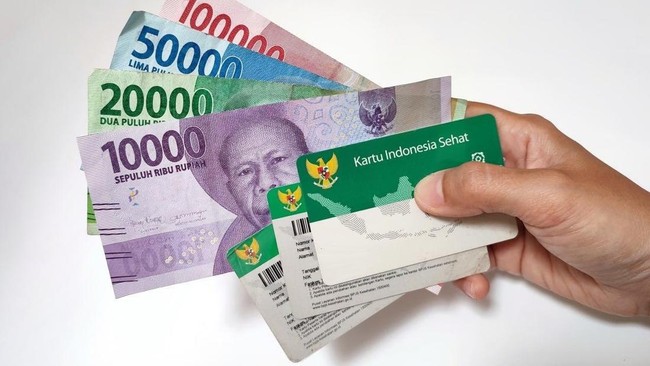
Jakarta, CNBC Indonesia – Health Minister Budi Gunadi Sadikin has said there are no plans to increase BPJS Health contribution rates. He urged the public not to worry, adding that the central government would continue to provide support if BPJS Health ran a deficit.
So what are the BPJS Health contribution rates currently in force?
As at Saturday, 24 October 2026, BPJS Health contributions remain governed by Presidential Regulation (Perpres) No. 59 of 2024, the third amendment to Perpres No. 82 of 2018 on Health Insurance, and Perpres No. 63 of 2022.
Under the contribution provisions in Perpres 63/2022, participants’ contributions are calculated according to several categories. First, contributions for recipients of the Health Insurance Contribution Assistance (PBI) are paid directly by the Government.
Second, contributions for wage-earning participants (PPU) employed by government institutions—including civil servants, members of the Indonesian National Armed Forces (TNI) and National Police (Polri), state officials and non-civil-servant government employees—are 5% of monthly salary or wages. The employer pays 4% and the participant pays 1%.
Third, contributions for PPU employees of state-owned enterprises (BUMN), regionally owned enterprises (BUMD) and private companies are also 5% of monthly salary or wages, with 4% paid by the employer and 1% by the participant.
Fourth, contributions for additional family members of PPU participants—namely a fourth child and any subsequent children, as well as parents and parents-in-law—are 1% of salary or wages per person per month, paid by the wage-earning participant.
Fifth, other relatives of PPU participants, such as siblings, in-laws and domestic workers, as well as non-wage-earning participants (PBPU) and non-working participants, pay according to a separate schedule:
Rp42,000 per person per month for benefits in a Class III inpatient room.
For Class III, from July to December 2020, participants paid Rp25,500, with the remaining Rp16,500 paid by the Government as a contribution subsidy.
From 1 January 2021, Class III participants paid Rp35,000, while the Government continued to provide a Rp7,000 subsidy.
Rp100,000 per person per month for benefits in a Class II inpatient room.
Rp150,000 per person per month for benefits in a Class I inpatient room.
Sixth, contributions for Veterans, Pioneers of Independence and the widows, widowers or orphaned children of Veterans or Pioneers of Independence are set at 5% of 45% of the basic salary of a Grade III/a civil servant with 14 years’ service, per month. The Government pays these contributions.
Under the latest contribution scheme set out in Perpres 63/2022, contributions must be paid by the 10th of each month. No late-payment penalty has applied since 1 July 2016. A penalty may be imposed if, within 45 days of their membership being reactivated, a participant receives inpatient care.
Under Perpres 64/2020, the penalty is 5% of the cost of the initial diagnosis for the inpatient treatment, multiplied by the number of months of arrears, subject to the following conditions:
Arrears are counted for a maximum of 12 months.
The penalty is capped at Rp30 million.
For PPU participants, the employer is responsible for paying the penalty.
21 services not covered by BPJS Health
What services are available to BPJS Health participants? Are all of them covered, or are some excluded?
Not all treatment and medical procedures are automatically covered by BPJS Health.
The provisions on services that are not covered are set out in Article 52 of Presidential Regulation No. 82 of 2018 on Health Insurance, as most recently amended by Perpres No. 59 of 2024.
The regulation lists 21 categories of healthcare services not covered by the National Health Insurance (JKN) scheme. They range from services for aesthetic purposes and infertility treatment to services already covered by other programmes.
However, an exclusion from BPJS Health coverage does not always mean that the patient must pay the entire cost out of pocket. Some services may be covered through other arrangements, such as employment injury insurance, traffic accident insurance or government funding.
The 21 categories listed under Article 52 of Perpres No. 59 of 2024 are:
- Services that do not comply with legislation
BPJS Health does not cover healthcare that fails to comply with legislation, including referrals requested by patients themselves and other services that do not meet the applicable rules.
- Services at healthcare facilities that do not partner with BPJS
Services at facilities that do not have an agreement with BPJS Health are generally not covered, except in emergencies as provided for by the applicable rules.
- Care resulting from an employment accident or work-related incident
Healthcare resulting from an employment accident or work-related incident is not covered by JKN if it is already covered by the Employment Injury Security programme or is the employer’s responsibility.
This does not mean that participants automatically have to pay for treatment themselves following an employment accident. Coverage depends on the applicable scheme.
- Care covered by a traffic accident programme
Healthcare resulting from a traffic accident is not covered by JKN to the extent that it is covered by the compulsory traffic accident insurance programme, in accordance with the applicable coverage limits and rules.
- Healthcare outside Indonesia
Healthcare provided outside Indonesia is not included in the services covered by JKN.
- Healthcare for aesthetic purposes
Healthcare provided for aesthetic purposes is not covered by BPJS Health. This should be distinguished from medical procedures required for a patient’s health.
- Infertility treatment
Healthcare intended to treat infertility or fertility problems is among the services not covered by JKN.
- Teeth-straightening or orthodontic treatment
Treatment to straighten teeth, or orthodontic care, is not covered by BPJS Health.
- Health problems caused by drug or alcohol dependence
Health problems or illnesses resulting from dependence on drugs and/or alcohol are among the services not covered by JKN.
- Health problems caused by deliberate self-harm
Treatment for health problems resulting from deliberate self-harm or from taking part in a hobby that endangers oneself is not covered.
The classification of health problems that fall into this category is determined under the Minister of Health’s rules.
- Alternative treatment not proven effective
Complementary, alternative and traditional treatments that have not been found effective through health technology assessment are not covered by BPJS Health.
This does not mean that all traditional treatment is automatically excluded. Its status depends on the criteria set out in the rules.
- Experimental treatment and medical procedures
Treatment and medical procedures classified as trials or experiments are not covered by JKN. The classification is determined under the Minister of Health’s rules.
- Contraceptive devices and medicines, and cosmetics
Contraceptive devices and medicines, as well as cosmetics, are among the categories not covered under Article 52.
However, this provision should be distinguished from family planning services. The same Perpres includes certain family planning services among the promotive and preventive benefits, including counselling and contraceptive services in accordance with the applicable rules.
- Household health supplies
Household health supplies are among the healthcare products or needs not covered by JKN.
- Healthcare resulting from a disaster, extraordinary event or epidemic
Healthcare resulting from a disaster during the emergency response period, an extraordinary event (KLB) or an epidemic is among the categories not covered by JKN.
- Care for preventable adverse events
Healthcare relating to preventable adverse events is not covered. The events included in this category are determined under the Minister of Health’s rules.
- Healthcare provided as part of a social service activity
Healthcare organised as part of a social service activity is not covered by JKN.
However, this does not automatically mean that patients must pay themselves, as such activities may have their own funding sources.
- Care resulting from crimes already covered by another scheme
Healthcare resulting from criminal acts—including assault, sexual violence, terrorism and human trafficking—is not covered by JKN if it is already funded through another scheme administered by a ministry or agency, or by a regional government, in accordance with legislation.
Victims of crime do not therefore automatically lose access to funding; coverage depends on the applicable scheme.
- Certain healthcare services relating to the Ministry of Defence, TNI and Polri
Certain healthcare services associated with the Ministry of Defence, the TNI and the Polri are among the categories not covered by JKN.
- Services unrelated to JKN benefits
Other services that are unrelated to the health insurance benefits available to participants are not covered by JKN.
- Services already covered by another programme
Healthcare already covered by another programme is not the responsibility of JKN. This provision makes clear that coverage must be assessed according to which programme is responsible for funding the service.
Source: jawawa.id (https://jawawa.id/newsitem/check-bpjs-health-contributions-as-at-24-october-21-services-are-not-covered-1792806661)
Originally published by CNBC Indonesia (https://www.cnbcindonesia.com/lifestyle/20261024005853-33-779069/cek-iuran-bpjs-kesehatan-per-24-oktober-21-layanan-ini-tak-ditanggung), translated from Indonesian