
Chatib Basri Summoned to Palace, DEN Highlights MBG Efficiency
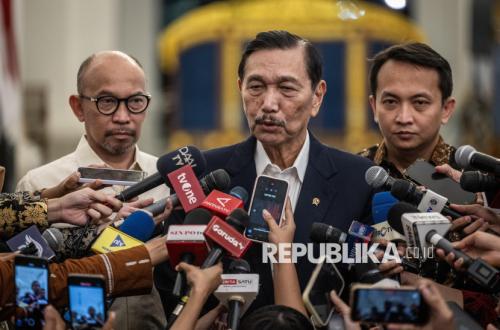
The National Economic Council (DEN) has highlighted the issue of efficiency within the Free Nutritious Meal (MBG) programme as one of the key recommendations submitted to President Prabowo Subianto. DEN member and former Finance Minister, M. Chatib Basri, was present during the meeting held at the State Palace on Tuesday (9/6/2026).
Chatib stated that a critical issue the government must address is the risk of rising prices for goods and products resulting from the weakening of the Rupiah.
“This will certainly impact the lower-middle class, and we must consider what actions to take, including fostering confidence or trust in the government. One way to achieve this is through budget efficiency measures, including those related to the MBOG programme,” Chatib said during a press conference at the Palace.
Meanwhile, DEN member Mochammad Firman Hidayat explained that Indonesia’s economic fundamentals remain in good condition. He compared the current economic state to the 1998 monetary crisis, noting that Indonesia is in a much stronger position, as evidenced by relatively high economic growth and stable inflation.
“One aspect we are highlighting is that corporate balance sheets remain very healthy. For instance, corporate debt in US dollars is much lower than it was in 1998,” said Firman.
Firman noted that corporate cash positions are also relatively high, which can be used to mitigate uncertainty. From a banking perspective, he assessed that the Capital Adequacy Ratio (CAR) remains above 25 per cent, indicating a sufficiently strong banking system.
However, Firman warned that Indonesia must remain vigilant regarding global economic uncertainty, particularly the impact of wars that are expected to last longer than previously anticipated, alongside the weakening of the Rupiah.
“The impact of war on global energy prices and the weakening Rupiah could lead to increased production and distribution costs,” Firman explained.
According to Firman, the Consumer Price Index (CPI) or inflation is currently at around 3 per cent, while the Wholesale Price Index (WPI) ranges between 5 and 7 per cent. These conditions must be anticipated in the second half of 2026.
Firman stated that amidst global uncertainty, confidence in Indonesia needs to be strengthened. He noted that President Prabowo has reaffirmed his commitment to adhering to fiscal deficit targets and will provide further details to the public.
This presidential commitment, according to Firman, also encompasses budget efficiency, which includes priority programmes such as the MBG.
“The amount that can be saved through MBG efficiency is quite significant. Furthermore, there are steps that can be taken to also increase revenue,” said Firman.
Firman emphasised that the weakening Rupiah must be viewed comprehensively. Regarding the balance of payments, there are concrete steps that can be taken to strengthen foreign exchange reserves.
One potential area for improvement is secondary income through increased remittances from Indonesian migrant workers abroad.
“Compared to the Philippines, our remittance levels are much lower. This means the President’s programme to increase skilled and high-quality workers, such as nurses, electricians, and other professionals, can help boost foreign exchange,” said Firman.
Additionally, Firman noted that tourist arrivals can also serve as a source of foreign exchange. Consequently, he is encouraging policies capable of increasing the number of international tourist visits to the country.